
by TEESTA SETALVAD
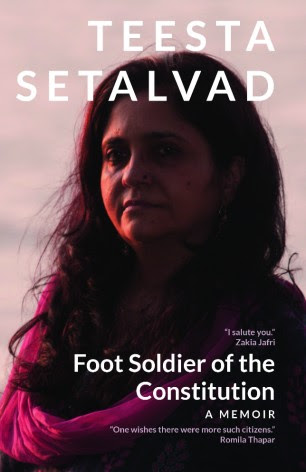 IMAGE/Leftword Books
This is an extract from Teesta Setalvad’s memoir released in January 2017. These extracts are from the chapter titled ‘Let Hindus Give Vent’
I reached Gujarat in early March 2002. I began to scour the relief camps and districts, then, returned back to Ahmedabad, exhausted. Late in the early morning hours, I would pen the alerts for the statutory bodies, the Supreme Court, the President of India, NHRC and other human rights forums. The overwhelming sense when I described things back home to Mumbai was – ‘If Bombay ten years ago was bad, then Gujarat is one thousand times worse.’ In the first six months, I was physically attacked five times. Twice the drivers of hired vehicles abandoned me in villages, fearful of the consequences of the journeys for them. Within days of the coverage, a resolve shaped into a dogged commitment based on these dual experiences: of having lived through Bombay 1992-1993 and now Gujarat 2002: mere documentation and advocacy and campaigning on the targeted mass crimes that exposed bitter fault-lines of bias and prejudice in our institutions of democracy and governance, would not be enough. It was time to test the criminal justice system, from several angles; can justice ever be done when mass violence happens? Can our courts restore the faith in the system? People’s confidence and trust in their neighbourhoods, and even their friends, had been snatched away.
This is what I told Javed in the nightly calls I made. Since I was away alone till odd hours, there was incessant worry at home. I remember saying that now we need to move the courts and see if justice can be done, to test the system and ask whether there can be recompense. We knew that this task could not have been undertaken by us alone and that we would need a strong body of citizens committed to the rule of law to take on that task. That was how Citizens for Justice and Peace (CJP) was born. In early April, in Nandan Muluste’s home, Pankaj Shankar showed us the uncut version of In the Name of Faith. It was a raw film that depicted all that needed to be said about the gross cruelty that was deliberately allowed free reign. Those of us in the room – Alyque Padamsee, Cyrus Guzder, Kadrisaab, Nandan Maluste, Shireesh Patel, Anil Dharker, Ghulam Peshimam, and Javed Anand – watched the film. Taizoon Khokharkiwala and his wife Edith have also been fellow travellers in our intense journey. Tears flowed freely at that screening. They turned to disbelief and anger at the extent of abdication of constitutional governance. We then resolved to action. It is no coincidence that those who were present that day were also among those who had been at the forefront of the citizen’s mobilizations after the Babri demolition and Bombay pogrom in 1992-93. The understanding and connections between the two bouts of violence, both of which reflected state complicity at different levels, were there.
News Click for more