
by ERIC A. POWELL
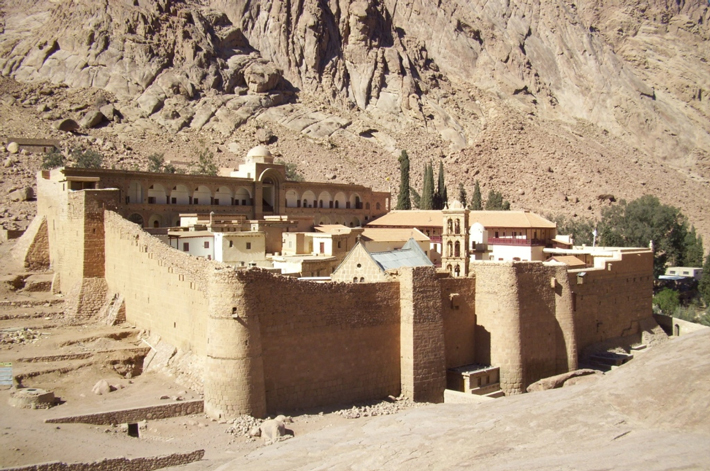 St. Catherine’s Monastery was built at the foot of Mt. Sinai in the 6th century on the orders of the Byzantine emperor Justinian. Over time it became an important destination for Christian pilgrims. Monks have lived within its walls ever since, and still welcome travelers. PHOTO/copyright St. Catherine’s Monastery
At the world’s oldest monastery, new technology is making long-lost manuscripts available to anyone with an Internet connection
Sometime in the eighth century, a monk at St. Catherine’s Monastery in Egypt’s Sinai Peninsula was preparing to transcribe a book of the Bible in Arabic and needed fresh parchment. New parchment was an expensive commodity at the time and was difficult to obtain, especially for a humble monk copyist living in a remote desert monastery. Luckily for him, the venerable religious community had a massive library that included books that were no longer in use. These manuscripts, some written in extinct languages, or thought to be unimportant, were valued only for their potential as sources of recycled parchment. No one in the monastery would have thought twice, for instance, when, while searching for writing material, the monk plucked out of the collection an ancient Greek text that had gone unread for a generation or more. None of his brothers would have batted an eye as he used a knife to carefully scrape away the centuries-old ink. Soon, the words were gone and the parchment was ready for the monk’s fresh transcription of Bible verses. Today, erasing an ancient text seems an incalculable loss, but to the eighth-century scribe, it was an act of devotion and even a measure of progress—an obsolete text was gone, and a holy manuscript that would enrich countless spiritual lives was left in its place.
Archaeology for more