
by BEE WILSON
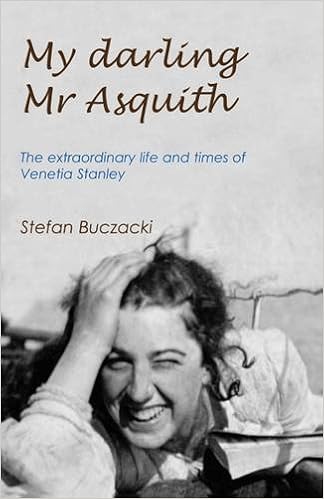 IMAGE/Amazon
My Darling Mr Asquith: The Extraordinary Life and Times of Venetia Stanley by Stefan Buczacki
Cato and Clarke, 464 pp, £28.99
How do you sign off an email? How, when writing to someone who is more than an acquaintance and less than an intimate, do you show that you mean well without being intrusively familiar? There is no common scale to draw on. You can make someone uncomfortable by sending them ‘xox’ in a work email when all they expected was a ‘cheers’. A late friend of mine always signed off ‘all good wishes’ – I felt that hit the right convivial-but-distant note. I started borrowing it, then ramped it up to ‘all best wishes’, fearing that ‘good’ might be interpreted as lukewarm, but now I am mildly regretting the inflation. I rattle out yet another round of doubly superlative ‘all best wishes’ and feel like Tchaikovsky giving the direction pppppp in his Symphony No. 6 when ppp would have done just as well. But it’s also possible to dial things down too far until a sign-off becomes an insult. The Twitter account ‘Very British Problems’ cites the problem of ‘receiving an email ending in “regards” and wondering what you’ve done to cause so much anger’.
In the age of letter-writing, deciding how to start and finish was so much simpler. In 1926, Fowler listed the various ways to end a proper letter:
Yours faithfully: To unknown person on business.
Yours truly: To slight acquaintance.
Yours very truly: Ceremonious but cordial.
Yours sincerely: In invitations & friendly but not intimate letters.
But that didn’t solve every dilemma. In an age of ritualised courtship and repressed emotions the difficulty was more likely to have to do with intimate letters than those written to business acquaintances.
My Darling Mr Asquith is a deeply sympathetic and scrupulously researched biography of the socialite Venetia Stanley (1887-1948). One of its main themes is the complex gradation of affection that could be expressed by different salutations at the start of letters between very posh associates in Edwardian and post-Edwardian times. In the letters of love and friendship exchanged between the members of Herbert Asquith’s circle – he was the Liberal prime minister from 1908 to 1916 – ‘dearest’ meant something different from ‘darling’ and ‘my darling’ was something else again. As Stefan Buczacki parses it, plain ‘darling’ was so commonly used as to be ‘fairly meaningless’ and so if you wanted to show that you truly had feelings for the person you were addressing the ante had to be upped. Adding a possessive was one way of making ‘darling’ more meaningful: ‘My darling’ carried ‘a slightly different connotation, and ‘My own darling’ a different one again. Another way was to go for the superlative: ‘“darlingest”, or “my darlingest”, were particularly affectionate, if ungrammatical,’ Buczacki notes.
 British Prime Minister Herbert Henry Asquith (1908-1916) who penned 560 letters to Venetia Stanley during World War I pictured with his daughter Lady Violet Bonham-Carter in 1923 PHOTO/Daily Mail
London Review of Books for more