
by
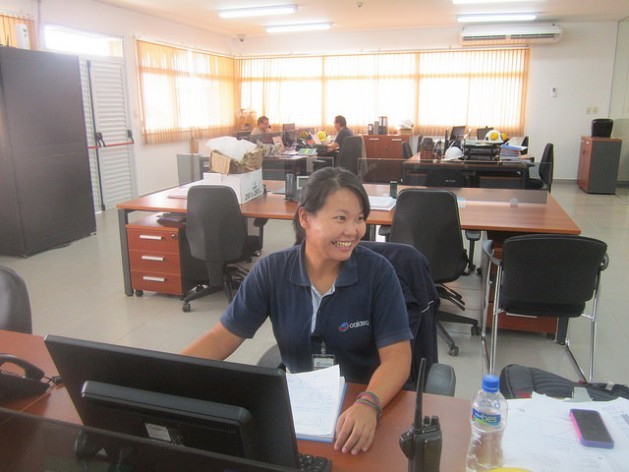 Chemical engineer Negumi Kosaka has been training for over a year, learning to manage each stage of the production of soybean oil and soymeal in the Angostura Agroindustrial Complex (CAIASA) in the industrial park in Villeta, Paraguay. Her parents, Japanese immigrants, grow soybeans in another region in this country, which is taking steps towards industrialisation with projects like this one. PHOTO/Mario Osava/IPS
“I worked in many companies, in construction, fertilisers, chemicals, but none of them were as good as this one,” said Dario Cardozo, who works in the Angostura Agroindustrial Complex (CAIASA) grain reception facility.
The way he is treated by the owners and managers – “very educated people” – the better wages and the good working environment are the advantages stressed by the 32-year-old father of two – a veteran among the young people who work with him receiving and monitoring the trucks that come from the Paraguayan countryside laden with soybeans to be turned into oil and soymeal.
“We’re the face of CAIASA,” he told IPS, describing his job at the entrance to the complex, the biggest soybean crushing plant in Paraguay. Keeping things moving quickly as 500 trucks – the average traffic during harvest season – a day come in to unload their cargo is an important task, he said, because “for truckers, time is gold.”
Hired by the company after the plant began to operate in 2013 in Angostura, he has been able to build a house in a new neighbourhood of Villeta, where the plant is located in the industrial park on the banks of the Paraguay river. The home is modest, and unfinished: it still needs plaster and paint.
“We used to live with my father-in-law, but he died,” said Cardozo’s wife Lourdes Ramírez, who is happy about the health insurance and other benefits offered by CAIASA. “The bus brings my husband to the two-lane avenue” a few hundreds of metres away, “but when it rains they drive him all the way home,” she said, standing in front of her house.
Local shopkeeper Marina Cáceres, the owner of the La Carapegueña 2 Supermarket, told IPS that “My sales have gone up, there’s more money in the city in the past couple of years; in this block alone there are three CAIASA employees.” The La Carapegueña 1 Supermarket, “which belongs to my father-in-law”, is at the entrance to the city, she said.
Villeta, 45 km from Asunción, is still mainly a rural municipality. Half of its estimated 40,000 inhabitants still live in the countryside, Mayor Teodosio Gómez told IPS.
But the arrival of dozens of industrial companies, which have invested a combined total of 800 million dollars here in the last five years, is changing the landscape and living standards in this municipality in Paraguay’s Central department.
Inter Press Service for more