
by JOSEPH NEVINS
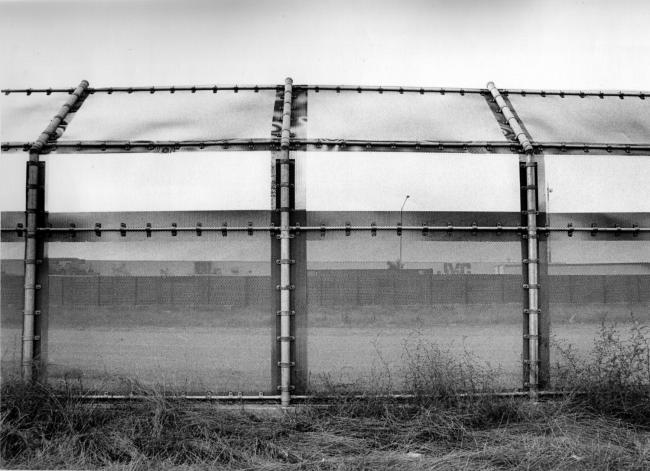 The border fence looking from San Diego into Tijuana PHOTO/Mizue Aizeki
Only by granting the world’s poor a right to a just share of the earth’s resources and a right to traverse global space will we begin to repair the historical injustices that drive migration.
A May 2015 article in The Guardian suggested that the coming months would see large numbers of unauthorized migrants, many of them unaccompanied minors from Central America, crossing the U.S.-Mexico boundary. Already in south Texas, the epicenter of the exaggerated migrant “surge” of the summer of 2014, the signs of a numbers increase were visible. “Every day we’re getting more women and children than the day before,” a Border Patrol agent reported, referring to apprehended migrants. Minutes earlier, the journalist had seen a Border Patrol van carrying 13 women and children from Guatemala and Honduras who had turned themselves in to authorities.
While the number of Central American migrants did not reach the feared heights this past summer, there has been a marked increase, particularly of children, over the last few months. As the New York Times reported from Mission, Texas in late November, “Once again, smugglers are bringing hundreds of women and children each day to the Mexican banks of the river and sending them across in rafts.” It is a development, explained the Times’ Julia Preston—a reporter with a penchant for channeling official Washington’s worldview—made all the more worrisome “as Americans’ concerns about border security are heightened after the Nov. 13 attacks in Paris raised fears that terrorists would try to sneak into the United States.”
Such “concerns” notwithstanding, the migrants, as suggested by the title of Juan Gonzalez’s eponymous book, are first and foremost the “harvest of empire.” People from Honduras and Guatemala—in addition to El Salvador—emigrate for varied reasons. Chief among them are the ravages of everyday life that Washington’s “foreign policy” apparatus—in its military, commercial, and diplomatic guises—and U.S.-based multinational corporations have helped to produce over time in those countries, and that help make life there untenable for many.
Instead of recognizing the need to reap what it has helped to sow, however, the U.S. government has increased the apparatus of immigrant policing and exclusion along, beyond, and within the country’s perimeter. In other words, having undermined the “right to stay home” for many—the right to a homeland in which a life of basic wellbeing is viable—Washington denies those it has effectively compelled to leave, the right to go somewhere thought to provide greater social and biophysical security.
Many migrants, of course, proceed northward nonetheless—often taking evermore costly, tortuous, and often deadly journeys to reach the United States, the desired destination of most. If they succeed, they must lead semi-clandestine lives and endure the indignities that their “illegal” status facilitates and requires—from poverty wages, to constant threat of arrest, to divided families. Or they ask for asylum upon arriving, and risk long periods of detention, eventual rejection, and deportation back to the countries from which they have fled, frequently under duress—with sometimes fatal consequences.
For these reasons and others, such as basic decency, the ability to move and to freely traverse international boundaries should be a fundamental human right. Establishing this right, in the Americas and beyond, should also be central to an anti-imperialist, anti-capitalist, and anti-racist politics.