
by KELLY CHERRY
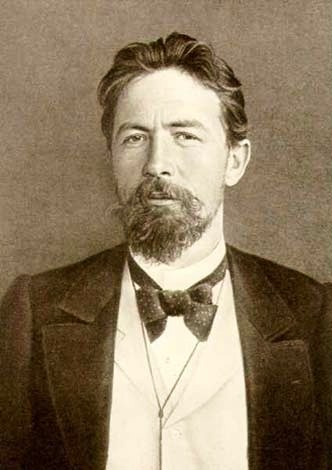 Russian physician, playwright and author Anton Chekhov (1860 – 1904) PHOTO / Wikipedia
(Part II of “Everybody Wants More Than Just One Thing”)
The truth is, almost all of us want more than just one thing. The child who wants water also wants to share it with his mother. The mother wants her child to have water and also food.
Take a look at Chekhov’s stories. Maybe you already have and are already acquainted with his distinctively realistic stories. Anton Chekhov was a doctor and a writer. His writing included four plays and many short stories, almost all of which are justifiably described as great. He had a particular ability to capture the Russian culture in the second half of the 19th century: Its mixed mood of melancholy and ennui, of longing and not being willing to do anything about it. Sometimes his work approaches satire — there is a long tradition of satire in Russian fiction — and indeed he wrote satirical pieces to earn money for his college tuition, but far more often, as he begins to write longer stories, his work is leavened by the delicacy of his descriptions and the efficiency of his narratives. His characters are so real that one remembers them as one remembers people in one’s own life. Most of us in this country have to read his work in translation, and we are fortunate that excellent translations are available.
One of his best-known stories is “Gooseberries,” and from it the following somewhat-ominous passage is often deployed as an epigraph. Ivan Ivanovich, a veterinary surgeon, is talking; the “happy man” he mentions is his younger brother, Nikolay:
“There is always, for some reason, an element of sadness mingled with my thoughts of human happiness, and, on this occasion, at the sight of a happy man I was overcome by an oppressive feeling that was close upon despair. It was particularly oppressive at night. A bed was made up for me in the room next to my brother’s bedroom, and I could hear that he was awake, and that he kept getting up and going to the plate of gooseberries and taking one. I reflected how many satisfied, happy people there really are! What a suffocating force it is! You look at life: the insolence and idleness of the strong, the ignorance and brutishness of the weak, incredible poverty all about us, overcrowding, degeneration, drunkenness, hypocrisy, lying. . . . Yet all is calm and stillness in the houses and in the streets; of the fifty thousand living in a town, there is not one who would cry out, who would give vent to his indignation aloud. We see the people going to market for provisions, eating by day, sleeping by night, talking their silly nonsense, getting married, growing old, serenely escorting their dead to the cemetery; but we do not see and we do not hear those who suffer, and what is terrible in life goes on somewhere behind the scenes… Everything is quiet and peaceful, and nothing protests but mute statistics: so many people gone out of their minds, so many gallons of vodka drunk, so many children dead from malnutrition… And this order of things is evidently necessary; evidently the happy man only feels at ease because the unhappy bear their burdens in silence, and without that silence happiness would be impossible. It’s a case of general hypnotism. There ought to be behind the door of every happy, contented man someone standing with a hammer continually reminding him with a tap that there are unhappy people; that however happy he may be, life will show him her laws sooner or later, trouble will come for him — disease, poverty, losses, and no one will see or hear, just as now he neither sees nor hears others. But there is no man with a hammer; the happy man lives at his ease, and trivial daily cares faintly agitate him like the wind in the aspen-tree — and all goes well.”
The Smart Set for more