
by AYU RATIH
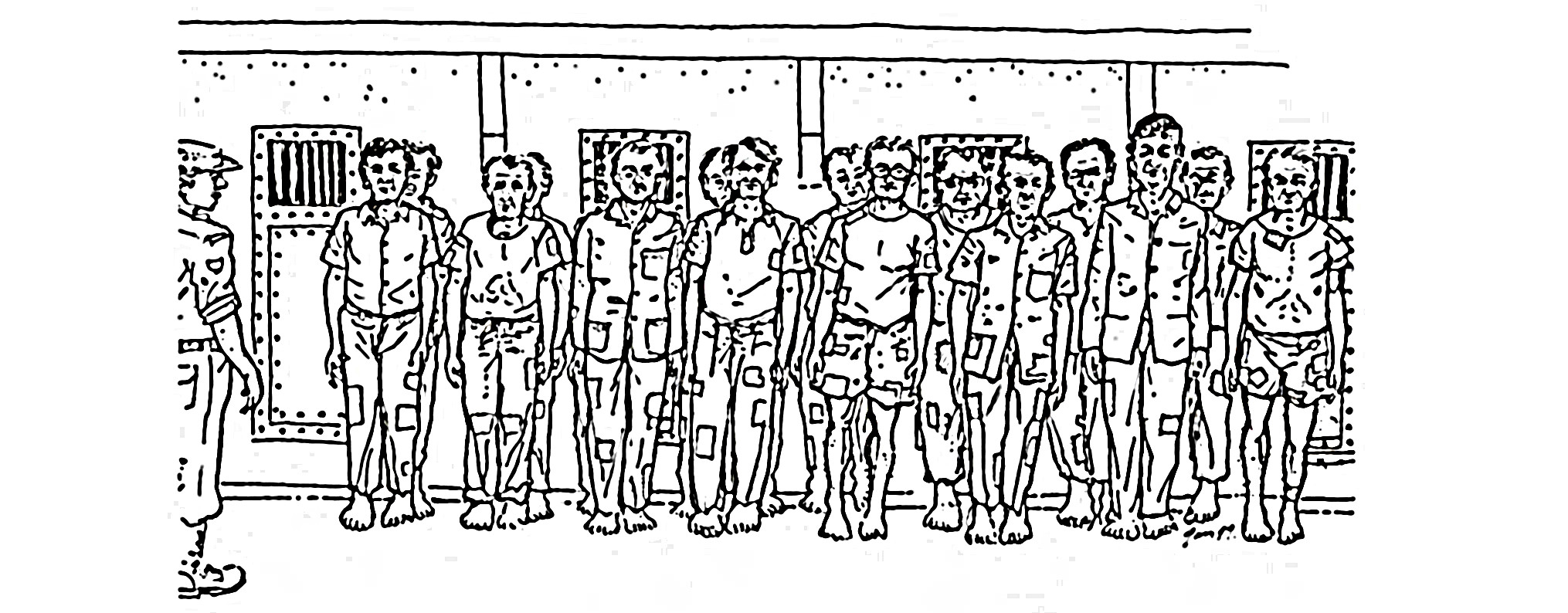
In all the years I spent as a student under Suharto, the humanitarian tragedy of 1965 never came across to me as a complete story. As a little girl I often heard adults around me talking in frightened fragments about ‘those times’. They spoke in whispers. Occasionaly I would hear the word ‘Gerwani’ or ‘PKI’ when someone swore at some irritating person. But I had no idea what those words meant. (PKI stands for Partai Komunis Indonesia, the Indonesian Comminist Party, while Gerwani is an abbrevitaion of Gerakan Wanita Indonesia, the Indonesian Women’s Movement that was affiliated with the PKI). Even the film Pengkhianatan G30S/PKI (Treachery of G30S/PKI), which I watched almost every 30 September with my school, didn’t make much sense as a story. I do recall Ade Irma Suryani, the daughter of General Nasution, getting shot. And the screams of General Panjaitan’s daughter as she wipes her father’s blood off her face after he was shot by soldiers in front of their house. I was always afraid of soldiers. Maybe because the woman who helped my parents at home always frightened us if we didn’t obey her by threatening, ‘Watch out, the men in green are coming! They will take you away’.
It was my junior high school history teacher who first awoke my interest in the past. Miss Tridoso was a fabulous storyteller. But I don’t recall anything she might have told us about Indonesian history, let alone the 1965 tragedy. I learnt about world history, the history of Europe. Beyond that, history meant nothing to me. It was rote learning, the flag ceremony, carnival on independence day, and war films about revolutionaries with sharpened bamboo spears fighting Dutch soldiers who always thundered ‘Kowe inlander … Godverdomme’(‘You darkie … God damn you’). I reckon most Indonesian kids who studied history under Suharto have the same memories. And then I read This Earth of Mankind, Pramoedya Ananta Toer’s great historical novel, in the mid-1980s. Only then did I begin to understand the colonial atmosphere out of which Indonesia was born. History suddenly became a rich harvest of stories and an unending quest for knowledge!
Even so, Suharto never made it easy for anyone to like history. If you were especially interested in those who lost everything as a consequence of the 1965 tragedy, it could be positively dangerous. Picking up a Pramoedya novel was, in the eyes of the state in those days, a big mistake. Three young men were arrested and jailed in Yogyakarta in 1989 just for quietly distributing copies of Pramoedya’s tetralogy and organising discussions of it. The mother of one of my friends would not lend me her copy of This Earth of Mankind until she had snipped off the top right corner of the opening page with her name on it. I couldn’t believe it. If she was so scared, why did she own a copy of this banned book? And where had she obtained it?
Inside Indonesia for more