
by ZACK BEAUCHAMP
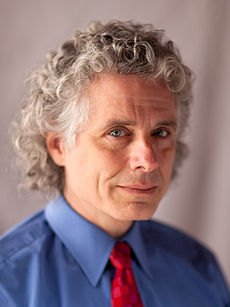 Steven Pinker PHOTO/Wikipedia
Does the arc of history not bend toward justice after all?
A great deal of popular research in recent years has suggested that the world is becoming more peaceful — that it is experiencing fewer devastating wars, and fewer civilians are dying in the conflicts that do break out. That idea is intrinsically appealing, because it suggests that people today are perhaps more civilized, or at least less violent, than in previous generations.
But now a new paper suggests that research could be wrong. It argues that what looked like a decline in war was actually just a statistical blip — a gap between major wars, rather than the end of them.
So which side is right? Can we carry on with our lives, secure in the knowledge that the world is becoming more peaceful? Or do we need to start worrying that we all might die in a fiery nuclear holocaust after all?
Why this is important
When Steven Pinker’s book The Better Angels of Our Nature came out in 2011, it made a huge splash. Its argument — that we’re living through the most peaceful era in human history — was surprising to a lot of people, given the conflicts currently being fought all over the globe, but Pinker’s data seemed extremely persuasive. According to his analysis, the rate of deaths from war has reached an astonishing historical low. His theory is very appealing. Who wouldn’t want to believe that we are living in a safer world, and that the future will likely be even safer?
A key part of Pinker’s work is the notion of the “long peace” — an idea that Pinker actually borrows from a historian, John Lewis Gaddis. It refers to the fact that in the past 70 years, wars between great powers have basically gone away. Because situations like the Cold War never escalated to direct conflict, we’ve managed to avoid the type of warfare that devastated societies in the early 20th century and, indeed, much of human history.
If the causes of that are, as Pinker suggested in a lecture, “the pacifying forces” of “democracy, trade, and international society,” then we should expect this trend to continue. So long as we continue to maintain the trends of the world we live in, including growing international trade, strengthening of international institutions like the UN, and strong diplomatic ties between democratic states, then we might actually be able to keep making the world a better place.
Enter NYU professor Nassim Nicholas Taleb, who is best known as the author of The Black Swan, a book on rare events. He thinks all of this is starry-eyed nonsense. In his opinion, proponents of the “war is declining” argument are over-interpreting evidence of a good trend in the same way people used to argue that the stock market could go up forever without crashes. He wrote a stinging critique of Pinker’s work, which Pinker replied to, and then Taleb replied to again.
Taleb’s new paper, co-authored with Delft University’s Pasquale Cirillo, is the latest volley in that ongoing intellectual war. It’s probably the most statistically sophisticated argument to date that war isn’t declining — and that we’re still every bit at risk of a major conflict as we always were.
 Nassim Nicholas Taleb PHOTO/Wikipedia
Vox for more