
by JOSEPH NEVINS
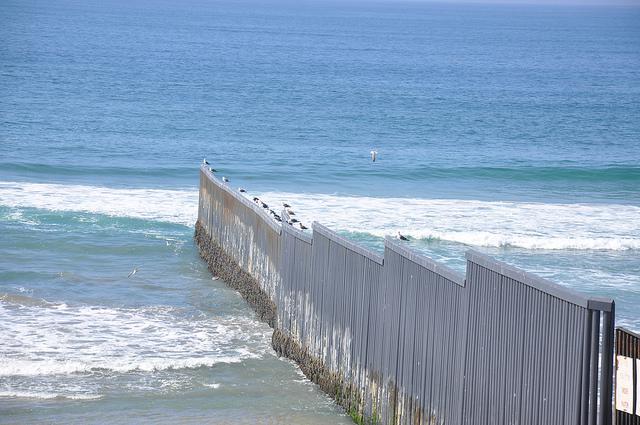 Along the U.S.-Mexico border, fencing stretches into the Pacific PHOTO/BBC World Service/Creative Commons
By legitimizing exclusionary border policing regimes in the U.S. and EU, groups like Human Rights Watch and Amnesty International contribute to ongoing humanitarian crises
The deaths of unauthorized migrants have long scarred the U.S.-Mexico borderlands. But as evidenced by a single incident on Sunday, April 19, the Mediterranean is the global epicenter of such fatalities.
An estimated 850 migrants—from a variety of countries, including Eritrea, Syria, Sierra Leone, and Bangladesh— perished when their less-than-seaworthy vessel capsized in the waters between Libya and the Italian island of Lampedusa. According to one report, “authorities described a grisly scene of bodies floating and sinking in the warm waters, with the majority of the dead apparently trapped in the ship at the bottom of the sea.”
In response, Italy’s prime minister, Matteo Renzi, borrowed a page from the talking points of U.S. authorities by pointing the finger at migrant smugglers. Using words that obscure how the growing strength of the European Union’s border policing apparatus—what many call “Fortress Europe”—effectively requires migrants to rely on professional smugglers and take ever-riskier routes to reach their hoped-for destinations, Renzi called smugglers “the slave drivers of the 21st century.”