
by FREDERIC LORDON
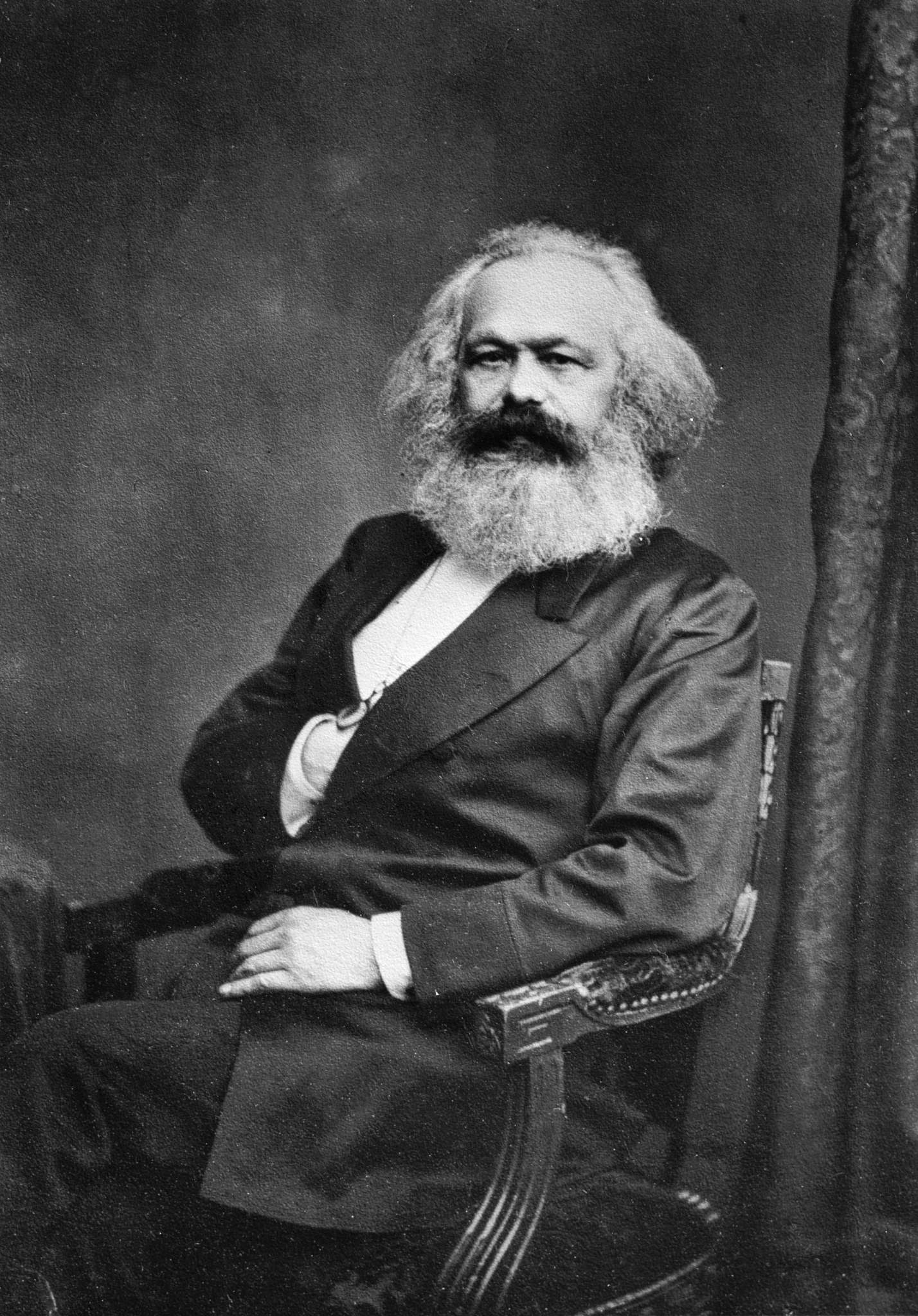 German philosopher Karl Marx IMAGE/Wikipedia
Thomas Piketty’s thousand-page economics bestseller reduces capital to mere wealth — leaving out its political impact on social and economic relationships throughout history
Thomas Piketty’s global renown shouldn’t stop us from asking some hard political questions — or rather questions about his intellectual and political deception. The media have been almost unanimous about his Capital in the Twenty-First Century (1), proof in itself of the book’s total innocuousness. The world would have to have changed a great deal for Libération, Le Monde, the New York Times, the Washington Post and many more to be so enthusiastic about anything actually controversial. Some English-language media, helped by less than progressive reservations, have managed to keep their heads: the Financial Times took Piketty to task on an obscure statistical point; Bloomberg ran a front cover last May in the style of a teen magazine, showing Piketty as a heartthrob surrounded with stars.
One thing is for sure: only favourably disposed media could hail Piketty as a “21st-century Marx” simply because he calls his book Capital. He admits he has “never managed really” to read Das Kapital (2) or any other works of Marx, does not set out any theory of capitalism, and makes no attempt to challenge its basis (3).
We should not ignore the book’s merits. Every commentator must be impressed by the scale and quality of Piketty’s statistical work. But its principal virtue lies in the fact that it is a book. Most economists, driven by the need to publish, have unlearned the skill of writing books. Instead, they produce technical papers (not longer than the 15 pages allowed by academic journals) so standardised that they lose all meaning. Capital in the Twenty-First Century is the thousand-page culmination of 15 years of dedicated toil. The usefulness of social sciences is never so clear as when they contribute to the political debate with solidly established facts.
But all the methodological rigour in the world will not make up for the most basic deception, so obvious that it has passed unnoticed: the title. Piketty tells us he is going to discuss capital. He is aware that a well-known author has written a book about it before him. He seems to think “I can get away with this”. Unfortunately, it does matter: it’s fine to call a new book Critique of Pure Reason provided you are not writing about, say, herbal medicine.
Just what is capital? Piketty, not having really read Das Kapital, is only able to give a very superficial definition: the wealth of the wealthy. To Marx, capital was something else entirely, a mode of production, a complex social relationship which, crucially, adds employment relationships to the monetary relationships of simple market economies. These are based on private ownership of the means of production and on the legal myth of the “free worker”, who is deprived of any means of making a living independently and therefore forced to hire himself out to survive, and to submit to domination by an employer.
Le Monde Diplomatique for more