
by EVIE PAPADA
 PHOTO/Joseph Kesisoglou/Flickr
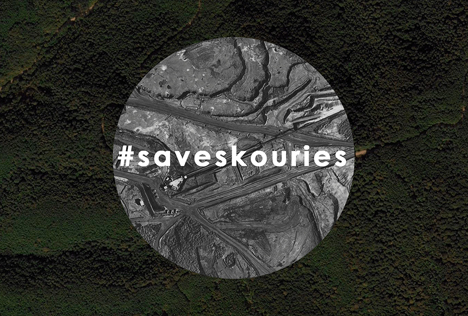
The Skouries forest in Chalkidiki has been at the centre of a hotly contested dispute between the mining company Hellas Gold, a subsidiary of the Canadian mining giant Eldorado Gold, and local communities. The company claims that an ambitious plan for mining gold and copper in the area – involving deforestation, open pit mining and the everyday use of explosives – will benefit the region through the creation of some 5000 direct and indirect jobs. Local residents, on the other hand, argue that the planned investment will cause considerable damage to the environment and livelihoods, resulting in many more job losses in existing sectors of the local economy (farming, fisheries, beekeeping, food processing and tourism). The residents’ claims are further supported by research that various independent scientific institutions have conducted, such as the Aristotle University of Thessaloniki and the Technical Chamber of Macedonia. In addition to questions of legitimacy raised by the transfer of mining rights from the Greek state to the aforementioned company, the Environmental Impact Assessment that Eldorado produced has been found to contain gross methodological discrepancies, whilst the public consultation process has been described as cosmetic.
…
Adding to the contentious issues hovering over livelihoods and the environment, the case of mining in Chalkidiki took on a pronounced political dimension in December 2003. This followed the Greek parliament’s ratification of a law allowing the transfer of the mines from their previous private owner to the Greek state for 11 million euros. However, the mines were sold the same day, for the same price, to George Bololas, owner of Hellas Gold. Since there was no open procurement process, the transaction breached European Union legislation. The concessions granted relieve the company of any tax transfers and from any financial obligation concerning environmental damage resulting from the previous operation of the mines. It also stipulates that the mining company has possession of all minerals – there are to be no royalties for the state.
The European Commission deems the terms of the contract as amounting to illegal state aid in favour of the company and has ruled that the Greek government should pay a fine of 15.3 million euros, plus interest. In addition, the European Court of Justice deems the Environmental Impact Assessment (EIA) produced by the company to be in adequate, for having failed to meet the requirements laid out in the Framework Directive 60/2000/EK regarding Community action in water policy. The Directive indicates that mining activity can be sustainable only if it does not alter the character of a region, and developmental if it is carried out in the overall interest of society. The Greek government has appealed the decision and the case is still pending. Despite the court decision and strong criticism, the EIA was finally approved and in March 2012, 4.1 square kilometres of public forest were put aside for the company to begin the implementation of the mining projects.
Eurozine for more