
SCROLL STAFF
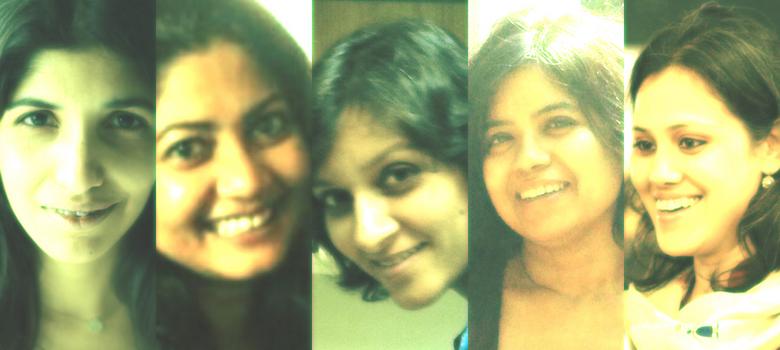
English-language publishing in India is probably the only industry in the country where women dominate the top positions at several of the leading publishers. Does this mean they do things differently from men?
We spoke to five of the women publishers: Chiki Sarkar of Penguin Random House India; Diya Kar Hazra of Bloomsbury India, Karthika VK of HarperCollins India;, Sayoni Basu of Duckbill Books; and Poulomi Chatterjee of Hachette India.
On whether having a woman as publisher influences the choice of books published, and whether women publishers do things differently from men.
Sarkar: I have never considered this. I am sure it does, though not in the obvious ways. Having girl publishers doesn’t mean only a certain kind of novel or cookbooks, etc., get published. Publishing is about individual tastes, not gender – and this question is relevant in that sense. The person who’s buying determines tastes.
Kar Hazra: We have enough male colleagues to strike a balance, actually. For our international trade list, the manuscripts we want to buy are read and discussed by all of us before a decision is taken. In any case, agents tend to approach the right editor for a particular book, gender notwithstanding – someone who will best understand and love the work. Though I think it’s more about the individual than gender, women are largely better at empathy and at adapting, at not letting their ego get in the way of decisions.
Karthika: I don’t think there is any overt or conscious decision-making based on gender. Remember there is a team that decides, not an individual, and there are as many men as women who constitute that team. I can only think that male and female editors bring very similar qualities to their work: an open mind, a nuanced awareness of the world, an ability to cut through to what matters, to identify and rectify dissonance, and a genuine warmth and empathy when it comes to writers and their work. I don’t think a male-female stereotype works when it comes to any of these. But yes, perhaps my style of management is shaped in some ways by my gender. I know I empathise when a colleague needs to work from home because her kids need her, or when someone needs to take a parent to the doctor or even just take some time off for themselves – and perhaps that has something to do with my responding, in these situations, not as a manager so much as a manager who is also a mother, daughter, wife.
Basu: Not consciously. If anything, in the field of publishing for children and young adults, one is consciously looking for male authors and male protagonists because there tend to be fewer of those. And common wisdom says boys will only read books about boys (not proven in our experience, but who knows?).
Chatterjee: I don’t think it affects the choice of books in any way. The choice has to do with having read widely and the kind of list that one would want to publish or the publishing philosophy. There’s no bias in general, but there might be a deliberate choice in some cases – a certain kind of book that I would want to publish because it’s an issue I would want written about. So it might make that choice because I’m a woman. But that’s not to say a man in my place wouldn’t feel strongly about the same issue. I don’t think the difference is by virtue of being a woman but by virtue of being the person one is. It’s not a gender-based difference. Any differences in functioning, in decision-making, aren’t necessarily gender-based but a matter of individuality or how each person leads or works in a team. However we function, the decisions we take – whether it’s about the books we publish or financial or business decisions or even building a team – would have to give good results for the company.
Scroll for more
(Thanks to Mukul Dube)