
by A. G. NOORANI

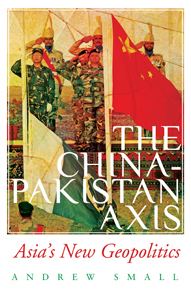 BOOK IMAGE/Hurst
The relations between India, China and Pakistan are poised on the cusp of complex and shifting equations. But India seems bent on repeating the mistakes of the past.
“No country can choose its neighbours, and a distant relative may not be as helpful as a near neighbour,” Prime Minister Li Keqiang said in his speech to the Indian Council of World Affairs in New Delhi on May 21, 2013. Its theme was “Seize the New Opportunities in India-China Cooperation”.
The greatest challenge that India has faced since Independence is not so much its relations with the United States or Russia as its relationship with its neighbours. Jawaharlal Nehru, besotted on a global role, ignored this truth. His successors did no better. Most important among the neighbours are Pakistan and China. They have been in a tacit alliance for half a century. With each India is locked in a major dispute that is very susceptible to a fair solution without the slightest detriment to its national interest. The Four-Point formula on Kashmir is based on the State’s membership of the Union of India. On the boundary dispute, each side has its vital, non-negotiable interest securely in its exclusive control; India has the McMahon Line and China has the Xinjiang-Tibet highway. Yet, there is little sign of movement on either dispute. As ever, India expects the “other side” to climb down.
New situation, same mindset
It is little realised that India faces very nearly the same situation that it did in 1959, when Nehru was the Prime Minister, and the signs are that the mistake he made then might well be repeated in 2015. When, on February 22, 2014, Narendra Modi said at a party meeting in Guwahati that “China should shed its expansionist mindset and adopt a policy of development” (The Hindu; February 23, 2014), he revealed only his own mindset and, incidentally, the limitations of his own understanding in such matters. China needs no patronising lectures on “development”.
Shortly after the issues in the boundary dispute were joined in January-March 1959, and well before they erupted in public in August 1959, China’s Ambassador Pan Tsu-li read out to Foreign Secretary Subimal Dutt a formal statement couched in language so unusual, with proverbs and all, as to suggest Mao Zedong’s draftsmanship: “We cannot have two centres of attention, nor can we take friend for foe.… Friends! It seems to us that you too cannot have two fronts. Is it not so? If it is, here then lies the meeting part of our two sides.” He ended with his “best regards” to Nehru who replied in a manner appropriate to his Headmaster at Harrow. On May 23, Dutt read out a statement, drafted by Nehru, upbraiding the Ambassador for breach of “diplomatic usage and the courtesies due to friendly countries”. He sharply attacked China (White Paper I; pages 73-78). India drove China into Pakistan’s embrace with lasting consequences. This need not have happened.
Significant changes in situation
The situation has changed in significant respects. Now, China seeks friendly engagement with the U.S. while pursuing its major disagreements with it. It is no longer hostile towards Pakistan but embraces it as an ally. But it seeks also, as it did in 1959, conciliation with India. In 1959, India had close relations with the Soviet Union. It now seeks a virtual alliance with the U.S. After the successive visits of Presidents Xi Jinping and Barack Obama to India, many feel that India is all set for a virtual alliance with the U.S., which lost no time in presenting a set of agreements with strategic military implications for India to sign. The reference to the South China Sea in the U.S.-India Joint Strategic Vision Document of January 25, 2015, was ill-advised. It was in the U.S.’ interest to secure India’s concurrence as it confronts China there. It is certainly not in India’s interest to go along with the U.S. on such an issue. Do we, indeed, have a joint strategic vision with the U.S.? Think alike?
No two situations are identical. China needs India’s friendship. India needs friendship with China as well as with the U.S. Non-alignment has become a dirty word because Nehru, the author of the credo, is hated by the Sangh Parivar for his espousal of secularism and is derided by foreign policy “experts”. Voluble Ministry of External Affairs retirees and their friends in the media share the feeling because they wrongly imagined that this quintessential hardliner and unilateralist, to boot, was an “idealist” and a “romanticist”. The policy that Nehru pursued ignored Pan Tsu-li’s warning with disastrous consequences that are still with us.
Neurotic response
India’s response to the Sino-Pakistan entente is a blend of the neurotic and the slick. It refuses to accept the reality of an entente that it did no little to establish, and it tries to weaken, if not break it, by stratagems too clever by half. Only a starkly realistic approach can yield good results. The “all-weather friendship” of old, “higher than the mountains and deeper than the oceans”, is much the weaker for wear and tear. But it remains strong because it is stuck by the most enduring cement—national interest. It would be foolish to try to split the two by flaunting the card of terrorism.
Frontline for more