
ARCHAEOLOGY EDITORS
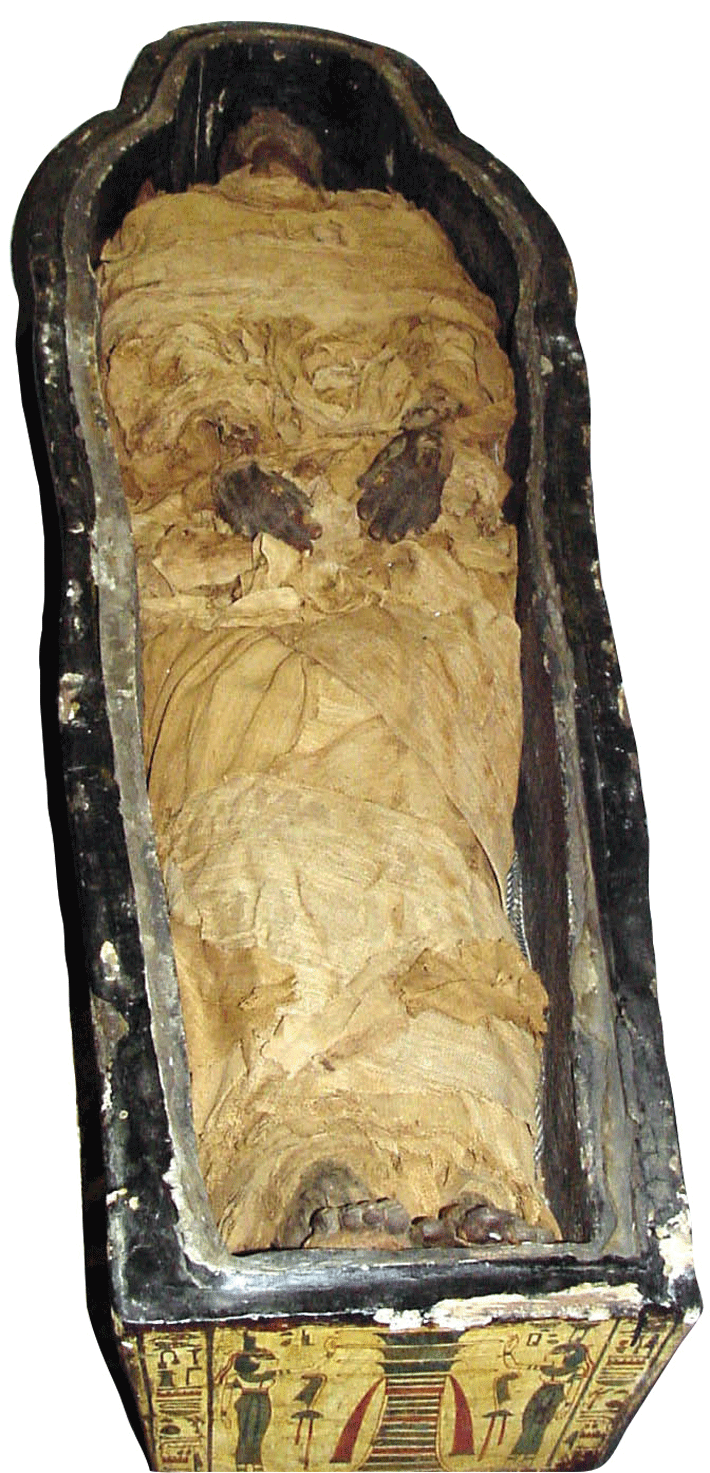 Egyptian mummy PHOTO/© Leeds Museums and Galleries, Leeds City Museum/Archaeology
Ever since the discovery of the largest known Greek tomb was announced in August, archaeology buffs around the world have been eagerly awaiting each successive bit of news from the site. The Amphipolis tomb, which dates to the time of Alexander the Great, is a prime example of how archaeology can captivate the public imagination and easily earned a spot on our list of the Top 10 Discoveries of 2014.
Equally impressive was the discovery, after decades upon decades of searching, of a ship that sank in Arctic waters in present-day Canada almost 170 years ago while looking for the Northwest Passage. That find was deemed so momentous that Canadian Prime Minister Stephen Harper took it upon himself to make the official announcement.
Archaeologists were also hard at work in the lab squeezing as much insight as possible out of limited evidence. Analysis of 6,000-year-old funerary wrappings established that ancient Egyptians practiced artificial mummification much earlier than had been thought. Genetic material from a skeleton found in an underwater cave in Mexico helped shed light on the relationship between the first people to arrive in the Americas and modern Native Americans. And a clever approach to interpreting the genome of Neanderthals revealed factors beyond the raw genetic code that explain how they differed from modern humans.
Archaeology for more