
DEUTSCHE WELLE
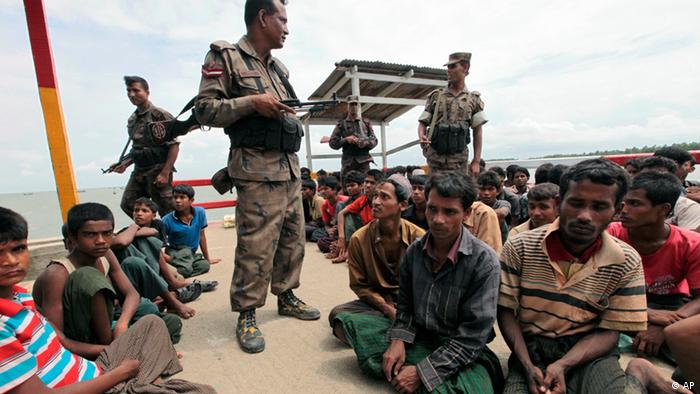 Rohingya who refuse the plan ‘may face years of life in locked down camps unless they decide to flee,’ says Robertson
Myanmar recently confirmed to the United Nations that it is on the verge of completing a plan that would grant Rohingya Muslims citizenship if they change their ethnicity to suggest Bangladeshi origin.
Foreign Minister Wunna Maung Lwin told AP that his government has started a “verification process” to enable the mostly stateless minority who has been in Myanmar for many generations to become naturalized citizens. But he says the government is still not recognizing the Rohingya as a group.
Myanmar’s government – which to date has refused to grant the majority of them citizenship – describes the estimated 1.1 million Rohingya as “Bengali,” a term which many members of the minority group object to strongly. Many Rohingya live in Apartheid-like conditions in Rakhine state on the western coast of the predominantly Buddhist country. Since sectarian violence erupted in 2012, an estimated 140,000 displaced people – mostly Rohingya – have been living in camps.
In a DW interview, Phil Robertson, deputy Asia director of Human Rights Watch (HRW), slams the government plan, saying that it is nothing less than a blueprint for permanent segregation and statelessness that appears designed to strip the Rohingya of hope and ultimately force them to flee the country.
DW: What exactly is the Myanmar government offering the Rohingya minority?
Phil Robertson: The Myanmar government is not offering the ethnic Rohingya in Rakhine State very much at all. At the center of the plan is the blatantly discriminatory 1982 Citizenship Law that has kept the Rohingya stateless for decades; an arbitrary and opaque citizenship ‘assessment’ process; and the very likely prospect that most of the over 130,000 Rohingya ensnared in this plan will face years of indefinite detention in locked down, crowded and squalid camps for displaced persons.
For the Rohingya to enter the so-called citizenship verification process, they will be first forced to repudiate their ethnic identity in what is a clear violation of their rights. Put simply, Rohingya can only apply for citizenship under this plan if they agree to adopt the “Bengali” label that they have resisted for years because it connotes that they are coming from outside Myanmar rather than being persons born in the country.
Deutsche Welle for more