
by SAMIR S. PATEL
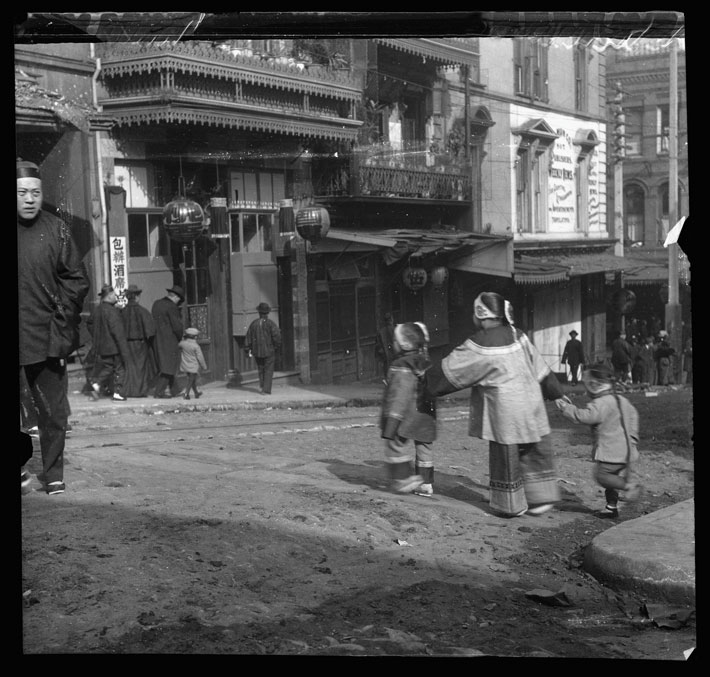 Chinatown, San Francisco, 1896-1906 PHOTO/Library of Congress Prints and Photographs Division, Arnold Genthe Collection
Before the California Gold Rush in the late 1840s, there were perhaps 50 native Chinese people in the United States. Just a few decades later, there were more than 100,000, and seemingly every city, town, and remote mining camp in the West had a Chinatown of its own. Chinese immigrants were exotic curiosities, targets of racism and violence—and an essential part of the labor force that settled the West. They left little written history, but dozens upon dozens of archaeological sites and collections are now enriching our understanding of how the first Chinese Americans negotiated life in a strange and sometimes hostile land.
Most of the nineteenth-century Chinese immigrants came from an area the size of Rhode Island—Taishan County, in the southern province of Guangdong, which had suffered the dual indignities of the Opium Wars and the Taiping Rebellion in the 1840s and 1850s. The opening of trade relations between China and the United States, and the discovery of gold in California, spurred the first surge of immigration. In 1852 alone, more than 20,000 Chinese people passed through San Francisco’s Golden Gate. Many found relative safety, comfort, and job opportunities in Chinatowns, which grew first in the cities and then appeared on the frontier as Chinese laborers pursued work in railroad construction, mining, lumber, agriculture, and other industries. Their population in the United States declined following the Chinese Exclusion Act of 1882, which prohibited new immigration, and would not rebound until the restrictions were lifted 60 years later, starting a second wave of Chinese immigration that has since brought their numbers north of three million.
Archaeological investigation of Chinatowns and Chinese neighborhoods began in the 1970s, with digs at sites such as Ventura, California, and Lovelock, Nevada. There were more in the 1980s and 1990s: Sacramento, San Francisco, Oakland, Los Angeles, San Jose, and others. But most of this early work was cultural resource management—digs related to construction or roadwork—and generated little analysis or scholarship.
Archaeology for more