
by JOSEPH NEVINS
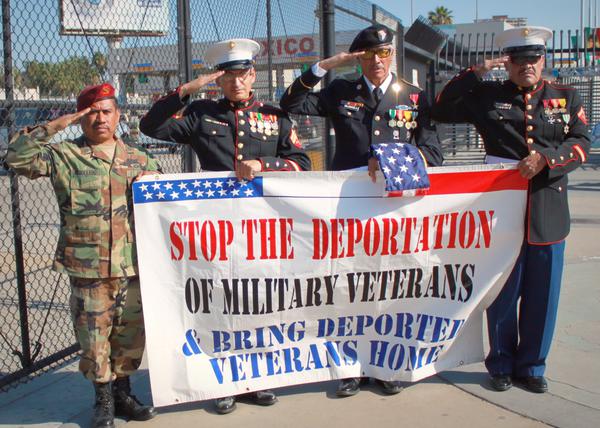 At the San Ysidro-Tijuana Border Port of Entry, San Diego PHOTO/April Arreola/Creative Commons
The ongoing attack on Bowe Bergdahl, the captive U.S. Army sergeant exchanged on May 31 for five Afghan prisoners held at the Guantanamo Bay Naval Base, demonstrates the lengths many in the United States are willing to go to persecute those perceived to have undermined U.S. war efforts. Having disappeared from his army base in 2009, Bergdhal has since been ridiculed for his alleged frustration with the U.S. war in Afghanistan. However great the importance of this case, the Bergdahl controversy should not obscure one of the most egregious of the systematic and official forms of what is effectively the disposal of U.S. soldiers: the deportation of veterans who are not U.S. citizens.
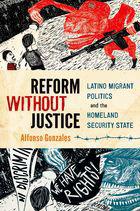
Like deportations in general, the number of military veterans sent into exile has ballooned since the mid-1990s. Changes in U.S. law in 1996 greatly expanded the number of deportable offenses, while eliminating the ability of judges to exercise any discretion in the vast majority of cases. Combined with a congressionally imposed quota that requires that ICE maintain 34,000 detention beds for immigrants daily, this has led to many more veterans falling within the deportation regime’s crosshairs. In his recently published and important book, Reform Without Justice: Latino Migrant Politics and the Homeland Security State, political scientist Alfonso Gonzales opens with the story of one such veteran. His name is Bernardo, someone Gonzales met in Mexico City in November 2010 at a protest against U.S. immigration policy.
At the age of one, Bernardo and his family migrated from the resort city of Cancun to the United States. From that time, he lived what he characterized as “an American life.” He eventually joined the U.S. military and was deployed to the Persian Gulf during the 1991 war.