
by NINA MARTYRIS
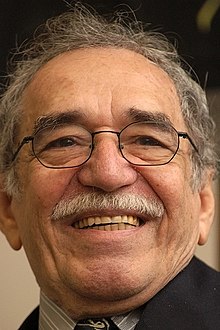 Columbia’s Gabriel José de la Concordia García Márquez. PHOTO/Wikipedia
Reading Gabriel García Márquez’s morbidity in the happiest country on earth.
Gabriel García Márquez spent his best years as a journalist in two spectacular cities on Colombia’s Caribbean coast: Barranquilla and Cartagena de Indias. In January, I visited them on a cultural reporting fellowship established by García Márquez’s New Journalism Foundation and the Ministry of Culture Colombia, which brings together twenty writers from around the world to the cities that nourished the author’s literary vision. First to Barranquilla, where García Márquez joined the literary Barranquilla Group, fell in love with the “tough old broad” Virginia Woolf, and lived in a brothel grandly called Residencias New York—the brothel being the ideal place for a writer, according to his other great hero, William Faulkner. Then to Cartagena, once an imperial market for slaves and gold, where he arrived on the roof of a truck as a homeless twenty-one-year-old with four pesos in his pocket and a suitcase of dirty clothes and books of poetry. The truck driver yelled after him, “Be careful, they give medals to assholes there.”
Today, García Márquez owns seven homes in five countries. His journey from what Colombians call a “super-poor” person to a “mega-rich” one makes him one of the few people to have experienced both the crushing poverty and fabulous wealth that divides his country so starkly. For the last two decades, he has been the absentee landlord of a modish, red-walled house in Cartagena. Literary stalker types, including this reporter, sneak up to the terrace of the adjoining Hotel Santa Clara to stare into the casa’s empty compound and swimming pool. The hotel, housed in a four-hundred-year-old Franciscan convent, is where García Márquez set his eerie little novel Of Love and Other Demons. A gentle prod to the imagination, and the long red walls of the house undulate into the 22-meter “stream of living hair the intense color of copper” growing out of the skull of the young girl buried in the convent’s crypt.
If Barranquilla is a city of migrants—a port at the confluence of the Caribbean and the River Magdalena that served as a haven for Europeans fleeing World Wars I and II—Cartagena is Tourist Central. In January, its beautiful walled Old City, with Spanish houses burdened with bougainvillea and chic little restaurants, was overrun with visitors. A sunburned American complained loudly about the price of a shrimp salad in the sunlit square outside the Palace of the Inquisition, which was itself criticized for not having enough quality torture weapons; as one tourist on TripAdvisor grumbled, the museum had nothing that Mel Gibson hasn’t already shown us in Braveheart. Meanwhile, the seaport of Barranquilla was preparing for carnival, an annual four-day eruption of masks, booze, parades, and dancing that is named by UNESCO as a world masterpiece of intangible heritage. Costumes range from the traditional elephant-trunked Marimonda to more risqué getups, such as that of the youngster who appeared topless with pre-op marks sketched neatly across her torso to critique the national obsession with breast implants.
Guernica for more