
by A. G. NOORANI
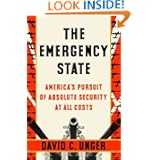
A damning critique of the United States’ militarist mindset which governs its foreign policy and entails violations of civil liberties.
The imperative necessity for safeguarding these rights to due process under the gravest of emergencies has existed throughout our constitutional history, for it is then, under the pressing exigencies ofcrisis, that there is the greatest temptation to dispense with fundamental constitutional guarantees which, it is feared, will inhibit governmental action.
372 U.S. 144 at 164 (1963)
THE United States Supreme Court, packed by successive Republican Presidents, has often departed radically from its own earlier rulings. Those rulings bear recalling today because the record of the Supreme Court of India on the Terrorist and Disruptive Activities (Prevention) Act (TADA), the Armed Forces (Special Powers) Act (AFSPA), the Prevention of Terrorism Act (POTA) and like issues has been worse than pathetic precisely because they are laced with eloquent rhetoric on freedom, while curbing freedom. The Supreme Court of Canada has upheld the values of freedom while deciding laws on terrorism. So, in recent years, did the House of Lords, now the Supreme Court of the United Kingdom.
However, a cold war between adversary states can have an equally harmful impact on civil liberties. The state uses the conflict for political mobilisation at home and the people, inflamed by official propaganda and chauvinistic media, develop a siege mentality. This is true of the U.S. today and also of the states of South Asia.
David C. Unger has been editorial writer at the solidly pro-establishment paper The New York Times for more than 30 years and a member of its editorial board for over 20 years. He teaches courses on American foreign policy at a prestigious university and is a member of the Council on Foreign Relations. All the more impressive and damning are his critiques of America’s militarist mindset which governs its foreign policy. His criticisms on foreign policy go hand in hand with his censures on violations of civil liberties. “The emergency state took on its present contours in the days of Franklin Roosevelt, Harry Truman and Dwight Eisenhower,” he recalls.
Barack Obama is no better. Unger writes: “Three years into the Obama administration, emergency state thinking and habits continue to damage our democracy, weaken our economy, and poison our international relationships. As candidate, Barack Obama talked eloquently about the importance of Presidents acting in accordance with the Constitution and the rule of law, and promised a new relationship with the world. But as President, Obama has addressed only a handful of Bush’s most flagrant constitutional abuses while building his core foreign policies around the familiar emergency state model.
“The assumptions and institutions of America’s emergency state have been nurtured by thirteen successive presidential administrations, seven Democratic and six Republican. Its practices and values have been sustained, and continue to be sustained, by glib overreaching formulas for national security that politicians and foreign policy experts have trained voters to demand from all candidates for national office.”
John Quincy Adams was Secretary of State under President James Monroe (1817-25). In a Fourth of July address in 1823 he said, “America goes not abroad in search of monsters to destroy. She is the well-wisher to the freedom and independence of all. She is the champion and vindicator only of her own. She will recommend the general cause by the countenance of her voice, and the benignant sympathy of her example. She well knows that by once enlisting under other banners than her own, were they even the banners of foreign independence, she would involve herself beyond the power of extrication, in all the wars of interest and intrigue, of individual avarice, envy, and ambition, which assumed the colours and usurped the standards of freedom…. She might become the dictatress of the world. She would be no longer the ruler of her own spirit.”
That is precisely what has come to pass. The U.S. had three historic opportunities for statesmanlike cooperation with the Soviet Union, and later Russia, for a stable world order—in 1945 at the end of the Second World War; in 1989-91 at the end of the Cold War; and at the turn of the century when Russia supported the U.S. in Afghanistan after 9/11. But the U.S. spurned even the North Atlantic Treaty Organisation’s (NATO) offer in 2001 and decided to go it alone, after 9/11, using its NATO allies as retainers. It also exacted a toll on democracy at home.
Move against American Japanese
The most sweeping wartime preventive detention programme was the internment of some 1,10,000 Japanese Americans, most of them born in the U.S. and American citizens. It was personally authorised by Roosevelt in Executive Order 9066 of February 1942, urged on by Secretary of War Henry L. Stimson and California Attorney General Earl Warren. Under the same executive order, several thousand German American and several hundred Italian American resident aliens were also interned.
“The shock of Pearl Harbour, like the shock of 9/11 sixty years later, unleashed panicky public fears that played on deeply rooted prior prejudices and required no supporting evidence. Roosevelt did nothing to resist those fears, even though Hoover and others assured him that the Japanese American population as a whole posed no real security threat.” The U.S. Supreme Court dutifully upheld the barbaric act.
Truman laid the foundations of an emergency state in peace time. “Breaking with American tradition, Truman flexed war-rooted presidential powers in the succeeding years of peace. He kept the unlimited state of national emergency Roosevelt had proclaimed in 1941 in full force until 1947. He kept most of its emergency provisions in effect throughout his term and bequeathed them to his successors. The emergency state never ended. Cold War Presidents from both parties thought of themselves and acted as war Presidents. And so have the four Presidents who have held office since the Cold War ended.
“Harry Truman created something new in America, something we live with today, something that connects our wars in Iraq and Afghanistan with our trade and budget deficits, with the disproportionate growth of the financial sector over the past four decades, and with today’s unsustainable foreign borrowing. Truman’s decision in these years created the peacetime emergency state. Unlike the wartime emergency state the peacetime variety has no logical termination, no moment when the emergency clearly ends and normal constitutional procedures come back into force. A new, security-based set of justifications for expanded presidential powers in peacetime was born.”
Days after Germany invaded Russia in June 1941, Truman advised: “If we see that Germany is winning we ought to help Russia and if Russia is winning we ought to help Germany, and that way let them kill as many as possible, although I don’t want to see Hitler victorious under any circumstances. Neither of them thinks anything of their pledged word.”
Frontline for more