
by DR. SAROJINI SAHOO
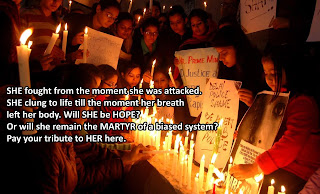
In the wake of the gang rape of a student on a moving bus in Delhi, on 16 December 2012, the public anger in the form of protests took place at India Gate, Raisina Hill, and Jantar Mantar in the Indian capital city of Delhi, and in other urban and rural areas of the country. These are the first mass agitations to support women’s right. For too long, women in India have been viewed as second-class citizens, always expected to walk a few proverbial steps behind their male partners. Not only in public, but in homes as well, violence against women is an all-too-common occurrence. But still feminism is not a popular term in India.
On the other hand, different governments in India have claimed that their steps to empower women have been successful. I remember few months ago, seven women entrepreneurs proudly declaring in front of the public that there was no need of any feminist ideas anymore because the Indian women have already been empowered.
In my articles, I have discussed at length that Indian feminism needs a different perspective from the one that is applied in the Western countries. The Indian feminism should be rooted here.
……….
The topic of sexual violence against females has never received a serious thought. In the Indian Penal Code – rapes, kidnappings and abductions, dowry deaths, domestic violence, torture (both mental and physical), molestations, sexual harassments are some of the crimes that come under VAW or Laws Relating to Violence Against Women. Other offences like determining and aborting of female fetuses, and demanding and harassing for dowry falls under the Gender Specific Laws. Indian Constitution, under Article 14, guarantees “equality before the law” and “equal protection of the law”. It empowers the State to take affirmative measure for women under Article 15 (3). All gender specific laws find their genesis under this Clause. Article 21 guarantees the right to life with dignity and without violence for every citizen. Directive Principles of State Policy, under Article 39, enjoins the State to provide adequate means of livelihood for men and women, equal pay for equal work for both men and women, and ensure just and humane conditions of work and maternity relief for women.
Despite the ostensible acceptance of women’s rights in the eyes of law and Constitution, the violations against women do not only exist, but are also on the rise. The latest available statistics compiled by the home ministry’s National Crime Records Bureau show that between 1953 and 2011, the incidences of rape rose by 873 per cent, or three times faster than all cognisable crimes put together, and three-and-a-half times faster than murder. InIndia, a woman is raped every 22 minutes, and a bride burnt for dowry every 58 minutes. The police last year registered 42,968 cases of molestation of. The number of crimes recorded against women, including sexual harassment, cruelty by husband or his relatives, kidnapping or abduction, and human trafficking, exceeds 2,61,000. Shocking as these figures are, they are actually a gross underestimation of the actual number, because crimes against women are highly under-reported.
Section 375 of the Indian Penal Code (IPC) defines that if a man has sexual intercourse with a woman below the age of 16, with or without her consent, he is guilty of rape. A nominal punishment is provided if the wife is between 12 and 15 years of age, or is living separately from him. Apart from ‘consent’, the other determinant for rape, according to the law, is that there must be a penetration of the woman’s vagina by the penis only. Penetration with any other object, be it life-threatening (a knife, an iron rod, etc), though more physically harmful, is not to be considered a rape. In that sense, the penis is accorded a privileged position in comparison with other objects. The act of penis penetration is based on the control men exercise over their women. In other words, the priority given to penetration by the penis, over all other forms of penetration, is historically based on the need to defend the rights of the legitimate father, rather than the woman’s physical integrity. The act of rape violates the father’s rights, as it leads to pregnancies by other men, and threatens the patriarchal power structures.
Feminine Fragrance for more