
by THUSHARA DIBLEY
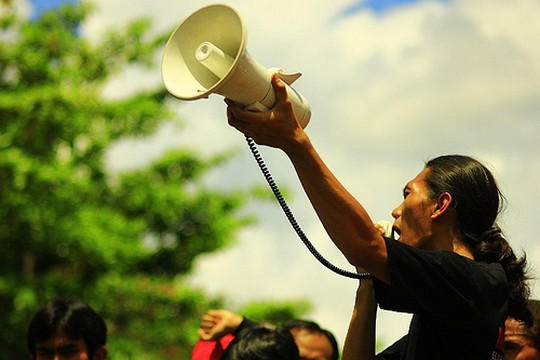 An activist at a protest in Yogyakarta in March 2012. Does social media replace the megaphone for activists in Indonesia today? PHOTO/Vito Adriono
Indonesia is Facebooking, Twittering and blogging, but what effect is this having on campaigns for social justice?
Indonesia is online. The number of Indonesians using the internet increased from two million in 2000 to over 55 million in 2012, the fourth largest number of internet users in Asia (after China, India and Japan).
This phenomenal growth in access to the internet has been supported by a rapidly growing economy as well as the widespread uptake of mobile phone technology. In 2011 a Nielsen report indicated that 48 per cent of Indonesia’s internet users went online via their mobile phones and another 13 per cent used some other type of handheld device.
Indonesian ‘netizens’ have also keenly taken to new social media sites like Facebook, Twitter and the blogosphere. In fact, Indonesians are the fourth biggest users of Facebook and the fifth biggest users of Twitter worldwide. Globally, these sites have received increasing attention as tools for activism. The Arab Spring protests, the Kony 2012 phenomenon and the Occupy Movement are frequently cited as examples of movements facilitated by the internet. But to what extent have these tools been used by activists in Indonesia? Have they taken up online mediums to campaign for change? If so, how successful are their efforts?
This edition provides a snapshot of the multitude of ways that Indonesian activists, politicians and ordinary citizens use new social media as a tool for activism. The contributors to this edition explore the diverse ways that this popular medium is used to affect change, but also question its effectiveness as a means to address issues of social justice.
Inside Indonesia for more