
by JULIA SURYAKUSUMA
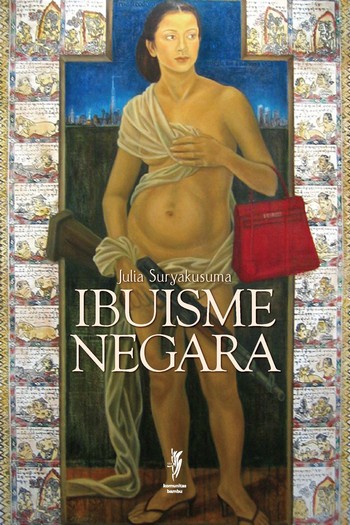
In authoritarian contexts, the state seeks to control its subjects and deploy them to support regime goals. Indonesia’s New Order, often labelled an ‘authoritarian developmentalist’ regime, prioritised economic development. Politics was therefore seen as a risk to national stability, which the regime saw as a prerequisite for that development. Making up half of the population, women – including poor women – were depoliticised and mobilised to support the New Order’s developmentalist goals through a series of highly interventionist state institutions.
Under Suharto’s New Order, a corrupt and oppressive state therefore came to dominate all aspects of life – including the social construction of womanhood. In 1988, I wrote an MA thesis about this, called ‘State Ibuism: the Social Construction of Womanhood in New Order Indonesia’. The first gendered analysis of the New Order, the thesis was an attempt to look at the inappropriateness for poor village women of state-engineered programs imbued with middle-class values. In it, I argued that while women were not taken into account in formal politics, the social and political engineering of women was, in fact, an integral part of the New Order State’s stranglehold on Indonesian society. The dominant gender ideology defined women as wives and mothers, as epitomised in Dharma Wanita, the state-sanctioned organisation for civil servants’ wives. In the formal hierarchy of this nation-wide institution, the positions held by women paralleled those held by their husbands.
State Ibuism and was finally published in September 2011 as a bilingual book, in both the original English and an Indonesian translation. But why bother publishing it at all now? Haven’t we come a long way from the days of Suharto’s New Order? How is State Ibuism still relevant to present day Indonesia?
Public discourse and institutions in Indonesia have shifted significantly since I wrote State Ibuism almost a quarter of a century ago. But don’t be fooled. The mechanisms and outcomes of governmental control are still strikingly similar. ‘Gender’ is still essentially a mobilising force for programmatic intervention and social control (or neglect, as in the case of migrant domestic workers). Despite everything that has happened, women are still objects socially constructed to fit within a certain hierarchical and patriarchal order.
Inside Indonesia for more