
by KATHLEEN MCGUIRE
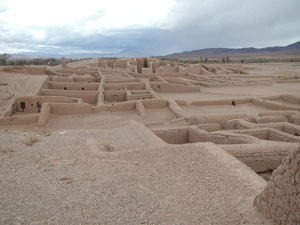 Paquimé (also called Casas Grandes) is one of northern Mexico’s largest and most well-studied sites. PHOTO/Randall McGuire, Binghamton University
As the young daughter of an archaeologist in the late 1990s, I was raised to understand that Indiana Jones is no more real than Luke Skywalker. I had been on digs and spent hours in my father’s lab where I concluded that, no matter what my classmates thought, my father was just another boring scientist, even if he did wear cowboy boots and skipped the lab coat. Adolescent that I was, I was similarly unimpressed with his work south of the U.S. border in northern Mexico. I knew nothing of the lawless Mexico that people saw on television because my own visits were graced with warm tortillas, birthday piñatas, kind faces, and Coca-Cola in tiny glass bottles. It was at the Thanksgiving table, then, when I was 14, that I first discovered my father’s job might actually be dangerous.
During the holiday season, my family always hosted the many archaeology graduate students from Binghamton University in upstate New York, where my father, Randall McGuire, was and still is a professor. After the dinner of turkey with all the trimmings was cleared, my father would go to the liquor cabinet and produce a bottle of fine tequila. Then he and his students would share stories from the field long into the night.
Archaeology for more