
by NAY EL RAHI
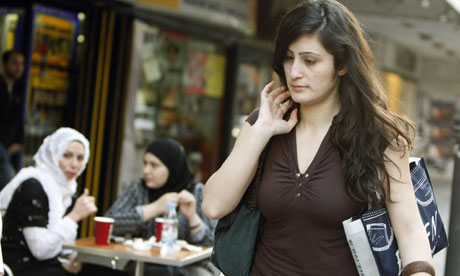 In Lebanon, marriage, divorce, child custody, inheritance and citizenship are all governed by membership of religious groups. PHOTO/Ramzi Haidar/AFP/Getty
You don’t become a Lebanese citizen by being born in Lebanon. Nor is having a Lebanese mother enough – or even living in the country for your whole life. In fact, you’re only recognised as a Lebanese citizen if you belong to one of the country’s 18 legally recognised religious groups. Without belonging to one, you can’t get married or divorced, or resolve child custody or inheritance issues.
Back in 2010, a group of Lebanese friends who wished, they said on the group’s Facebook page, to “live in dignity and equality with other co-citizens”, decided they had had enough. They called on fellow secularists from across the country to take to the streets, to “make their voices heard and put faces behind demands”, say the organisers on Facebook, but most important to celebrate secularism with joy, music and colours bright enough for everyone to notice.
Thus was created Lebanese Laique Pride, a movement that sought to gather the different shades of Lebanon’s secular fabric. The 2010 march marked the start of a campaign for a secular civil state founded on citizenship, that guarantees the expression of the country’s diversity and secures social justice. Their demands included a unified civil personal status law, a non-confessional electoral law and the abolition of institutional sectarianism.
…
Decades later, when Lebanon gained independence in 1943, confessionalism endured, remaining the basic principle of Lebanese life. In practice, it means the president has always been and always will be a Maronite Christian, the prime minister a Sunni Muslim, and the speaker of parliament a Shia Muslim. This also means that seats in parliament are apportioned between Christians and Muslims, and civil service posts follow similar sectarian formulas.
The Guardian for more
(Thanks to Harsh Kapoor of SACW)