
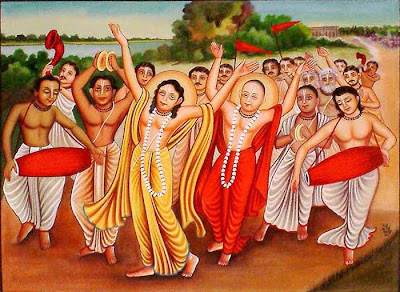
(A Pattachitra painting of Sri Chaitanya Dev)
The Bhakti movement in Indian literature focused on singular devotion, mystical love for God, and had a particular focus on a personal relationship with the Divine. Given their belief in the centrality of personal devotion, poet-saints were highly critical of ritual observances as maintained and fostered by the Brahmin priesthood. Though the Bhakti movement had its genesis in southern India in the 6th century AD, it didn’t gain momentum until the 12th century in the central western regions of India. It then moved northward, coming to an end roughly in the 17th century.
But strangely enough, if we compare the gender basis participation ratio of saint-poets, we find the inclusion of women in this movement was tempered. It is also true that there is little evidence to support any type of revolt against the patriarchal norms of the time. Women bhaktas (disciples) were simply staying largely within the patriarchal ideology that upheld the chaste and dutiful wife as ideal. These women transferred the object of their devotion and their duties as the “lovers” or “wives” to their Divine Lover or Husband. Nonetheless, that their poetry became an integral aspect of the Bhakti movement at large is highly significant and inspirational for many who look to these extraordinary women as ideal examples of lives intoxicated by love for the Divine.
Andal Thiruppavai (a 10th century Tamil poetess), Akka Mahadevi (a 12th century Kannad poetess), Janabai (a 13th century Marathi poetess), Meera Bai of 16th century in Hindi and Madhavi Dasi in that century in Oriya literature were some poetesses who wrote exquisite poetry that has been passed on through bards and singers throughout India. But strangely enough, they had to face the challenge from the patriarchal society, whereas no male poets of their time had to encounter such bitter experiences. These female poets were often blamed by their husbands for acting opposite to marital practices while no evidence was found that the wives of the male poet-saints raised voices against the divine love affairs of their husbands.
Complete Blog here
(Submitted by Sarojini Sahoo)