
Angelina’s contribution to a Third World War: An interview with Milenko Sreckovic
by DJURDJA NIKACEVIC
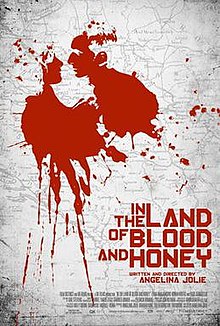
Famous Hollywood actress Angelina Jolie recently directed a movie called In the Land of Blood and Honey in which Serbs are depicted as raping Muslim women prisoners during the Bosnian War. As the movie doesn’t show the conduct of Bosnian soldiers, among the Serbian public it has been characterized as one-sided and anti-Serbian. We now talk to Milenko Sreckovic from Pokret za slobodu (Freedom Fight Movement), a movement that wrestles with consequences of the neoliberal project in Serbia and organizes a horizontal movement of workers and peasants.
Do you also consider this movie to be anti-Serbian?
Angelina Jolie’s movie In the Land of Blood and Honey, together with accompanying statements of the director herself, supports military interventionism against the countries whose regimes aren’t favored by the USA. Her movie is not meant to be against Serbia and the Serbian people, but it is directed against Syria, Iran, and other countries on the USA’s enemy list. Serbs are used in the movie as a well-known symbol for bad guys, originating in the prime of Bosnian war propaganda, but the director’s intention is that the soldiers of the Serbian army should in fact be seen as soldiers of the Syrian or Iranian army — because they are the new enemies against whom there should interventions. They are the ones who are symbolized by the rapists, the bad guys, in her movie.
In her interview with the Balkan branch of Al Jazeera, Angelina Jolie declared that we should reconsider the use of vetoes against “humanitarian interventions” in the Security Council, that the world should intervene in order to stop violence in Syria; and she condemned Russia and China for casting vetoes on the UN Security Council resolution condemning the regime in Damascus. However, Russia and China cast vetoes because their support for the previous intervention for protection of civilians in Libya was misused to take down an inconvenient political faction. It is obvious that the intervention in Libya has only made things worse than before and that the number of civilian victims has increased.
Would an intervention in Bosnia have prevented the war?
In truth, there were interventions in Bosnia and they merely contributed to stirring up existing conflicts. For example, crimes of the Serb Republic army in Srebrenica were a result of the international community’s intervention. In 1993 Srebrenica was declared, by the United Nations Security Council, a safe area inside the Serbian territory. The town, however, wasn’t demilitarized and members of Bosnia and Herzegovina’s army still kept their weapons there. For the following two years they went on killing local Serbian civilians in villages around Srebrenica, using the safe area as a refuge. The UN couldn’t prevent airplanes from bringing weapons because the airspace above Bosnia was under US control. Thorvald Stoltenberg, a UN peace negotiator in Bosnia, personally witnessed the arms smuggling which, in his own words, was conducted by American and Iranian airplanes. Serbs wanted to avenge their compatriots. Since Srebrenica was completely surrounded by Serbian territory, they easily broke into the town, used buses to transport women and children to Muslim territory, and then executed a large number of men who were old enough to participate in armed attacks.
Monthly Review Zine for more
First night: In the Land of Blood and Honey, Berlin Film Festival
by GEOFFREY MACNAB
Courage under fire! Jolie’s debut is not for faint-hearted
In The Land Of Blood And Honey is certainly very gruelling viewing indeed. Aside from a five minute pre-war preface in which the heroine Ajna (Zana Marjanovic) is shown at her easel painting, walking the streets and dancing, it is pretty much an atrocity exhibition all the way through.
Jolie shows an unlikely flair for juddering action sequences and for showing Serbian snipers picking off their prey. There are many moments here that make you wince and turn away your eyes – killings, explosions and rapes. The superstar turned director certainly conveys just how surreal and terrifying the experiences of Bosnian Muslims were when their former friends and neighbours turned against them in such savage fashion.
…
Jolie elicits two very strong performances. Marjanovic excels as the 28-year-old woman, gifted as an artist, ingenuous and kind-hearted, who is suddenly pushed into the most hellish existence imaginable. Goran Kostic (who once played a Polish builder in EastEnders) is also impressive as Danjiel, the Serbian commander who becomes Ajna’s lover and protector. He captures well the character’s chauvinism and his creeping doubts about the fanatical cause that he espouses.
Where Jolie is markedly less sure-footed is in telling a story. The romance between Danijel and Ajna can’t help but seem far-fetched in the extreme. Jolie, who also scripted the film, is all too clumsily trying to contrast the intimate scenes between the two solicitous lovers with the cruelty that surrounds them. As the film progresses, the tempo becomes ever more torpid. Sequences are held for too long as the director throws in portentous close-ups. It is uncomfortable to watch scenes of lovemaking between the couple with the rape scenes that precede them.
Independent for more