
by DAAN BAUWENS
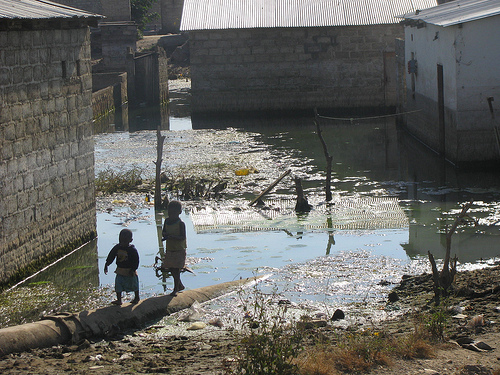 Zambia has recently been categorised as a middle-income country, yet two-thirds of the country’s population live on less than two dollars per day. PHOTO/Ephraim Nsingo
BRUSSELS, Oct 31, 2011 (IPS) – Last week the European Commission unveiled its ‘Agenda for Change’, a new policy framework outlining priorities for the European Union’s development aid and detailing the Commission’s renewed focus on economic growth as a means of poverty reduction, particularly in the world’s poorest countries.
However, while many have applauded this new agenda, international NGOs fear that several developing nations, especially middle-income countries, now risk loosing the Commission’s much-needed financial support. NGOs also raised questions about the role of the private sector in the new agenda.
The EU is the world’s biggest donor of official development aid: With an annual budget of 53.8 billion euros, the European Commission (EC) and member states delivered more than half of total global development aid in 2010. The EC singlehandedly manages and distributes 11 billion euros worth of EU development funds.
To increase the effectiveness of existing aid, the EC organised several rounds of consultations with global partners, governments, private sector actors and NGOs this year, resulting in the publication of the ‘Agenda for Change’ on Oct. 13.
This document was subsequently discussed at an open stakeholder meeting on Oct. 19 during which Development Commissioner Andris Pielbags stressed the EC’s commitment to focus on “sustainable and inclusive growth”, a policy that includes supporting good governance, respect for human rights and democracy, gender equality, the role of civil society and the fight against corruption.
The agenda also prioritises social protection, health, education, supporting a favourable business environment, sustainable agriculture and clean energy.
Most major international NGOs welcomed the Commission’s focus areas, particularly commitments to crack down on corruption and invest in agriculture, but continue to voice serious concerns about the Commission’s focus on economic growth.
“Basically, the Commission is telling us that greater economic growth is a means of tackling poverty,” Laura Sullivan, an expert in EU development policy for the international NGO ActionAid, told IPS.
“We agree growth is a necessary condition (for poverty reduction) but it’s not the only one,” she said.
“Nigeria, for instance, has had growth rates Europe can only dream of. At the same time, Nigeria has one of the highest poverty rates in the world because of the high levels of inequality in the country.”
IPS for more