
by B. R. GOWANI
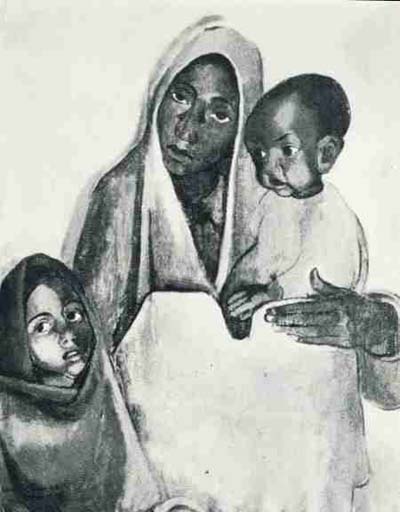 A painting. Mother India (1935) by South Asia’s Amrita Sher-Gil (born in Budapest, Hungary in 1913 and died in Lahore, India in 1941), she is considered India’s Frida Kahlo. It was in subcontinent that she realized her true potential. She was critical of West’s superficial image of India: “It was the vision of a winter in India – desolate, yet strangely beautiful – of endless tracks of luminous yellow-grey land, of dark-bodied, sad-faced, incredibly thin men and women who move silently looking almost like silhouettes and over which an indefinable melancholy reigns. It was different from the India, voluptuous, colorful, sunny and superficial, the India so false to the tempting travel posters that I had expected to see.” TEXT/Art Knowledge News. IMAGE/Amrit@IT.com
after enduring months of hardship
the creator creates life
nurses it, nourishes it
carries out the daily chores
under the scorching sun
through economic lean
forced to walk barefoot
fetch buckets of water
machine-less cloth washing
food cooked on coal stoves
floor swept and moped by hands
…
early to rise, late to bed
through work, worry, and difficulty
trying to provide comfort
as much as possible to its created ones
narcissists are self possessed
but here the case is opposite
there is no self
the only focus is the created ones
time passes …
the creator loses agility
segments of anatomy requires repair
feelings of dependence seep in
meanwhile, the created ones passed the rituals
and in turn had become creators themselves
their entire attention now is their own creations
ignoring the needs of their own creator
no time but excuses they have
for non-performance of their duty
the created ones
shower their love and attention
on the ones they have created
while rejecting their own creator
did Nature intend it this way
are we wired such
or is this the normal way
or to think about this is the abnormal way?
B. R. Gowani can be reached at brgowani@hotmail.com