
DEUTSCHE WELLE
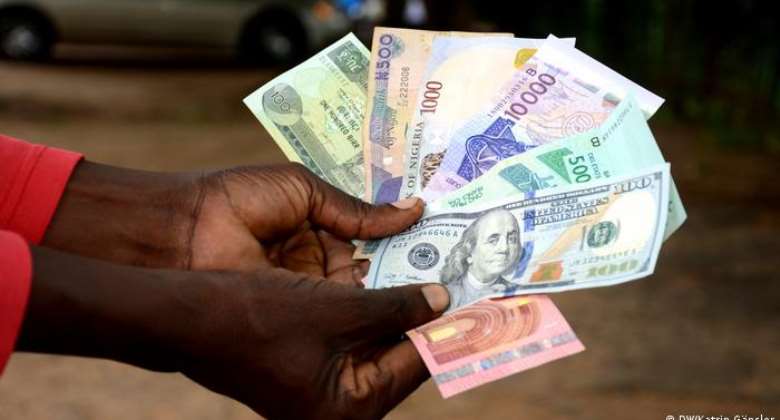
Only a handful of African countries print their own banknotes
At least 40 African countries print their money in the UK, France and Germany — decades after independence, raising questions about self-sufficiency. DW examines what prompts them to outsource their currency production.
Last July, a delegation from The Gambia visiting the Nigerian Central Bank asked if the Gambian dalasi could be ordered from its West African neighbour.
The Gambia’s central bank governor, Buah Saidy, said the country was running low on its national currency.
The tiny West African country had to redesign its currency after the defeat of former President Yahya Jammeh, who ruled The Gambia from 1994 until he was forced into exile after refusing to accept defeat in the 2016 elections.
Jammeh, who is accused of human rights violations and killings of political opponents during his 22-year reign, had images of himself on the nation’s banknotes.
After his ouster, the Gambian Central Bank set about destroying those images.
Now, the dalasi notes have images of a fisherman pushing his canoe out to sea, a farmer tending to his rice paddy, and a spattering of colourful, indigenous birds.
Outsourcing the cash
One issue remains, however: The Gambia doesn’t print its own currency. It places orders with UK companies, resulting in a shortage of liquid money.
And The Gambia is not alone in having its money printed in another country.
More than two-thirds of Africa’s 54 countries print their money overseas, mostly in Europe and in North America. It comes at a time when the African Union is trying to usher in a golden, made-in-Africa age that should see Africa beef up production and enjoy greater profits.
Among the top firms that African central banks partner with are British banknote printing giant De La Rue, Sweden-based Crane, and Germany’s Giesecke+Devrient.
How transparent is the process?
It is perhaps surprising that almost all African countries import their currencies. The practice could even raise questions of national pride and national security.
For richer countries, like Angola and Ghana, there’s also the issue of real autonomy and economic sufficiency.
Most countries are tight-lipped about their currency-printing processes — likely for security reasons. The printing firms are even less transparent.
None of the firms DW contacted responded to requests for a list of African countries that print with them.
Counting the cost
Modern Ghana for more