
by RAKHSHANDA JALIL
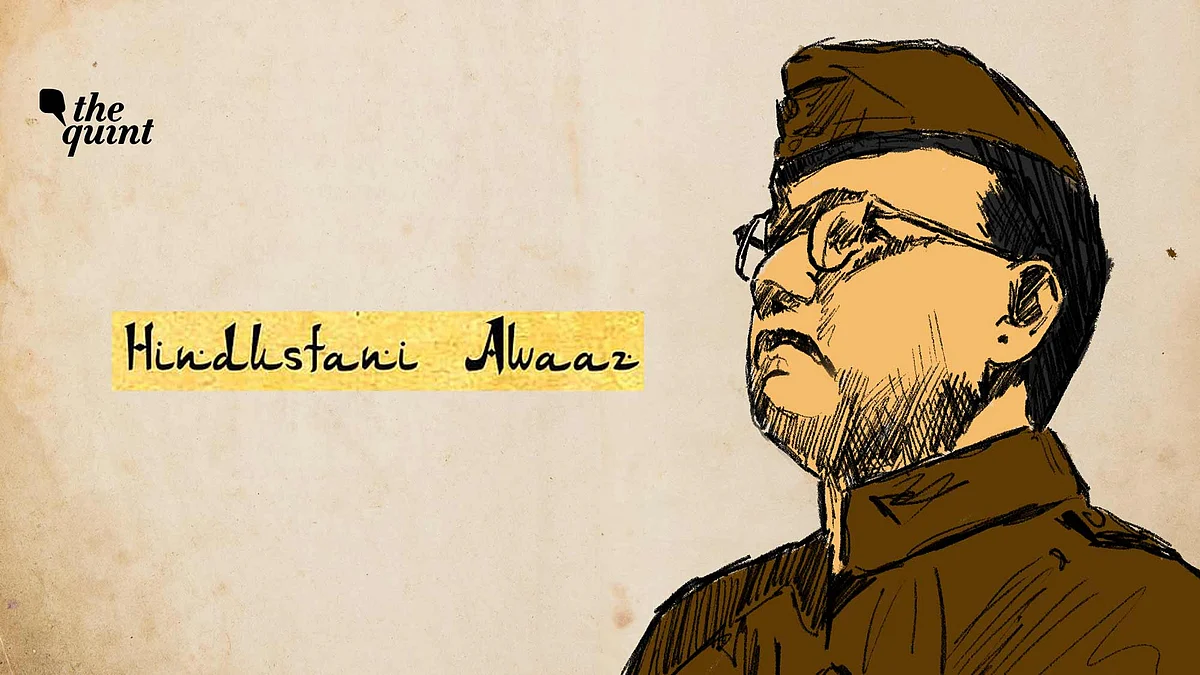
A fair amount of poetry was written about him, the hopes from his leadership and the grief when he disappeared.
‘Tum mujhe khoon do, main tumhe azaadi doonga’ (Give me blood, and I shall give you freedom) – with this slogan, Subhas Chandra Bose seized the popular imagination like few other leaders of his time. Popularly known as ‘Netaji’, this dashing, well-dressed figure, whose daring exploits, both on and off the political stage, made him a strikingly different person from the relatively staid political leaders of his time. Always immaculately dressed, fond of fast cars, unafraid of going against the grain and speaking of an armed struggle in which women were equal participants, he had little time for discussions and political parleys.
Naturally, he soon caught the eye of the Urdu poets of his age who were as much public intellectuals, polemicists and politically savvy as verse smiths. We find a fair amount of poetry written about him, the hopes and expectations from his leadership and the grief and bewilderment when he disappeared from sight at the peak of his political career.
‘For Babu Subhas Chandra Bose’
Razi Badayuni (1878-1939) from the medieval city of Badayun, which has produced many a poet, wrote a panegyric entitled ‘Baabu Subhas Chandra Bose ke Naam’ (for Babu Subhas Chandra Bose), extolling his exemplary bravery and courage, pleading with the Almighty to give him a long life so he may continue to do his extraordinary work, ending with this heartfelt wish:
Azad Hind fauj ke aali commander
Baabu Subhas Bose pe Bharat ko naaz hai
Azadi-e-watan ke mujahid Khuda kare
Allah tujh ko ?haib se taaqat ata kare
(O Great Commander of the Azad Hind army
Bharat is proud of Baabu Subhas Bose
May this fighter for the country’s freedom
Be granted courage from the Beyond by Allah)
Netaji’s Willing Embrace of ‘Be-Watani’
Tirlok Chand Mahroom, possibly the most prolific poet of his age who picked the smallest tremor in the political seismograph, was quick to take note of a giant-slayer such as Netaji. He, too, dwells on Bose’s courage and strength, his willing embrace of be-watani (homelessness) for the sake of his homeland, and offers reasons why he made such an impact on the popular Indian imagination:
Kiya muztarab teri ghairat ne mujh ko
Na dekhi gayi tujh se zillat watan ki
(Your self-respect has profoundly affected me
You couldn’t bear to see the nation dishonoured)
In a similar vein, Darshan Singh Duggal speaks of the legacy of honour and self-respect Bose has bequeathed his countrywomen and men, a legacy he traces to Rana Pratap and Tipu Sultan:
Woh aashiq watan ka, woh dharti ka shaida
Woh Rana ka saani, woh Tipu ka paikar
Tashhaddud ke aagey bhala sir jukata?
(That lover of the nation, that mad devotee of the soil
A match for Rana, made in the likeness of Tipu
Would he have bowed his head before aggression?)
And goes on to end thus:
Watan ki hawaon ka azaad naghma
Zameen ka tarana sunata rahega
(A free song wafting in the nation’s winds
He will keep humming the anthem of the soil)
At Bahadur Shah Zafar’s Grave
In 1943, Bose visited the grave of Bahadurshah Zafar, the last Mughal emperor, in Rangoon. Here, he gave his famous rallying cry of ‘Dilli Chalo’, echoing the slogan of the mutineers of 1857 who had converged upon Delhi and made it a Markaz, a centre, of their revolt, just as they had hoisted the old and frail emperor on the throne of Delhi.
TheQuint for more