They are the change they want to see

The Collector, Delhi
Anshu Gupta was studying journalism at Delhi when he came across Habib, who used to take care of abandoned bodies near LNJP hospital. It was the winter of 1991 and often, Habib’s daughter would cling to a corpse to keep herself warm. The little girl didn’t have any warm clothes. The same year, Anshu was working with the earthquake victims of Uttarkashi, when he saw people wearing jackets made out of gunnysacks. They didn’t want food or money. They just wanted warm coats.

For the next seven years Anshu worked as a corporate communications specialist but yesterday’s images still haunted him. He realized that India didn’t have a single organization to supply clothes to the poor and dispossessed. Goonj was born – an NGO that collects and donates clothes, leftover uniforms, backpacks, pencils, books and notebooks to poor people across the country. “Clothing is a basic need, not disaster-relief material. Why should the poor wait for a disaster to get some clothes,” says Anshu, who chucked his job with Escorts and started Goonj by taking all the extra clothes he found at home and the houses of friends and relatives and distributing them on Delhi’s roads.

What started as a single-room, one-man organization has 15 offices, 125 employees and a fleet of volunteers across the country today. Anshu insists, “We never wanted to grow as an organization. We wanted to grow as an idea so that people replicate it.”

Volunteers go door to door, collecting clothes, books, waterbottles – anything that can be used by the poor in the hamlets of Bihar, Orissa or Assam. Anshu says Goonj is helping to “change the mindset of the urban population about the optimal utilization of vital resources through concepts like recycle and reuse.”

As well as lending a hand to those who need it most.

– Shobhan Saxena

The Shoe Santa, Mumbai

The man sleeping outside a shop near Kandivili station is drunk. Nandan Pandya wakes him up with a question: “Do you have slippers?” The man’s brow furrows. Pandya ferrets out a pair of new black plastic slippers from a polythene bag and asks him to try them on. The man takes the pair, fidgets, then holds them close to his chest and salutes the ground. It’s Pandya’s cue to leave.

For eight years, Pandya, 21, a final-year engineering student, has greeted many owners of unhappy feet in this way. Most are “too overwhelmed to emote”. Every week, Pandya buys at least six or seven pairs of slippers and scans the streets for cracked heels, swollen ankles, raw soles – any evidence of prolonged barefootedness. His target audience includes garland-sellers, hawkers, beggars, pavement-dwellers – people who can’t afford to throw shoes at politicians no matter how much they want to.

Pandya spends nearly Rs 300 on his goody bag. He buys only plastic slippers. “Many people want rainy-day shoes as they suffer from various foot diseases when they step into puddles,” says the student, whose beneficiaries are mainly to be found at suburban stations.

So why does he do this knowing full well that many of his recipients might sell his gift rather than wear it? He always adds the careful warning, “Please don’t sell these,” but says it doesn’t really bother him if they do. “I don’t give because they will use the shoes, I give because they need it.” He says his slipper service has changed him forever. “Now, I don’t shout when the rickshawallah refuses to hand me back a five-rupee balance.”

-Sharmila Ganesan-Ram

TOI

Lettuce and eggs top risky food list

Nutrition advocacy group lists 10 items that have been responsible for thousands of illnesses.

By Aaron Smith, CNNMoney.com staff writer

Leafy greens were rated the riskiest food by the Center for Science in the Public Interest.

NEW YORK (CNNMoney.com) — Leafy greens — including lettuce and spinach — top the list of the 10 riskiest foods, according to a study from a nutrition advocacy group released Tuesday.

The Center for Science in the Public Interest listed the following foods, in descending order, as the most risky in terms of outbreaks: leafy greens, eggs, tuna, oysters, potatoes, cheese, ice cream, tomatoes, sprouts and berries.

The scientists rated these foods, all of them regulated by the Food and Drug Administration, by the number of outbreaks associated with them since 1990, and also provided the number of recorded illnesses.

The severity of the illnesses ranged from minor stomach aches to death, the center said. With leafy greens such as lettuce, the top cause of illness were pathogens like E. coli, Norovirus and Salmonella in foods that were not properly washed.

Over the past 20 years, leafy greens caused 363 outbreaks, resulting in 13,568 reported illnesses, the center said. That’s compared to berries, No. 10 on the list, which were associated with 25 outbreaks totaling 3,397 reported illnesses.

“Leafy greens are a healthy home run, but unfortunately they’re associated with food-borne illness,” said Sarah Klein, a staff lawyer with the center who helped prepared the study.

In all, the Top 10 resulted in more than 1,500 outbreaks, totaling nearly 50,000 reported illnesses, according to the center, which added that most food-related illnesses don’t get treated or reported, so the real total is likely much larger.

“Millions of consumers are being made ill, hundreds of thousands hospitalized and thousands are dying each year from preventable foodborne illnesses,” the study said. “Unfortunately, the FDA is saddled with outdated laws, and lacks the authority, tools and resources to fight unsafe food.”

Food producers, including the Western Growers Association, released statements criticizing the report.

“Farmers are consumers, too,” the association said, in a release from spokesman Paul Simonds. “They eat the fresh produce they grow as do the members of their families, and have invested millions of dollars enhancing food safety practices in the last few years. Scaring people away from eating some of the healthiest foods on the planet, like fresh produce, does not serve consumers.”

Salmonella was also a chief culprit in egg, cheese and tomato-related illnesses, the study said, in cases when eggs are undercooked and when cheese is not processed properly.

Salmonella can be difficult to remove from raw tomatoes without cooking, according to the study.

The study also associated Salmonella and E. coli with potatoes. Klein said this generally happens when cold-prepared potato items, such as potato salad, are mixed with other contaminated ingredients.

Unrefrigerated fresh tuna deteriorates quickly, the study said, releasing harmful toxins, and canned tuna gets dragged into the picture because of mixed-in ingredients such as mayonnaise. Improperly washed oysters are at risk of Norovirus.

Rich Ruais, executive director of the Blue Water Fisherman Association and the American Blue Fin Tuna Association in Salem, N.H., disagreed with the study’s “bad rap” on tuna.

“Tuna? I beg to differ,” he said. “Tuna is one of the healthiest foods on the Earth. It’s life sustaining; it’s life prolonging.”

Ruais said the tuna-based diet of Japanese citizens plays a big part in their high average longevity. He also said the FDA strictly mandates that tuna is gutted and stuffed with ice immediately after it’s caught by commercial fisherman, and submerged in slush once it gets to shore, to prevent risk of pathogens.

More surprisingly, bacteria can also survive in ice cream, primarily from the Salmonella contamination of eggs, an important ingredient that is sometimes undercooked, the study said. Much of the study’s blame goes to a 1994 outbreak that sickened thousands of ice cream lovers in 41 states.

The National Milk Producers Federation released a statement criticizing the report as “based on outdated information.”

“Cheese and ice cream products are among the safest, most stringently regulated foods in this country,” said the federation, in its release. “The cheese examples in this report mostly concern consumption of raw milk products, which neither [the] FDA nor the dairy industry recommends. The ice cream example is 15 years old and was an isolated incident.”

MC

Not your average folklore

Sayed Mahmoud talks to singer Fayrouz Karawya


Fayrouz Karawya is already happening. Her fans are mesmerised by the power of her performance, taken in by the sophistication of a style that rises way above the humdrum of ordinary love songs.

There is something about Karawya that reminds me of Aida El-Ayoubi, the singer who retired in the early 1990s having given us two exceptional albums. Like El-Ayoubi, Karawya is an accomplished singer who is not so much interested in showing off her exceptional vocal skills as in offering a real experience of immense melodious diversity.

I heard her sing at the British Council in Cairo a few weeks ago, where she serenaded us with songs written by Amr Taher, Ahmed El-Fakharani, Mohamed Khayr and Ahmed Haddad — all of whom are accomplished vernacular poets rather than run-of-the-mill song writers. The music was mostly written by the composers Sherif El-Wasimi and Akram Murad. Karawya writes the music for some of her songs.

Born in 1980 in Port Said to a politically active family, Karawya was named after the famous Lebanese singer. She began singing in school and then took three years of classes in music theory and oud at the Arab Music Institute. As a medical student at the University in Cairo, she shopped around for singing opportunities. The break came when she sang Qabl Al-Awan (Before it’s Time) in Magdi Ali’s film Asrar Al-Banat (Girls’ Secrets).

Karawya studied theatre direction for a while and worked with the independent company Al-Mesaharati (The Ramadan Drummer) with director Abir Ali. The company performed folkloric pieces, and Karawya was in charge of the musical side. She sang in four stage plays with Al-Mesaharati: Hakawi Al-Haramlek (Tales of the Harem Quarters), Helw Masr (Sweet Egypt), Sahraya (Late Night), and Ya Halawt Al-Donya (O Beautiful Life).

Karawya has been singing professionally for three years. “My first concert was in 2006, with the young poet Ahmed Haddad, who is the grandchild of both Salah Jaheen and Fouad Haddad, two of Egypt’s most memorable vernacular poets,” she says. “Haddad helped me develop a new approach to singing.”

WA

FairouZ Karawya – Fostan El Sahra

The Spread of New Diseases: The Climate Connection


“The dislocation of fruit bats because of deforestation has increased encounters between humans and the bats — and the pathogens they carry.”

As humans increasingly encroach on forested lands and as temperatures rise, the transmission of disease from animals and insects to people is growing. Now a new field, known as “conservation medicine,” is exploring how ecosystem disturbance and changing interactions between wildlife and humans can lead to the spread of new pathogens.

By Sonia Shah

Look up into the tree canopy of the urban tropics in South Asia, Australia, or equatorial Africa and as often as not you will find masses of Pteropos fruit bats, hanging from the branches like so many furry stalactites. Their forests cut down by bulldozers, torched by slash-and-burn farmers, or desiccated from a disrupted climate, fruit bats increasingly intrude upon human communities, adapting to the orchards and cultivated fruit trees of the cities, farms, and suburbs that have subsumed their forests.

With those bats come diseases that spread to humans, and a growing body of research suggests that their microbes — as well as other pathogens that jump from animals to people — are spreading more rapidly because of climate change and deforestation.

The ongoing deforestation of African rainforests, for example, has increased such encounters, by bringing humans closer to infected bats. Roughly 4 percent of Congo basin rainforests were lost during the 1990s alone. With habitat loss devastating many animal species hunted for game meat, impoverished villagers have stepped up their predation on survivor species such as fruit bats.

In Congo in 2007, for example, local hunters slaughtered thousands of fruit bats with their shotguns, and villages were “literally inundated” with blood-bathed bat corpses, according to scientists. As a result, 260 people became infected with the deadly Ebola virus, which scientists believe had lived quietly in the bats and then was transmitted to the villagers exposed to the bats’ blood and other fluids. A total of 186 people perished. Scientists in Gabon and Congo have traced that Ebola outbreak to a massive migration of fruit bats into the stricken villages just prior to the epidemic.

“When you disrupt the balance, you are precipitating the spillover of pathogens from wildlife to livestock or humans,” says the Wildlife Trust’s veterinary epidemiologist and public health expert, Jonathan Epstein.

Other bat-related outbreaks of deadly diseases in humans have occurred in recent years in Malaysia and Bangladesh, sometimes because of changes in weather patterns or in land use as human settlements and agriculture increasingly encroach upon forested areas. And there is growing evidence that rising temperatures and unusual rainfall patterns have already expanded the risk of diseases carried by insects, a phenomenon that is expected to worsen as the world continues to warm this century and insects shift their ranges to higher latitudes and elevations.

These developments have given rise to a growing consensus among many wildlife biologists and public health experts who advocate a new approach to conservation and public health called “conservation medicine,” which promotes interdisciplinary collaborations to expose the links between ecosystems, the health of wildlife, and humans that lead to the emergence of new pathogens.

In recent years, for instance, scientists have been ferreting out the connections between climate change and human health. They’ve found that spasms of cholera correlate with changing sea surface temperatures and that diarrhea outbreaks arrive as the mercury climbs. They’ve discovered associations between seasonal weather patterns and malaria that are so strong that outbreaks can be predicted with the weather forecast.

The so-called meningitis belt in West Africa has expanded in recent years, thanks to land-use and climate changes, the Intergovernmental Panel on Climate Change (IPCC) notes. Malaria has newly established itself in the East African highlands as the region warms. The destruction of thousands of acres of Peruvian rainforest has created new mosquito habitat and unleashed more than 120,000 cases of malaria in the late 1990s, Stanford University’s Amy Vittor and colleagues have found, compared to fewer than 150 a year in the early 1990s.

And future climate change could intensify the burden of these diseases in some places, allowing still others to annex new territory. According to the IPCC’s 2007 assessment, a 2- to 5-degree F increase in the average global temperature could lead by 2100 to longer seasons of malaria transmission in Africa and a 5 to 7 percent extension of the disease into higher latitudes. Coupled with projected population growth, the changing climate could nearly double the number of people at risk of infection from dengue fever by 2080.

Humans have been acquiring microbial pathogens from animals and insects for millennia, from the measles we got from goats to the malaria bestowed upon us by mosquitoes. But in the past six decades, the pace of pathogens jumping from animals into humans — collectively dubbed “zoonoses” — has quickened, experts say.

The transmission of the filovirus Ebola from bats to humans illustrates the complexity of the spread of these diseases and its relation to climate change and land disturbance. Simple bat-human contact isn’t sufficient for the filovirus Ebola to erupt.

“It’s a cascade of events” that bring bats, apes, and humans together in unusual ways, aggravated in part by “unique climatic conditions,” says World Health Organization zoonoses expert Pierre Formenty. According to a NASA analysis of meteorologic satellite data, Ebola outbreaks correlate with heavy rains at the end of a period of intense aridity. Extremely dry conditions force some fruit trees to defer fruiting. When the rains come and the stricken trees put out fruit, all manner of fruit-starved species, including Pteropus bats and apes, gather to feast. Large numbers of creatures concentrated under newly fruit-heavy trees provide microbes such as Ebola a prime opportunity to jump from one species to another. And once Ebola starts circulating heavily in a new species such as apes or bats, it can readily be transmitted through infected blood and other fluids to humans.

Whether the warming planet will aggravate the unusual rainfall patterns that set the scene for Ebola outbreaks remains unclear. While experts in conservation medicine have made great strides delineating the links between climate and disease, projections about how disease patterns will shift as the climate changes are still nascent. Worryingly, however, a trend toward aridity has already been noted across African rainforests.

Abnormal patterns of human-bat contact, aggravated by intensified agriculture, led to the emergence of the lethal Nipah virus in Malaysia. The virus, which scientists isolated inside fruit bats, first erupted at an industrial-scale pig farm in 1998. Scientists suspect that the bats fed on the cultivated fruit trees overhanging the pigs’ troughs, contaminating the pigs with virus-infected feces, urine, and saliva. The pigs fell ill first, their huge numbers rapidly amplifying the virus and enabling it to jump to the local farmers. Forty percent died of acute encephalitis within a matter of weeks. Nipah virus has also emerged in South Asia and now erupts in Bangladesh nearly every year, killing 70 percent of the afflicted. By 2007, 123 people had been felled.

And it’s not just bats. In the United States, environmental disruptions have allowed microbes from rodents and birds to find their way into humans, too. During the late 1990s, two novel diseases emerged in the United States: hantavirus and West Nile virus. Scientists suspect the arrival of the new scourges are the result of the changing climate, and, indeed, so far both diseases have been linked to weather patterns that are expected to intensify as the world warms. Concern is high that more such novel diseases may emerge as the climate continues to change.

A never-before-seen hantavirus struck the southwestern United States in the early 1990s, after an El-Nino-associated cycle of early season heavy rains ended a six-year-long drought. According to Paul Epstein of Harvard Medical School’s Center for Health and the Global Environment, the drought had reportedly winnowed the ranks of owls, snakes, and coyotes while the rains fattened supplies of pine nuts and grasshoppers, both of which allowed the local deer mice population to explode ten-fold. Deer mice overran local communities, and hantavirus, which may have been living quietly inside rodent populations for years, exited through their feces and into the dry air and the airways of the people. The scourge broke out again in 1998, following a 1997 El Nino event. As with Nipah virus, hantavirus now regularly plagues the southwestern United States. Hantavirus pulmonary syndrome kills 37 percent of its victims; by 2007, 165 had died.

West Nile virus, transmitted by mosquitoes from birds to humans, first emerged on American soil in 1999 and its arrival similarly has a “very strong climate trigger,” Harvard’s Epstein says. According to a recent report by scientists from New York University and Harvard, cases of West Nile virus between 2001 and 2005 increased by 50 percent with every 9-degree F rise in the mean maximum weekly temperature, and 33 percent after heavy rains. Warmth and heavy rain tend to lead to an abundance of the Culex mosquitoes that transmit the microbe.

Between 1999 and 2007, the Centers for Disease Control logged over 27,000 cases of West Nile virus infection, some 8 to 10 percent of which end in death. With the correlation between climate and West Nile virus already evident, researchers speculate that the warmer temperatures and heavier downpours that climate change models predict will likely increase the burden of West Nile virus in coming years.

Human health, of course, is a complex beast. Much of the impact of these changes will depend upon factors other than the climate: our own population growth, our immune systems, and the care with which we craft our health systems and distribute medical goods. There’s much we can do to diminish the burden of a disrupted disease landscape, with prompt treatment and well-planned prevention. The burden of some diseases may even decline.

But no sophisticated diagnostic method nor high-tech medical care can save us from new pathogens, which by definition cause indeterminate illness of uncertain origins. This fall, the Institute of Medicine called for greater political commitment and funding for global surveillance of emerging zoonoses.

The trouble is, of the estimated one million unique viruses carried by vertebrate species — and thus potential zoonotic threats — a mere 2,000 have been described. Surveillance of wildlife health, which could provide early warning of zoonotic pathogens on the move, is minimal, particularly in those parts of the world where contact between wild species and people are most intimate.

Fortunately, most of the time, microbial forays into new species are either benign or unsuccessful, extinguished by the new host’s immune responses or by the microbe’s own failure to thrive. “Only a tiny fraction are going to become human pathogens,” says Centers for Disease Control medical ecologist James Mills. And even with new zoonotic pathogens cropping up with increasing frequency, the actual number of deaths from the diseases they cause is still miniscule, compared to old killers such as malaria.

But the potential risks of new pathogens adapting to the human body are indisputable. And it only takes one. After all, not many people died when a lentivirus of Cameroonian chimps first jumped into humans sometime in the 1930s, even as it carved a foothold in the rapidly growing colonial African city of Leopoldville. But then it evolved into a form that efficiently preyed upon humankind. Between 1981 and 2007, 55 million souls were infected, and to date the disease it causes — AIDS — has killed more than 25 million.

Yale

Sonia Shah’s website is Resurgent Malaria

Watching me watching you

Complicit surveillance and social networking

We’ve all spent so much time and effort being worried about formal surveillance – all those street and lobby cameras – that we’re in danger of forgetting how much we cooperate in surveilling and being surveilled online

by Miyase Christensen

New research suggests that 25% of people in the UK suffer from some form of paranoia (1), probably because of a combination of urbanisation, globalisation, migration, wealth disparity and the media. So would it be right to assume that paranoia will worsen as we move towards complex personal surveillance, the result of the heavy use of social networking sites such as Facebook? While these sites are collecting data on their users, as my own research in Sweden illustrates, many of us are taking part in this on a seemingly voluntary basis, often unaware of its extent.

Formal surveillance means one CCTV camera per 14 citizens in the UK, or 200,000 such cameras in the city of Shenzhen in China. But parallel to the traditional forms of surveillance, there is a new voyeurism, rooted in an appetite for peer-to-peer surveillance. Watching friends, neighbours and colleagues for security purposes – and sometimes just for fun – seems to be getting common.

Take Adam’s Block. This was an open-access site webcasting a live video feed from the intersection of Ellis Street and Taylor Street in San Francisco for entertainment purposes. But some in the neighbourhood did not approve and the owner of the camera and site were threatened. “Adam” had to shut down the service for his own safety. In solidarity, others from the neighbourhood installed their own cameras, meaning eventually to network the cameras and live-cast at www.adamsblock.com under the name OurBlock.tv, as an example of citizen surveillance. The site, which says, it is “empowering citizens to fight crime and save lives” and called itself the “a global network of webcams” intended “to make a difference in your community”, aimed to have thousands of people and homes around the globe visually accessible via the web – voluntarily. This is not a unique example.

MDip

Ex-ISI Chief Says Purpose of New Afghan Intelligence Agency RAMA Is ‘to destabilize Pakistan’

By Jeremy R. Hammond

Shahid R. Siddiqi contributed to this report


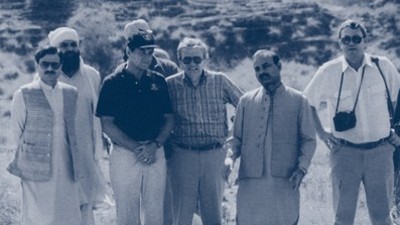
Then Maj. Gen. Hamid Gul, Director General of the ISI (far left), with William Webster, Director of Central Intelligence, Clair George, Deputy Director for Operations, and Milt Bearden, CIA station chief, at a training camp for the mujahedeen in Pakistan’s North-West Frontier Province in 1987 (RAWA.org)

In an exclusive interview with Foreign Policy Journal, retired Lt. Gen. Hamid Gul responds to charges that he supports terrorism, discusses 9/11 and ulterior motives for the war on Afghanistan, claims that the U.S., Israel, and India are behind efforts to destabilize Pakistan, and charges the U.S. and its allies with responsibility for the lucrative Afghan drug trade.

Retired Lieutenant General Hamid Gul was the Director General of Pakistan’s Inter-Services Intelligence (ISI) from 1987 to 1989, during which time he worked closely with the CIA to provide support for the mujahedeen fighting the Soviet occupation of Afghanistan. Though once deemed a close ally of the United States, in more recent years his name has been the subject of considerable controversy. He has been outspoken with the claim that the terrorist attacks of September 11, 2001 were an “inside job”. He has been called “the most dangerous man in Pakistan”, and the U.S. government has accused him of supporting the Taliban, even recommending him to the United Nations Security Council for inclusion on the list of international terrorists.
In an exclusive interview with Foreign Policy Journal, I asked the former ISI chief what his response was to these allegations. He replied, “Well, it’s laughable I would say, because I’ve worked with the CIA and I know they were never so bad as they are now.” He said this was “a pity for the American people” since the CIA is supposed to act “as the eyes and ears” of the country. As for the charge of him supporting the Taliban, “it is utterly baseless. I have no contact with the Taliban, nor with Osama bin Laden and his colleagues.” He added, “I have no means, I have no way that I could support them, that I could help them.”

After the Clinton administration’s failed attempt to assassinate Osama bin Laden in 1998, some U.S. officials alleged that bin Laden had been tipped off by someone in Pakistan to the fact that the U.S. was able to track his movements through his satellite phone. Counter-terrorism advisor to the National Security Council Richard Clarke said, “I have reason to believe that a retired head of the ISI was able to pass information along to Al Qaeda that the attack was coming.” And some have speculated that this “retired head of the ISI” was none other than Lt. Gen. Hamid Gul.

When I put this charge to him, General Gul pointed out to me that he had retired from the ISI on June 1, 1989, and from the army in January, 1992. “Did you share this information with the ISI?” he asked. “And why haven’t you taken the ISI to task for parting this information to its ex-head?” The U.S. had not informed the Pakistan army chief, Jehangir Karamat, of its intentions, he said. So how could he have learned of the plan to be able to warn bin Laden? “Do I have a mole in the CIA? If that is the case, then they should look into the CIA to carry out a probe, find out the mole, rather than trying to charge me. I think these are all baseless charges, and there’s no truth in it…. And if they feel that their failures are to be rubbed off on somebody else, then I think they’re the ones who are guilty, not me.”

General Gul turned our conversation to the subject of 9/11 and the war on Afghanistan. “You know, my position is very clear,” he said. “It’s a moral position that I have taken. And I say that America has launched this aggression without sufficient reasons. They haven’t even proved the case that 9/11 was done by Osama bin Laden and al Qaeda.” He argued that “There are many unanswered questions about 9/11,” citing examples such as the failure to intercept any of the four planes after it had become clear that they had been hijacked. He questioned how Mohammed Atta, “who had had training on a light aircraft in Miami for six months” could have maneuvered a jumbo jet “so accurately” to hit his target (Atta was reportedly the hijacker in control of American Airlines Flight 11, which was the first plane to hit its target, striking the North Tower of the World Trade Center at 8:46 am). And he made reference to the flight that hit the Pentagon and the maneuver its pilot had performed, dropping thousands of feet while doing a near 360 degree turn before plowing into its target. “And then, above all,” he added, “why have no heads been rolled? The FBI, the CIA, the air traffic control — why have they not been put to question, put to task?” Describing the 9/11 Commission as a “cover up”, the general added, “I think the American people have been made fools of. I have my sympathies with them. I like Americans. I like America. I appreciate them. I’ve gone there several times.”

At this point in our discussion, General Gul explained how both the U.S. and United Kingdom stopped granting him an entry visa. He said after he was banned from the U.K., “I wrote a letter to the British government, through the High Commissioner here in Islamabad, asking ‘Why do you think that — if I’m a security risk, then it is paradoxical that you should exclude me from your jurisdiction. You should rather nab me, interrogate me, haul me up, take me to the court, whatever you like. I mean, why are you excluding me from the U.K., it’s not understandable.’ I did not receive a reply to that.” He says he sent a second letter inviting the U.K. to send someone to question him in Pakistan, if they had questions about him they wanted to know. If the U.S. wants to include him on the list of international terrorists, Gul reasons, “I am still prepared to let them grant me the visa. And I will go…. If they think that there is something very seriously wrong with me, why don’t you give me the visa and catch me then?”
‘They lack character’

I turned to the war in Afghanistan, observing that the ostensible purpose for the war was to bring the accused mastermind of the 9/11 attacks, Osama bin Laden, to justice. And yet there were plans to overthrow the Taliban regime that predated 9/11. The FBI does not include the 9/11 attacks among the crimes for which bin Laden is wanted. After the war began, General Tommy Franks responded to a question about capturing him by saying, “We have not said that Osama bin Laden is a target of this effort.” The Chairman of the Joint Chiefs of Staff, Richard Myers, similarly said afterward, “Our goal has never been to get bin Laden.” And President George W. Bush himself said, “I truly am not that concerned about him.” These are self-serving statements, obviously, considering the failure to capture bin Laden. But what, I asked General Gul, in his view, were the true reasons for the invasion of Afghanistan, and why the U.S. is still there?

“A very good question,” he responded. “I think you have reached the point precisely.” It is a “principle of war,” he said, “that you never mix objectives. Because when you mix objectives then you end up with egg on your face. You face defeat. And here was a case where the objectives were mixed up. Ostensibly, it was to disperse al Qaeda, to get Osama bin Laden. But latently, the reasons for the offensive, for the attack on Afghanistan, were quite different.”

First, he says, the U.S. wanted to “reach out to the Central Asian oilfields” and “open the door there”, which “was a requirement of corporate America, because the Taliban had not complied with their desire to allow an oil and gas pipeline to pass through Afghanistan. UNOCAL is a case in point. They wanted to keep the Chinese out. They wanted to give a wider security shield to the state of Israel, and they wanted to include this region into that shield. And that’s why they were talking at that time very hotly about ‘greater Middle East’. They were redrawing the map.”

Foreign policy for more

(Submitted by reader with the following comments:(“Read with caution! With Gul the potential of bullshit is very high! Keep your skeptical hat on.”)

My Mother’s Sari

By Vaidehi

There, in the wooden box
my mother’s sari, enveloped in white muslin,
with mothballs.

Her sense of order is in each one
of its folds,
and the press of her palm.
A universe of ironing lies beneath the pillow.
Tiny packets of camphor, incense and fragrant roots –
her perfume.

My mother’s sari’s tucked-in eagerness
coupled with the jingling of bangles
is the zest to get down to work.

Lines running across the broad pallu,
the unbroken bridges of an upright life,
keeping all evil at bay –
a cane to reprove naughty children.

Folds tucked into a knot,
a mysterious treasure-house of meanings,
the pretty yellow Madhura sari
with its green border of blooms . . .
. . . that queen was perhaps like my mother.

Endless is my mother’s sari –
the more I wrap it around me, the more it grows.
I remember becoming a midget once
trying to measure it,
trying to drape it.

My mother’s sari –
the latex of mango and cashew,
a heaven of Ranja, Kepala and Suragi
golden wheat-beads auguring
the New Year Kani,
the old rolling over each year
to yield a new import.

My mother’s sari,
with stars all over its body,
shields those in distress
from rain or shine,
it glows uniquely in the darkness

My mother’s sari
of voile or handloom,
with a small dream of silk
When the dream came true,
Father was no more.
She wears it now
but the dream is gone.

There! My mother’s old, Udupi weavers’ sari
looks at me from where it hangs.
I unfold it and envelop myself in it
uttering with a long sigh
the word ‘Amma’ –
a word that remains forever fresh,
however worn with use.

Translation by Dr Ramachandra Sharma and Ahalya Ballal

from Parijatha, Publisher: Christ College Kannada Sangha,
Bengaluru, 1999

3QuarksDaily

(The poem and the following bio-data are submitted by reader)

Vaidehi (real name Janaki Srinivasa Murthy), born in 1945, in Kundapura, Dakshina Kannada District, Karnataka is a well-known Kannada fiction writer and poet, renowned for her espousal of the cause of women. Her writings, generally described as post-modernist, depict the plight of women in an indignant and rebellious tone. In fact, it is told that her creative self blossomed as a result of her encounters with patriarchy, in search of her personal freedom. For instance, daring to sit on a chair was, for her, one of the heroic feats she accomplished in her childhood, in defiance of the social injunction that girls should not sit on chairs in presence of the male members of the family, let alone male members from outside. She longed for the freedom that she was denied on account of being a woman, but enjoyed in full measure by her brothers. Her short stories and novels lament the discrimination and unequal treatment meted out to women in society. She successfully takes up cudgels on their behalf, using her pen as an effective weapon for social transformation.

Vaidehi has received many prestigious literary awards, such as the Karnataka Sahitya Akademi award, the M.K. Indira award, and the Katha award.

The Library of Congress has acquired fifteen titles by her. Many of her works have been translated into English and many Indian languages.

Vaidehi

The left wins in Greece, but not in Turkey, why?

By ORAL ÇALI’LAR

I was informed by an SMS message early in the morning that the leftists won general elections in Greece. The main opposition PASOK leader George Papandreou will be the new prime minister of our neighboring country. That means the left beat the right and have now claimed power.

Naturally, I started to think about the left in Turkey … The left has not won any elections for a long time. “Does the left exist in Turkey?” asked a friend of mine. We know that all social democrat parties claiming to be leftist are statists and nationalists. It is the fact that in Turkey there is no left-social democrat party of any international standard – a fact that more and more people are starting to realize.

Leftist parties in other countries may not be totally divorced from nationalism. Some may quite rightfully assert that PASOK in Greece, for instance, is a nationalist party. In this sense, the sincerity of socialism in Greece may be opened to discussion.

However, I can easily say that the Greek and European left follow a somewhat more democratic, more universal path. PASOK’s nationalist side is quite distant from statism and militarism, something that makes the party different from leftists in Turkey.

Leading figures in Europe, such as German Chancellor Angela Merkel and French President Nicolas Sarkozy, have allied against Turkey as they nurture xenophobia. The leftist Papandreou in Greece has adopted a more positive approach in finding a peaceful solution to the Cyprus question, compared to his rival Costas Karamanlis. PASOK had also supported the Annan Plan in Cyprus.

In general, leftist parties in Europe are more positive towards minorities, foreigners and immigrants. Rightist parties lead the charge with their xenophobia and have negative feeling toward Turkey’s accession to the European Union. None is surprising. On the contrary, all these are in line with the descriptions of the right and the left.

HDN

Food Supply Hangs In The Balance

By Stephen Leahy, Inter Press Service

UXBRIDGE, Canada – Rocketing food prices and hundreds of millions more starving people will be part of humanity’s grim future without concerted action on climate change and new investments in agriculture, experts reported this week.

The current devastating drought in East Africa, where millions of people are on the brink of starvation, is a window on our future, suggests a new study looking at the impacts of climate change.

“Twenty-five million more children will be malnourished in 2050 due to effects of climate change,” such as decreased crop yields, crop failures and higher food prices, concluded the International Food Policy Research Institute (IFPRI) study.

“Of all human economic activities, agriculture is by far the most vulnerable to climate change,” warned the report’s author, Gerald Nelson, an agricultural economist with IFPRI, a Washington-based group focused on global hunger and poverty issues.

The report, “Quantifying the Costs of Agricultural Adaptation to Climate Change”, may be the “most comprehensive assessment of the impact of climate change on agriculture to date”, as IFPRI claims, but researchers concede that there is no current way to quantify all of the future repercussions of changing weather patterns on the food supply.
A critical component of agriculture is knowing the best time to plant seeds, for example. Farmers rely on their past experience and weather records. But one of the most robust science findings is that climate change has and will produce significant increases in weather variability.

CC

Bolivia – Constantino Lima: The Other Politics Born of Everyday Experience

Written by Raúl Zibechi, Source: Americas Program

If Evo Morales had not awarded him the most important distinction given by the state, the life of Constantino Lima would only be known to his friends and companions, even though his personal life is among those that epitomize the outstanding history of the Aymara people.

One has to make the trip up to El Alto to find the man, a small and fragile body, of medium height, skin the color of earth, clear eyes, and a generous smile. He looks almost carefree in the midst of the hustle and bustle of women hawking their merchandise and the wary young people who glance at the khara (person of European descent) out of the corners of their eyes. He was born in September, 1933 in Rosario, a small village in the province of Pacejas on the [outskirts] of La Paz, where the altiplano is dotted with Aymaran chullpas, the beautiful, thousand-year-old funeral towers.

In 2008, the government of Evo Morales decorated Constantino with the Condor of the Andes, the greatest distinction awarded by the Bolivian state, because he was considered “an important person in the resurgence of indigenous cultures in Bolivia.” In 1960 he helped to create the National Autochthonous Party (PAN, Partido Autóctono Nacional) along with 22 other indigenous people and in 1968, when he entered the Universidad Mayor de San Andrés, he created the Julián Apaza University Movement (MUJA, Movi). He was the second indigenous person elected to a deputy position in the Bolivian Congress, in 1985, by the Tupac Kataria Indian Movement which he had helped establish in 1978.

We met him at the entrance to the municipality of El Alto. He was accompanied by a young student who did not hide his admiration for Constantino. We walked a number of blocks through the packed streets of La Ceja, the altiplano center filled with street vendors, and entered one of the noisy bars where you can always hear Andean music. At an altitude of 4,000 meters, if you look down from here, you see the city of La Paz and if you look up, you see the snowy peaks of the Cordillera Real. Constantino asks for a tea and smiles. There is almost no need to ask him questions. He likes to talk.

Constantino Lima (CL): Sometimes people ask me what ideology has inspired me, and I say that it doesn’t come from the right or from the left, that I have always hated both sides because both sides have called us Indians pieces of shit. My answer is the following: [my inspiration comes from] my mother and my father. One’s parents have much to do with one’s formation, and so do the oral histories of grandparents, great grandparents. The birds also speak, the trees speak, the rivers speak, the rocks speak, in short, animals talk to us, and so do the apus (spirits) and the ancestors.

Raúl Zibechi (RZ): Tell me about your first political experiences.

CL: I was eight years old. I went with my mother, holding on to her and we had to walk eight or nine kilometers. My mother loaded firewood on the burros and sold it where there were kharas and then we bought sugar for tea. My mother brought me to keep her company and to take care of the burros. When we arrived to sell wood to the neighbors, some huge dogs came out of a house and attacked us. My mother defended herself as well as she could, and I grabbed on to her skirt. Some kids of about five or six, perhaps older, shouted “Mama, Mama, our dogs want to eat these Indians, they must be really delicious for the dogs.” Their mother wasn’t at all concerned. She wasn’t even worried. The children kicked my mother in the behind and pulled at her bundle and wanted to throw it away. They made fun of us, they called us “little Indians.” My mother complained to the mayor to whom we always brought firewood. The mayor was white and he made us go to the office where the kids were hanging out and called to their white mother. The mayor began to argue with my mother, “Listen, woman, never disrespect this woman ever again. You’re not to complain about this girl ever again. Or is that how you act?” He threatened her, and my mother couldn’t do anything but cry. The kharas were merchants and they lived on the firewood business and they paid us a price that would guarantee them a profit.

RZ: Why do you consider this a political experience?

CL: Because from this experience, a kind of anger grew here (he indicates his heart). I arrived home at seven years old and asked my father why these white men with skin a different color from ours were like that. The following day, he gathered together all of us sons, and had us sit around the table. We were six brothers. He stood in front of the blackboard—my father was the first Indian teacher in Pacajes—and he began his explanation.

UDW