More Inhuman Stories From Gujarat


By Shabnam Hashmi, Countercurrents.org

Gujarat: During the past three months from two villages in Mehsana Muslims families have been forced out and in one of the villages women brutally beaten up by the police. In baroda 5 young men illegally detained, tortured in a farm house and then shown arrested after 6 days after underdoing third degree torture and then implicated of possesing a rocket launcher which the poilce has not shown till today.

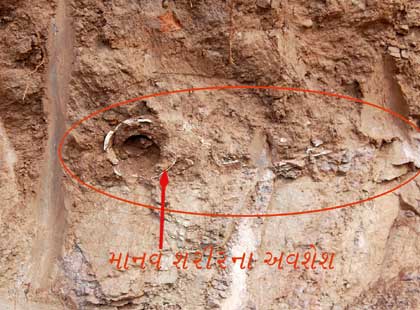
The latest in the series is building a road in the middle of a grave yard in Dahod with human remains still sticking out. The stories of capturing of grave yards, religious and cultural spaces along with various other ways of very systematic and planned discrimination keeps pouring in from all corners of India.

Those in power as well as the so called secular parties and a sizeable portion of the media has just become deaf and blind. While we celebrate our democracy and India moving into the 21st century, a large section of the population has become second class citizens in their own land. The other marginalised poor -tribals, dalits also facing similar situation. Religion has become the biggest industry with huge turn over and the new age gurus its ambassadors. Indian Middle class conciousness is sliding into medieval time. Indian middle class was never so irrational, superstitious and prejudiced as it has become today.

CC

Venezuela Moves Up Four Positions in U.N. Human Development Ranking

By James Suggett – Venezuelanalysis.com

Mérida, (Venezuelanalysis.com) – Venezuela improved it’s ranking from 62nd to 58th in one year, according to the United Nations Human Development Report 2009, which measured life expectancy, access to education, and income in 182 nations worldwide in the year 2007.

In the annual report, each country was ranked according to its Human Development Index (HDI), which is a composite figure between a minimum of zero and a maximum of one that represents the three aforementioned factors.

Venezuela’s HDI improved from .765 in the year 1980 to .844 in 2007, according to the report. In the year 2000, one year after President Hugo Chavez took office, Venezuela’s HDI was .802, and the figure has risen each year since then.

According to the United Nations Development Program representative in Venezuela, Yves Sassenrath, Venezuela’s improved ranking was the result of the reduction of its infant mortality rate, as well as the increase in its literacy and school enrollment rates.

Since Chavez took office in 1999, access to primary health care in Venezuela has increased more than fourfold to nearly 100%, illiteracy has been nearly eradicated, and infant mortality has decreased by more than half.

In the report, Venezuela was placed in the second tier of countries, which includes 45 countries judged to have attained “high human development.” The first tier, which includes 38 countries with “very high human development,” is topped by northern European countries, Australia and Canada.

Among Latin American and Caribbean countries, only Barbados was placed in the top tier, with a ranking of 37th worldwide. In the second tier, Chile, Antigua and Barbuda, Argentina, Uruguay, Cuba, Mexico, and Costa Rica received higher HDIs than Venezuela, while Panama, Trinidad and Tobago, Saint Lucia, Dominica, Grenada, Brazil, Colombia, Peru, and Ecuador received lower HDIs than Venezuela.

Overall in the report, fifty-one countries received a lower ranking than the previous year, forty-eight received a higher ranking, and eighty-three received the same ranking as the year before.

VA

Speech at the Opening Ceremony of the Ismaili Centre, Dushanbe

Speech by Karim Aga Khan
At the Opening Ceremony of
The Ismaili Centre, Dushanbe
Monday, 12 October 2009


Photo: Gary Otte

Bismillah-ir-Rahman-ir-Rahim
Your Excellency President Rahmon,
Your Worship the Mayor of Dushanbe,
Your Excellencies,
Distinguished Guests,

It is a great honour for me to welcome you to this inauguration ceremony. I am deeply pleased to greet President Rahmon, who was here when together we laid the Foundation Stone for this building five years ago, and who has long been a steadfast supporter of the Centre project. The same thing is true of the Civic Authorities of Dushanbe, and we are also honoured to welcome His Worship, Mayor Ubaidullaev.

It is also a distinct pleasure to look out upon this audience and to greet so many other leaders, from so many walks of society. Your very presence here invests this occasion with special meaning, for you truly represent the broad diversity of this country — and your participation attests to the importance of pluralism in Tajik life.

We have looked forward to this event for a long time. And now that this day of dedication has come, let me also extend our warmest gratitude to everyone whose contributions have made this vision a reality. We salute those who have donated their time and talent and material resources to this project, including those who designed, constructed and decorated this building and its surroundings. You have created a remarkable building that will enhance the cityscape of Dushanbe, just as it reflects and re-interprets the materials and colours and inspiring landscapes of other iconic buildings of the larger region.

The Tajik Ismaili community has roots in this region that extend back more than a thousand years, as long ago as the second century of Islam. The community holds a recognised and admired position in the history of human endeavour here, contributing some of the greatest names in the fields of theology, philosophy, poetry and the sciences. This new Centre will be a place for looking back on that rich and powerful history in grateful and solemn remembrance. It will be a place, as well, for peaceful contemplation of the spirit, and of the world, as we live our lives in the present moment. And it will be a place to think about the future and how this profound heritage can shape and inform tomorrow’s world. This Centre aspires to give physical form and spiritual space for pursuing all of these objectives.

As we look around us today, we are reminded of other times down through history when a variety of cultures and traditions have come together happily in this land. It is inspiring to remember how enriching encounters of ideas and viewpoints have so often prevailed against opposing forces of ignorance and prejudice. The remarkable flowering of human talent here has owed much to the pluralism of Tajik society. I am proud, in noting just one reflection of that tradition, that this Centre is located in a neighbourhood that celebrates the great names of Ismoili Somoni and Rudaki.

TIO
(Submitted by Nizar Dhanani)

Richard Moncrieff on the Violence in Guinea

The world has started paying attention to Guinea over the past week, following reports that government soldiers killed and raped scores of civilians at a protest in a soccer stadium in Conakry, the capital. The trouble in Guinea goes back to last December, when a military junta led by Captain Moussa Dadis Camara, an obscure junior officer, took control of the small West African nation six hours after its longtime dictator, Lansana Conté, died. Camara at first promised his rule would be temporary, but it hasn’t been, leading to the protest on September 28th, which is Guinean independence day. To make sense of what’s going on, I spoke to Richard Moncrieff, the West Africa project director for International Crisis Group, who is based in Senegal. An edited transcript of our conversation follows.

What’s the current situation in Guinea?

The people are pretty shocked at the events of the 28th of September. The violence was very, very brutal—there was sexual violence, and unarmed protesters were simply gunned down by the security forces, who then went into the poorer suburbs of Conakry, where they continued abuses and committed robberies and really terrorized the population.

And it remains tense, because the situation has not been resolved. I think it’s clear that if the army persists in its desire to stay in power, then opposition groups will again go out on the streets as a way of putting pressure on the military junta. The second element is that there are tensions within the military junta itself.
There is considerable tension in the provinces, too, due to the militarization of public administration and the recruitment of ethnic militias by the junta, as well as public unhappiness with the junta’s intention to stay in power. This raises the risk of further instability, which could affect neighboring countries, especially Liberia and Sierra Leone.

Was this explosion of violence unprecedented? Was it unexpected?
It was not unprecedented. In fact, it was remarkably similar to the violence that occurred in February, 2007, when there were protests over how the government handled a general strike. The army went onto the streets and shot at unarmed protestors. Over a hundred people died. Those acts were committed by similar people within the army and security forces, and they did it with the same objectives: to terrorize the population and to maintain power.

NYer

Help Deformed Children in Fallujah

Iraq Solidarity UK


Fatima Ahmed was born in Fallujah with deformities that include two heads

October 18, 2009

To: The United Nations

Young women in Fallujah in Iraq are terrified of having children because of the increasing number of babies born grotesquely deformed, with no heads, two heads, a single eye in their foreheads, scaly bodies or missing limbs. In addition, young children in Fallujah are now experiencing hideous cancers and leukaemias. These deformities are now well documented, for example in television documentaries on SKY UK on September 1 2009, and on SKY UK June 2008. Our direct contact with doctors in Fallujah report that:

In September 2009, Fallujah General Hospital had 170 new born babies, 24% of whom were dead within the first seven days, a staggering 75% of the dead babies were classified as deformed.This can be compared with data from the month of August in 2002 where there were 530 new born babies of whom six were dead within the first seven days and only one birth defect was reported.

Doctors in Fallujah have specifically pointed out that not only are they witnessing unprecedented numbers of birth defects but premature births have also considerably increased after 2003. But what is more alarming is that doctors in Fallujah have said, “a significant number of babies that do survive begin to develop severe disabilities at a later stage”.

As one of a number of doctors, scientists and those with deep concern for Iraq, Dr Chris Burns-Cox, a British hospital physician, wrote a letter to the Rt. Hon. Clare Short, M.P. asking about this situation. She wrote a letter to the Rt. Hon.Douglas Alexander, M.P. the Secretary of State of the Department for International Development (a post she had held before she resigned on a matter of principle in May 2003 ) asking for clarification of the position of deformed children in Fallujah.

She received a reply dated 3rd September 2009 (two days after the Sky TV broadcast of 1st September 2009 ) from a junior minister, deputy to The Secretary of State, Mr. Gareth Thomas MP, Duty Minister, Department for International Development. In his reply he denies that there are more than two or three deformed babies in Fallujah in a year and asserts that there is, therefore, no problem. This is at wild variance with reports coming out of Fallujah. One grave digger of a single cemetery is burying four to five babies a day, most of which he says are deformed.

UI

(Submitted by Ingrid B. Mork)

Video Interview: Dan Berger on Political Prisoners in the United States

Written by Angola 3 News

This new interview with author/activist Dan Berger was conducted in the Winter of 2009. The interview is mostly based on Berger’s essay “The Real Dragons: A Brief History of Political Militancy and Incarceration: 1960s to 2000s,” which is featured in the book Let Freedom Ring: A Collection of Documents from the Movements to Free U.S. Political Prisoners (PM Press, 2008).

In part one, Berger discusses his new research into US prison movements of the 1970s, which Berger is researching and writing about for his PhD dissertation at the Annenberg School for Communication at the University of Pennsylvania.

DAN BERGER: Political Prisoners in the US, #1/2

In part two, Berger discusses prisoner movements today, particularly in light of the recent ten-year anniversaries of both Critical Resistance and The Jericho Movement.

DAN BERGER: Political Prisoners in the US, #2/2

Dan Berger is a writer and activist living in Philadelphia. He is the author of Outlaws of America: The Weather Underground and the Politics of Solidarity (AK Press, 2006) and co-editor of Letters From Young Activists: Today’s Rebels Speak Out (Nation Books, 2005). Presently, along with his dissertation about 1970s prison movements, he is editing a book about 1970s-era radicalism, titled Hidden Histories of 1970s Radicalism (forthcoming from Rutgers University Press in Fall, 2010). His writings have also been published in the International Journal of Communication, The Nation, Punishment & Society, WireTap, Z Magazine, and elsewhere.

The grandson of Holocaust survivors, Berger has long been involved in struggles for social justice. From 2000 to 2003, he served as founding co-editor of ONWARD, a now-defunct internationally distributed quarterly anarchist newspaper based in Gainesville, Florida, that emerged out of the global justice movement. Berger has also been involved in an array of organizing efforts against war, racism, and the prison industrial complex. A longtime activist in support of U.S. political prisoners, Berger has published and presented scholarly essays on news images and prison abuse, alternative media and globalization, and race and social movements.

This new video-interview is made by Angola 3 News, which is an official project of The International Coalition to Free the Angola 3. Over 37 years ago in Louisiana, 3 young black men were silenced for trying to expose continued segregation, systematic corruption, and horrific abuse in the biggest prison in the US, an 18,000-acre former slave plantation called Angola. In 1972 and 1973 prison officials charged Herman Wallace, Albert Woodfox, and Robert King (who then became known as the Angola 3) with murders they did not commit and threw them into 6×9 ft. cells in solitary confinement, for over 36 years. Robert was freed in 2001 after 29 years of continuous solitary confinement, but Herman and Albert remain behind bars.

Through our work supporting the Angola 3, we seeks to spotlight the broader issues that are central to their story, like racism, repression, prisons, human rights, solitary confinement as torture, political prisoners, the legacy of the Black Panther Party, and more.

TF

Coups, UNASUR, and the U.S.

By Noam Chomsky – Zmagazine

The last time I had the opportunity to speak in Caracas-at long-distance that time-was about a year ago, right after the UNASUR (Union of South American Nations) meeting in Santiago in September 2008. That meeting was called “with the purpose of considering the situation in the Republic of Bolivia,” after an uprising backed by the traditional elites who had lost power in the impressive democratic elections of 2005. UNASUR condemned the violence and the massacre of peasants by the quasi-secessionist elements, and declared, “Their fullest and decided support for the constitutional government of President Evo Morales, whose mandate was ratified by a wide margin in the recent referendum.” These are the words of the final Declaration, which also warned that the participating governments-all of the South American Republics-“energetically reject and do not recognize any situation that implies an intent of civil coup d’état, the rupture of institutional order, or that compromises the territorial integrity of the Republic of Bolivia.” In response, President Morales thanked UNASUR for its support and observed that, “For the first time in South America’s history, the countries of our region are deciding how to resolve our problems, without the presence of the United States.”

True, and a fact of historic significance.

It is instructive to compare the Charter of the Organization of American States (OAS) with that of the African Union (AU). The latter permits intervention by African states within the Union itself in exceptional circumstances. In contrast, the Charter of the OAS bars intervention “for any reason whatever, in the internal or external affairs of any other state.” The reasons for the difference are clear. The OAS Charter seeks to deter intervention from the “colossus of the North”-and has failed to do so. That is an enduring problem in the Western hemisphere, nowhere near solution, though there has been significant progress. After the collapse of the apartheid states, the AU has faced no comparable problem.

South American Process of Integration

VA

The Obama Doctrine

By Abdallah El-Ashaal

By now, we know enough of Obama’s thinking to venture into outlining what I will call the Obama Doctrine.


The first trait of that doctrine is that no single superpower can run the world alone. This is a marked departure from the imperious views of President Bush who thought that Washington was the centre of the universe and could not be opposed or given advice. Bush’s attitude caused much trouble for America and lost it many friends abroad.

The second trait is that military power needs a political context. This, too, is a reversal of Bush’s policy of pre-emptive strikes. For Obama, diplomacy takes precedence over military action, which means that a major power should cultivate friends and use a carrot and stick policy with its enemies. Unfortunately, Bush has left behind a sad legacy, one that Obama will have trouble overturning.

The third trait is a focus on disarmament. Obama is making nuclear weapons disarmament a primary goal. He was the first US president to head a summit of UN Security Council members and urges reduction of their nuclear arsenals while continuing to preach strict non-proliferation. In April, during a NATO meeting in Prague, Obama made it clear that disarmament would remain a top priority for his administration.

The fourth trait is the rehabilitation of the UN’s role in international politics. By reversing the policies of President Bush, who routinely thumbed his nose at the UN, Obama seeks to reassure the world that multilateralism is back again.

The fifth trait is respect for international law. Whereas his predecessor avoided any mention of international law, Obama seems to cherish the term. His policies so far completely contradict those of the Bush administration, which took pride in deriding international law.

There may be more to the Obama Doctrine than the five traits mentioned above. But so far, the new president seems to be consistent in reassuring the world that his country is no longer a bully, but is a partner in policy and an advocate of legality.

This week’s Soapbox speaker is former assistant to the Egyptian foreign minister.

WA

Tomgram: Ira Chernus, Cold War’s Ghost Blocks Mideast Peace

And you thought “don’t ask, don’t tell” was a U.S. law on gays in the military that Barack Obama has promised to change. As it turns out, the same phrase plays quite a different role in the Middle East, where Obama seems to have no intention of changing it at all. Successive administrations have adhered to a “don’t ask, don’t tell” policy when it comes to Israel’s sizeable arsenal of nuclear weapons. That country has never acknowledged their existence, adhering instead to another arcane formula: “We will not introduce nuclear weapons into the Middle East.” Jonathan Schell has described this strange situation: “Evidently, in some abstruse way, possessing [nuclear weapons] is not introducing them. You’d have to do something more to introduce them. You’d have to brandish one or make a threat with one, or maybe just acknowledge that you had them. As long as they keep them in the basement and don’t make any introductions, then it’s alright.”

In May, the Obama administration evidently agreed not to break step with the fictions of previous administrations by acknowledging, or attempting to force Israel to publicly acknowledge, its estimated 100-200 nuclear weapons, including city-busters and cruise missiles adapted to be nuclear-armed and put on subs in the Mediterranean. His administration seems also to have agreed not to pressure the Israelis to sign the Non-Proliferation Treaty (NPT) under which nuclear arms are theoretically managed on our planet.

This, of course, leads to bizarre Middle Eastern policy anomalies rarely acknowledged in this country. In the midst of all the screaming headlines about an Iranian bomb which does not yet (and may never) exist, none of the acts the administration is demanding of the Iranians (and around which it is threatening to impose even stronger sanctions), including allowing International Atomic Energy Agency inspectors into its nuclear sites and providing greater transparency about the state of its nuclear program, have been put into practice by Israel, despite its perfectly real — in fact, staggeringly large — program. And no penalties have been imposed.

When Israel was in Iran’s present situation back in the 1950s and early 1960s, and secretly developing a nuclear weapons program, U.S. administrations simply looked the other way. Ever since, presidents have preferred not to look at all, not publicly anyway. According to Eli Lake of the Washington Times, despite President Obama’s stated policy of wanting to strengthen the NPT and lead the world toward nuclear disarmament, he recently “reaffirmed” to Israeli Prime Minister Benjamin Netanyahu “a 4-decade-old secret understanding that has allowed Israel to keep a nuclear arsenal without opening it to international inspections.”

One irony of the Obama push for an Israeli-Palestinian peace agreement, even while working to bring Iran to heel, has been this: despite all efforts in Israel and here, the Israeli nuclear arsenal has begun creeping towards the light of day. Soon enough, to everyone’s surprise, it may become part of the conversation even in the United States. So here’s a final irony: it’s just possible that “don’t ask, don’t tell” will lose its meaning in the Middle East before it does in the U.S. military. In the meantime, as TomDispatch regular Ira Chernus points out, the Obama administration’s focus on Iran continually creates unexpected problems elsewhere. Tom

TD

Dear America: Letter From a Muslim-American

Mohsin Mohi-Ud Din: Kashmiri-American human rights activist, Fulbright Scholar-Morocco, Drummer of Zerobridge

I write to you, America, as a Muslim-American who is frustrated at seeing both sides of my identity spreading myths about each other. In part one of this two part article, I address America from a Muslim perspective. In part two, which will follow in the coming weeks, I shall write to the Muslim community, from an American perspective.

Dear America,

Our world today is assaulted with myriad headlines describing rising extremism and terrorism, and political instability in Afghanistan, Pakistan, and the Middle East. Despite the plethora of bad news, most recently we have seen a day of hope marked by the end of Ramadan, where Muslims from all nations, social classes, and sects openly united in the spirit of humility, brotherhood, thankfulness, and peace.

As human beings, you and me have a tendency to let the negative marginalize the good and the true. But in this Ramadan the unity and the message of peace and humility that nearly a billion Muslims have exhibited should not go unnoticed, nor should it be underestimated.

America, even though you are part of us (Muslims) and we are a part of you, you often fear and misunderstand the one thing that unites the billion of us around the world is peace, love, and spiritual strength; you fear our religion, Islam. I write the following to not accuse anyone or apologize on behalf of any group. In part one of this article, I speak to you America, as one Muslim who is part of the majority of Muslims standing against the Ahmedinijads, Bin Ladens, and Taliban and Al Qaeda. These men have stolen my voice… our voice. The actions of a violent minority have for too long trumped the selfless and righteous actions of the moderate majority who do good in the name of Islam.

Firstly, Muslims are not a violent people and Islam is not a violent religion. I fear you overlook the fact that the faith of Muslims has been monopolized by the corrupt despots of Muslim countries and Muslim extremists. And it is the extremists whose power is bolstered by a media that has paralyzed the voice of the Muslim majority, who in fact abhor violence and terrorism.

It can be confusing even to me because on one side we only see Muslim extremists on the TV preaching hate in the name of Islam and we barely hear the majority. As I will touch on in part two of this article, Muslims have even marginalized themselves. But America, Muslims are a community of over a billion people, most of whom live in poverty within developing countries governed by oppressive, abusive, authoritarian regimes. These very regimes remain bunkered against an alienated group of extremists who are taking to the gun instead of a potentially rigged ballot. It is our mothers and daughters and sons who are being killed on a daily basis by either violent extremists or botched missile attacks by NATO. We are against violence and terrorism America, be it from Muslim extremists or NATO bombs. We are against violence because it is we who are the primary target of most terrorist attacks today. And while we may disagree with your military actions and policies, we look up to the principles that make up America… I speak of the freedom to be critical of yourself as a society and government; the opportunities awarded by the most comprehensive education system in the world; and your effortless ability to adapt in an ever transforming world.

Secondly, we Muslims, especially the Muslim youth, are not limited to the identifications that many parts of you believe us Muslims to be. Many see us to be ignorant, introverted, backwards, fundamentalist people. This is far from the truth. We are artists, painters, poets, doctors, lawyers, musicians, intellectuals, gay, straight, punk or conservative, man and woman, and yes, we too are American.

Thirdly, Muslims abroad and Muslims in America are often confused by your (America) political and military actions, which sometimes contradict the pro-freedom, pro-democratic pro-human rights rhetoric. Yes, the fault is ours (the Muslims) in numerous respects, but America, historical facts show that failed foreign policies have contributed to the political and economic landscape in which many Muslim led authoritarian regimes currently thrive. As an American myself, I know it is not the American agenda to kill civilians. The brave men and women in the armed forces are fighting for international peace and security. I truly believe this. So, why do many other Muslims in my community distrust American policies and actions?

HP

(Submitted by Al-Karim Amersi)