The impact of the Crisis on women

One year after the onset of the financial crisis, the EWL has published a Statement to the attention of European policy makers. At this time, predictions abound concerning the ‘end’ of recession and the return to growth, but the EWL analysis of the effects of the crisis and the nature of the reform packages that our governments have put in place to tackle it, is critical.

Due to persistent gender inequalities, the crisis was from the start, and remains, gendered in its nature and its effects. Women’s absence from decision-making positions in those fields that caused the crash has been well-documented, but the attention given to lay-offs in the construction and car industries has further exacerbated the misleading image of this crisis as one that concerns primarily men. Women, more integrated into the labour market than ever before, are nevertheless also direct victims, especially as women are more likely than men to be in precarious employment positions. There are four times as many women as men in part-time jobs in the EU, an area excluded from unemployment statistics. Their families, to whom women dedicate a higher proportion of their income than their partners, will also suffer.

The EWL argued from the beginning that it was essential to acknowledge, understand and analyse the impact of the crisis on women, and to design recovery plans at national, European and international levels that would explicitly seek to address and rectify this impact. In one sense, the crisis and subsequent reforms represented an opportunity to ensure that the same weaknesses in our systems were not allowed to persevere and produce similar catastrophic effects in the future, including the absence of women in economic and financial decision-making and the lack of regard for innovative thinking and methods such as gender budgeting and feminist economics. This has not happened. At the European level, the recovery plan was explicitly gender blind.

The effects of the crisis are far from over, and while many key opportunities to learn from history and implement much-needed changes have already been passed by, more are yet to come. Nevertheless, this window of opportunity cannot stay open indefinitely. Continuous denial of the gender impact of the crisis coupled with the exclusion of women from the shaping the post-crisis framework runs the very serious risk of leading to a rapid return to a ‘business-as-usual’ approach, which while designed for ‘recovery’, will only in the long term have detrimental consequences for all stakeholders, not least women. Political will and concrete actions are needed now.

SFCrisis pdf file

WL

The Gift of Life, and Its Price


Mastera family

The Mastera twins, in a family photo at 2 months old, each weighed only about 3 pounds at birth. They are doing well now, but the path was difficult.

By STEPHANIE SAUL

Published: October 10, 2009

Scary. Like aliens. That is how Kerry Mastera remembers her twins, Max and Wes, in the traumatic days after they were born nine weeks early. Machines forced air into the infants’ lungs, pushing their tiny chests up and down in artificial heaves. Tubes delivered nourishment. They were so small her husband’s wedding band fit around an entire baby foot.

Having a family had been an elusive goal for Jeff and Kerry Mastera, a blur of more than two years, dozens of doctor visits and four tries with a procedure called intrauterine insemination, all failures. In one year, the Masteras spent 23 percent of their income on fertility treatments.

The couple had nearly given up, but last year they decided to try once more, this time through in-vitro fertilization. Pregnancy quickly followed, as did the Mastera boys, who arrived at the Swedish Medical Center in Denver on Feb. 16 at 3 pounds, 1 ounce apiece. Kept alive in a neonatal intensive care unit, Max remained in the hospital 43 days; Wes came home in 51.

By the time it was over, medical bills for the boys exceeded $1.2 million.

NYT

The Great Spectacle from Sweden

By B. R. Gowani

Nobel deeds are the goal and aim of
Obama, the first non-white US President.
Being a Harvard lawyer, now part of the
Elite class of the United States, he is the guy to
Lead the Democratic Party’s façade of liberalism.

Pakistan is experiencing the devastating
Effects of the Nobel Peace Prize winner’s policies.
Afghanistan will see more barbarity and
Cruelty from the recruits of the dying empire.
Eagle has soared too high; immune from victims’ pain

Prize givers are repudiating Bush or are they
Repeating the Committee’s peace hypocrisy?
Iraq is peace-less for a long time and in the US, the
Zombies wants to go after Iran to protect Israel.
Empire’s end can bring some peace: not the Peace Prize.

B. R. Gowani can be reached at brgowani@hotmail.com

Marx and Darwin: Two great revolutionary thinkers of the nineteenth century

Part 1
By Chris Talbot 17 June 2009

This is the first of a three-part series comprising a lecture by WSWS correspondent Chris Talbot to meetings of the International Students for Social Equality in Britain . Part 2 was posted on June 18 and Part 3 on June 19.

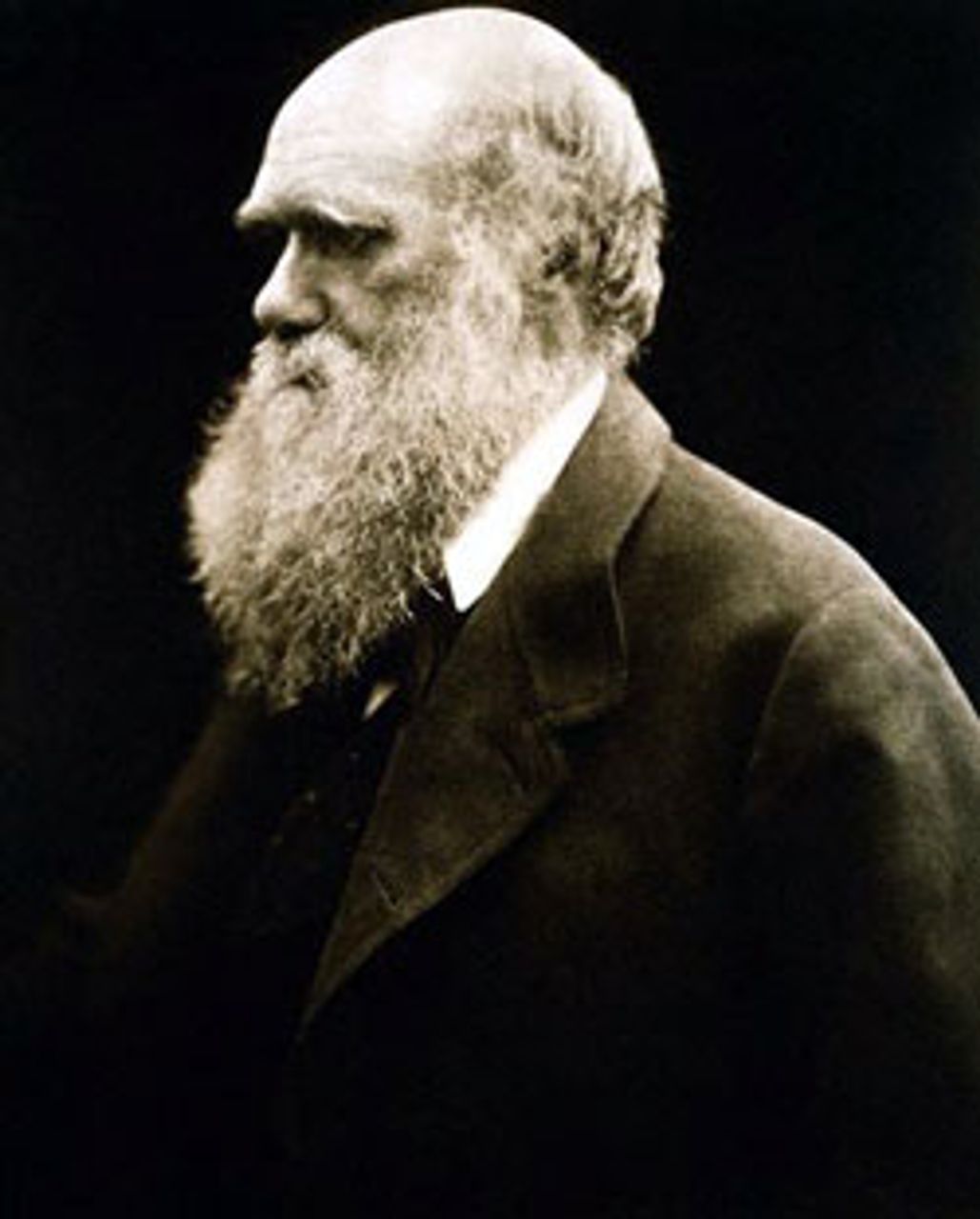
We have organised these meetings of the International Students for Social Equality in honour of Charles Darwin from a different standpoint from the many other bicentenary events. We want to bring out the connection between Darwin and that other great thinker of the mid-19th century, Karl Marx.


Charles Darwin

The importance of Marx hits you when you take in the events of the last few months. We are now in a world economic crisis comparable to, if not more severe than, that of the 1930s, which will have a major effect on all of our futures. Current economic theory completely failed to predict this crisis. The economists cannot explain how it happened and have no answer to it [1]. In contrast, Karl Marx spent much of his life developing an economic analysis that explains the inherent instability of capitalism and provides a scientific basis for the development of the socialist working class movement.

Superficially, it may seem there is not much of a connection between Darwin, the retiring English gentleman, and Marx ,who along with Frederick Engels, was involved in revolutionary communist activity for most of his adult life. But Marx and Engels themselves immediately recognised the significance of Darwin ’s theory when On the Origin of Species appeared 150 years ago. Engels wrote to Marx in 1859, just after he had read the first edition of Darwin ’s book [2]:

Darwin, by the way, whom I’m reading just now, is absolutely splendid. There was one aspect of teleology that had yet to be demolished, and that has now been done. Never before has so grandiose an attempt been made to demonstrate historical evolution in Nature, and certainly never to such good effect. One does, of course, have to put up with the crude English method.

The last sentence is a reservation that Engels and Marx held—only in private it must be stressed—regarding the methodological approach of Darwin . But throughout their lives they insisted on the importance of Darwin ’s work. Teleology, meaning a divine purpose which was working itself out in nature, had been demolished.

WS

There Is Much to Do: An Interview With Hugo Chavez

September 29th 2009 , by Greg Grandin – The Nation

Three years ago, Venezuelan president Hugo Chávez caused a stir when, in a speech to the United Nations General Assembly, he called then-US President George W. Bush a “devil.” “I can still smell the sulfur,” he said, standing at the same podium where, a day earlier, Bush had given his own address. Last week, Chávez once again followed a US president in the UN podium, but this time he caught a whiff of something different–“the smell of hope.” In the following interview–conducted at Venezuela’s mission to the United Nations in New York–Hugo Chávez talks about his relationship with Barack Obama and what his election could mean for the United States, as well as about the Honduran crisis, plans to extend the Pentagon’s presence in Colombia, domestic successes and challenges, and the legacy of Brazilian president Luiz Inácio Lula da Silva.

Greg Grandin: I’d like first to ask you about the Honduran crisis. Manuel Zelaya–the president overthrown in a coup on June 28–is currently in the Brazilian embassy in Tegucigalpa , having returned to the country in secret. What happens next? What can be done to force those who carried out the coup to negotiate?

Hugo Chávez: It’s not for me to decide what the next step is. Zelaya has called for dialogue. That was the first thing he did as soon as he entered the Brazilian embassy. The coup-plotters have responded with repression, death and terror. I believe that the brutal nature of this coup will lead to its failure.

GG: But how do you explain the intransigence of Roberto Micheletti, the president installed by the coup? There is about a month to go before the scheduled November 29 presidential elections, and whether Zelaya is returned to office or not, we know that one of two candidates from either the National or Liberal parties–both conservatives–is going to win. So why wouldn’t the de facto government want a negotiated solution, allowing a symbolic return of Zelaya to the presidency for a short period in order to legitimate the outcome of the election?

HC: Noam Chomsky has a book, which I read for the first time when I was in Spain , called Fear of Democracy. There is your answer. Fear of democracy. In Honduras , they had a sham democracy. It was run by elites, what was called a liberal democracy but in reality was a false democracy. Honduras has been governed by a small group that for a long time has been supported by the United States, which used Honduras as a military base against other countries of Central America, against Cuba, turning the country into a colony. Manuel Zelaya came from the ranks of the Liberal Party, he entered the government as an intelligent young man, breathing in the new winds blowing from South America , the winds of change, I would say even winds of revolution. It is different from the revolution of the 1970s. This one is carried out not with rifles but by a peaceful people, it is a democratic revolution. Montesquieu said that men needed to be able to ride the wave of events. And that’s what Zelaya did. With his cowboy hat he climbed up and rode the wave. And as soon as he broached the question of convening a constitutional assembly to consult with the people about refounding the republic, the political class that has governed all this time, the Honduran bourgeoisie, became frightened. That is the fear of democracy.

GG: What is the importance of events in Honduras for the rest of the continent? There are signs that the right, the transnational right, is regrouping, and that it sees Honduras as the first battle in a larger struggle to roll back the left.

VA

Maternal death rate in Sierra Leone is a “human rights emergency”

As world leaders meet at the United Nations in New York to discuss increased funding for healthcare in developing countries, Amnesty International’s Secretary General Irene Khan has launched a campaign to reduce maternal deaths in Sierra Leone .

The report Out of Reach: The Cost of Maternal Health in Sierra Leone uses graphic and personal testimonials to show how women and girls are often unable access lifesaving treatment because they are too poor to pay for it.

In Sierra Leone , one in eight women risk dying during pregnancy or childbirth. This is one of the highest maternal death rates in the world.

Thousands of women bleed to death after giving birth. Most die in their homes. Some die on the way to hospital; in taxis, on motorbikes or on foot. In Sierra Leone , less than half of deliveries are attended by a skilled birth attendant and less than one in five are carried out in health facilities.

“These grim statistics reveal that maternal deaths are a human rights emergency in Sierra Leone ,” said Irene Khan, launching the report in Sierra Leone ‘s capital, Freetown . “Women and girls are dying in their thousands because they are routinely denied their right to life and health, in spite of promises from the government to provide free healthcare to all pregnant women.”

AMN

Gulzar’s favourite lyrics now in English

Indo-Asian News Service

Oscar award winning lyricist Gulzar has handpicked 100 of his best works that have been translated into English by scriptwriter Sunjoy Shekhar for an anthology titled ‘100 Lyrics’. The poet reveals that he was inspired by rocker Sting to come out with this compilation.

‘100 Lyrics’ is a bi-lingual volume that contains the original lyrics in Hindi along with their English translations, featuring anecdotes about the composition.

Published by Penguin-Books India, the yet-to-be released volume has English versions of the lyricist’s early hits like Mera Gora Ang Lai Le, the first film lyric that Gulzar wrote for Bimal Roy’s Bandini in 1963, to the enduring Dil Dhoondta Hai (Mausam), Naam gum jayega (Kinara), Humne dekhi hai un aankhon ki, Is mod pe jate hain (Aandhi) and Mera kucch Saman (Izazat).

Gulzar, who won an Oscar this year for the song Jai Ho in the film Slumdog Millionaire, has surprisingly drawn inspiration from English musician Sting.

“The popular musician Sting inspired me to compile this book. I have published several volumes of my poetry before and compiled my stories separately in two small volumes in Hindi. Somehow, I do not mix the two, except when my poems were picked up for a film and dressed with a musical rendering,” said Gulzar.

“Following in the footsteps of Sting, I undressed my lyrics and realised that lyrics can survive on their own without a mannequin or a visual. If not all, a good majority of them survived in another genre or form- as poetry,” says Gulzar in the book.

HT

How Israel Buried the UN’s War Crime Probe

Buying Off the Palestinian Authority

By JONATHAN COOK
Nazareth

Israel celebrated at the weekend its success at the United Nations in forcing the Palestinians to defer demands that the International Criminal Court investigate allegations of war crimes committed by Israel during its winter assault on the Gaza Strip.

The about-turn, following furious lobbying from Israel and the United States, appears to have buried the damning report of Judge Richard Goldstone into the fighting, which killed some 1,400 Palestinians, most of them civilians.

Israeli diplomats suggested on Sunday that Washington had promised the Palestinian Authority, in return for delaying an inquiry, that the United States would apply “significant pressure” on Benjamin Netanyahu, the Israeli prime minister, to move ahead on a diplomatic process when the US envoy, George Mitchell, arrives in the region tomorrow.

But, according to Israeli and Palestinian analysts, diplomatic arm-twisting was not the only factor in the PA’s change of heart. Haaretz newspaper reported last week that, behind the scenes, Palestinian officials had faced threats that Israel would retaliate by inflicting enormous damage on the beleaguered Palestinian economy.

In particular, Israel warned it would renege on a commitment to allot radio frequencies to allow Wataniya, a mobile phone provider, to begin operations this month in the West Bank . The telecommunications industry is the bedrock of the Palestinian economy, with the current monopoly company, PalTel, accounting for half the worth of the Palestinian stock exchange.

The collapse of the Wataniya deal would have cost the Palestinian Authority hundreds of millions of dollars in penalties, blocked massive investment in the local economy and jeopardised about 2,500 jobs.
Omar Barghouti, a Jerusalem-based founder of a Palestinian movement for an academic and cultural boycott of Israel , denounced the Palestinian Authority’s move: “Trading off Palestinian rights and the fundamental duty to protect the Palestinians under occupation for personal gains is the textbook definition of collaboration and betrayal.”

The deal to establish Wataniya as the second Palestinian mobile phone operator has been at the centre of the international community’s plans to revive the West Bank ’s economy and show that Palestinians are better off under the rule of Mahmoud Abbas, the Palestinian president, than Hamas.

CP

Chopping at the trees of life

By NICOLE JOHNSTON

Vast swaths of a once-fertile country have become wastelands and life for rural Malawians is now even tougher, reports Nicole Johnston

Malawi’s rural poor don’t know much about the science of climate change, but they know how it is affecting them: a slow slide deeper into poverty in an inexorable cycle of heat, hunger and HIV/Aids.

Farmers tell tales of once-fertile soil that now yields very little; of rains that don’t come on time or arrive in floods; and of rivers once rich in fish now too shallow and hot to provide this valuable source of protein.

In Balaka, in the south, the elders notice the changes most. Manesi David doesn’t know how old she is but grown men call her gogo.

“For six years I’ve noticed this change in the weather. The rains have changed; now we have hunger every year. In the past, the sun was not so hot,” David says. “Malaria is increasing and because the temperature is rising people get tired more easily. People are getting old very quickly nowadays because they work so hard.”

David is part of a new irrigation project run by the Balaka Livelihood Security programme, which works with farmers to mitigate the effects of climate change. The programme digs wells and uses treadle pumps to irrigate the fields of its 78 members, each of whom has 100m2 under cultivation. The group grows sweet potatoes, pumpkins and maize.

The village headman, Yohane Tsamba, reads a newspaper when he can afford one and avidly listens to the radio. He knows that “many factories overseas use coal and they have destroyed nature because they put fumes into the atmosphere”.

“Most of our mountains no longer have trees because we’ve cut them down. Generations are still coming, and what will they have?”

MG