The era of women empowerment and 39 lashes


Getting punishment instead of empowerment? Photo: Iqbal Ahmed/ Drik News

By Moazzem Hossain

I wish I did not have to write this piece. One must do it since there has been a silence on the part of the commentators and the politicians, except this daily which published a strongly worded editorial on this issue on May 26. Moreover, the incident had taken place next door to the upazila where I come from. Yes, I am talking about the recent incident at a village in Daudkandi, where a girl was whipped with 39 lashes in the presence of a few hundred peoplethe outcome of a decree of a local salish.

This is not the first occasion that such a crime has been committed by the so-called moulanas and their accomplices in this nation. The aim of this piece is to remind the politicians at all levels that, under any circumstances, this kind of atrocity cannot be allowed and must be stopped immediatelyby making new laws if required.
There is no excuse for tolerating such a heinous act in rural Bangladesh during the so- called era of women empowerment and emancipation. Most importantly, it makes one doubly puzzled that no politician has come forward and shown empathy towards that poor injured girl in the hospital. Perhaps they do not want to be stigmatised, and feared a backlash from the bigots.

Some readers may have thought that the village where the incident took place was located in a remote and illiterate part of the country. No, Daudkandi has one of the highest literacy rates, close to 80%, and is located not too great a distance from Dhaka (only 50 km).
Politically, this is certainly one of the violence-ridden areas of the country, although it has a very high level of per capita income. Although the famous Goalmari fight had taken place here during the war of liberation (Pakistan army even lost some its officers in this fight), the post-liberation period has been infested with violence after violence.

The infamous killers of the father of the nation come from this area (Khandakar Mushtaq and Col. Rashid). Since General Zia’s time this locality has been dominated by BNP-Jamaat politics led by Khandakar Musharaf, who lost the last election to AL’s Subed Ali Bhuiyan.
If I am correct, neither the incumbent MP, nor the former MP has visited the victim until now. None of the 45 MPs elected in the women’s quota has visited the poor girl, either. One may ask, what kind of democracy we are heading towardsdemocracy for the elite, or democracy for the masses?

Daily Star for more
No buts for Asean on No Tobacco Day

By Achara Ashayagachat

Health advocates have urged Asean governments to print the World Health Organisation (WHO)-advised picture warnings on cigarette packs as part of Sunday’s World No Tobacco Day.
The Bangkok-based Southeast Asia Tobacco Control Alliance (Seatca) has called on governments in the region to immediately implement their commitments under the WHO Framework Convention on Tobacco Control.

So far only Thailand, Singapore, Malaysia and Brunei have pictorial health warnings on cigarette packs, said Seatca director Bungon Ritthiphakdee.

“We are calling on Asean governments who are lagging behind to follow suit and pass laws requiring strong, prominent pictorial health warnings as required by the WHO framework.

“Pictorial pack warnings are one of the best ways to educate the more than 100 million smokers in the region on the dangers of smoking. It does not cost governments much money to implement this measure,” said Ms Bungon.

• Related content: Showing the truth about tobacco

Under the framework, parties are given a three-year deadline to implement Article 11 of the WHO framework which states warning messages on tobacco product packs should cover at least 50% of the principal display areas of the package. It also requires that multiple health warning messages be rotated, encourages the use of pictures and pictograms and prohibits misleading terms such as light and mild, or low tar.

The Philippines, Cambodia and Vietnam missed their 2008 deadline to introduce prominent health warnings on tobacco packs. Laos has only a few months left to comply.

“Tobacco companies use graphics on their packs to attract established smokers and first-time smokers among teenagers. But when governments want to use graphics on packs to educate smokers, the companies fight these measures as they are in the Philippines, Malaysia and Indonesia,” Ms Bungon said.

Indonesia has not ratified the WHO framework and is lagging far behind other Asean countries in tobacco control measures.
Studies in the region have found that prominent graphic warnings on cigarette packs are far more effective in educating smokers and the public in general.

Bangkok Post for more

Buddhist monks on walkathon for environment

By Kripa Krishnan (Press Trust of India)

Manali, May 28 (PTI) Dressed in their deep red robes, monks and nuns of a 800-year-old Buddhist sect have begun a marathon padyatra to propagate environmental conservation and spread awareness about the indiscriminate use of plastics and motor vehicles.

Led by their spiritual leader the Gyalwang Drukpa, 600 monks would travel across the snow-clad Himalayas in a month long ‘padyatra’ that will culminate in the Hemis Festival in Ladakh later next month.

“The yatra is a way of embracing the ‘walking life’, which is beautiful and stress free. Why should we quit walking for cars and helicopters, when they cause so much damage to nature,” the Gyalwang Drukpa told reporters here before commencing the journey on May 25.

The ‘walkathon’ is expected to gather more volunteers and fellow Drukpas along the 400-km stretch.

The Drukpa leader says he is expecting upto 1000 followers to join him en route the journey where they would talk to villagers about the environment and also distribute pamphlets and canvas bags.

“We want to spread the message of environmental protection and are not marching for Buddhism. The aim is to interact with people living in the remotest corners of the Himalayas and get to know nature more intimately,” the spiritual leader said. PTI

PTI

Submitted by Pritam Rohila

Worms and Liars

By B. R. Gowani

The Jewish TaNaKh says:
(the Bible too,
the Qur’an somewhat differs)
After creating the universe
In five days;
On the sixth day:
God created Adam and Eve.
And then came the Sabbath.

Or can it be that
God then slid into permanent coma
And hence the screwed up world?

Al Qaeda created/inspired many groups:
Most of them are busy
Blowing up people and things …

But where is Osama?
Resting? Or in a permanent coma?

Frequently since 2001 headlines read:
“US attack kills Taliban in great numbers” or
“Pakistan hands over Al Qaeda members to US”
Subsequently, often it is acknowledged:
Many of these were/are innocent civilians!

Notwithstanding the innocents,
The sheer numbers murdered should account for
Total number of Muslim militants …
Many times over.

So what is the true reality?

The recent bombings in Pakistan show
A proliferation of militants
How is that possible, given so many proclaimed deaths?

Do they multiply before dying,
Or are the US/Pak leaders lying?

Or is it …

New militants are born from the US bombs
and are propagating like vermin?

B. R. Gowani can be reached at brgowani@hotmail.com

A decade on, East Timor is still linked to Indonesia

East Timor ten years after the referendum

Hedda Haugen Askland and Thushara Dibley


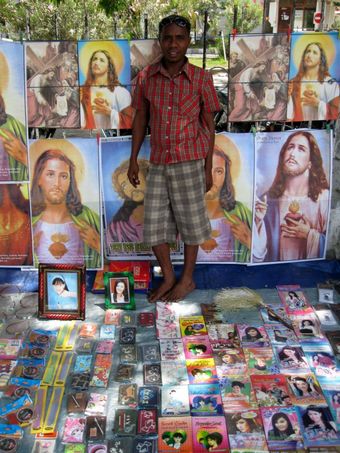
A street vendor in Dili selling Indonesian books and other
products imported from Indonesia
Thushara Dibley

August this year marks ten years since the historic vote in East Timor for independence from Indonesia. In that time East Timor has become established as an independent nation whose leaders have cultivated a nationalism that emphasises East Timor’s Portuguese heritage and valorises the resistance against the Indonesian occupation. Nonetheless, as the contributors of this edition show, independent East Timor remains connected to Indonesia in diverse and intricate ways.

Not long after East Timor became independent, Inside Indonesia decided we would no longer run stories about East Timor, unless they dealt directly with the new country’s connection – historical or current – to Indonesia. East Timor was now an independent country, and we thought it would be an insult to treat domestic East Timorese affairs as if they were still ‘inside’ Indonesia. Ten years on, we’ve decided to devote an entire edition to the relations between the two countries, to look both at the legacies of the past occupation and at connections that continue in the present.
Inside Indonesia for more

Megaprojects and Militarization: A Perfect Storm in Mexico

Todd Miller

The 40-day blockade of the Trinidad mine in the Oaxacan community of San José del Progreso came to a sudden and violent halt on May 6. Mine representatives and municipal authorities called in a 700-strong police force that stormed into the community in anti-riot gear along with an arsenal of tear gas, dogs, assault rifles, and a helicopter.

The overwhelming show of force was in response to community residents’ demand that the Canadian company Fortuna Silver Mines immediately pack its bags and leave. The company is in the exploration phase of developing the Trinidad mine. The result was a brutal attack, with over 20 arrests and illegal searches of homes. Police seemed to be going after a heavily armed drug cartel, not a community protest.

This is one of the drug war’s dirty secrets: As Mexican security budgets inflate with U.S. aid – to combat the rising power of drug trafficking and organized crime – rights groups say these funds are increasingly being used to protect the interests of multinational corporations. According to a national network of human rights organizations known as the Red TDT, security forces are engaged in the systematic repression of activists opposed to megaprojects financed by foreign firms such as Fortuna Silver Mines.
NACLA for more

The Left-Wing Media Fallacy- Jeremy Bowen, The BBC, And Other National Treasures

By David Edwards

It is a mistake to imagine that media corporations are impervious to all complaints and criticism. In fact, senior editors and managers are only too happy to accept that their journalists tend to be ‘anti-American,’ ‘anti-Israel,’ ‘anti-Western,’ indeed utterly rotten with left-wing bias.

In June 2007, an internal BBC report revealed that Auntie Beeb had long been perpetrating high media crimes, including: “institutional left-wing bias” and “being anti-American”. (‘Lambasting for the “trendy Left-wing bias” of BBC bosses,’ Daily Mail, June 18, 2007)

Former BBC political editor, Andrew Marr, applied his forensic journalistic skills, noting that the BBC was comprised of “an abnormally large proportion of younger people, of people in ethnic minorities and almost certainly of gay people, compared with the population at large”. This, he deduced, “creates an innate liberal bias”. (Nicole Martin, ‘BBC viewers angered by its “innate liberal bias”,’ Daily Telegraph, June 19, 2007)

On the other hand, despite the fact that the media system is made up of corporations that are deeply dependent on corporate advertisers (for revenue) and official government sources (for subsidised news), other possibilities are unthinkable. If one were crazy enough, one might ask, for example:
‘Is it accurate to describe the corporate media as servile to concentrated power? Or, as a key component of the state-corporate system, is media propaganda best described as a form of self-service?’
Zmag for more

Two Funerals and a Wedding

The Battle of Swat, the Indian Elections and the End of the Sri Lankan Civil War

By NIRANJAN RAMAKRISHNAN

There were three significant happenings this week up and down the vertical axis of the Indian Subcontinent.

Up in the North, Pakistani troops battled the Taliban in Swat. As the week closed they had just begun the battle for Mingora, the capital town of the picturesque vale.

Meanwhile down South on a coastal strip along the Indian Ocean, the Sri Lankan Army was concluding what is being called Eelam War IV, the final chapter ending in the elimination of the Liberation Tigers of Tamil Eelam (LTTE), and the killing of its legendary chief, Prabhakaran. It marked the end of a government military operation that matched the LTTE’s own ruthlessness and savagery.

In the middle was India, electing its 15th parliament, fifty seven years since its first. The Congress party, which governed the last five years in a tenuous coalition, was returned to power with increased numbers, while its opponents on the nominal right and left were both shorn of seats.

It was Winston Churchill who remarked that the United States could usually be relied upon to do the right thing… after having tried everything else. The same remark might apply to Pakistan with this alteration, “after having secured promises of billions in additional aid”. Following several months of dilly-dallying — even an accommodation with the Taliban — essentially letting the outlaws run the judicial system in Swat, Pakistan finally moved. Whether nudged by world outrage at the YouTube video of a young lady in Swat being publicly whipped by Taliban goons, or whether as a result of the latest administration of the ancient American patent medicine for Pakistan (one part threat, four parts blandishment) the army appeared to shake off its post-Waziristan funk and move with dispatch and determination against the insurgents. Like the military operations in Sri Lanka, this has resulted in large numbers of refugees (1.4 million per one report) fleeing their homes to escape the fighting. The devastation of the fight for Mingora is yet to come. And there is something unseemly against an army being used against one’s own population, a fact likely to stick in many craws in the months and years to come. But as with Indira Gandhi and Bhindranwale, sometimes the biggest punishment is simply having to eat one’s own cooking.

Widespread celebration all over Sri Lanka greeted the Sri Lankan president’s announcement that the LTTE had been crushed, and that peace had returned to the island paradise (incidentally, the word ‘serendipity’ comes from an old name for Sri Lanka). The civil war there has continued for nearly 30 years. Lincoln concluded his in four. But that is as far as the analogy may be pushed. Compared to the complexities of the Lankan problem, the American Civil war was a piffle. Tamils, though a minority, make up over 25% of the population. They were for long part of the establishment until they were purged by the Sinhalese. Unlike blacks in the US, Tamils have inhabited Sri Lanka for over a millennium, some say even longer than the Sinhalese. And unlike the overt crime of slavery, in the US, Tamils in Sri Lanka have for fifty years been subject to a below-the-radar apartheid, punctuated by pogroms connived at by the Sinhalese establishment. The LTTE was a reaction to this, in the end an overreaction. But if the Tamil’s status in Sri Lanka is at all recognized widely and on its way to being addressed, Prabhakaran for all his crimes and follies deserves a due measure of credit. It is trite to invoke Lincoln’s words about binding the wounds, but it is no less true for that.

Like Sherlock Holmes’ curious incident of the dog in the night, the Indian elections were remarkable for what did not happen.

Counterpunch for more

A neuroscience arms race could lead to guilt-free soldiers

The science of the brain is poised to play a major role in the wars of the future, according to Jonathan Moreno at Penn State University

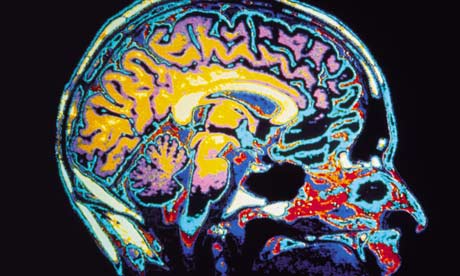
Psychological onslaught: How do you make your enemy feel defeated? Photograph: Howard Sochurek/Corbis
Military strategists grasped the importance of the mind on the battlefield when people first crossed clubs. But advances in modern day neuroscience and pharmaceuticals could transform the way wars are fought in coming decades.

In a recent defence intelligence agency report, leading scientists were asked to cast their minds forward 20 years and describe how neuroscience might be used by the military. They described “pharmacological land mines”, performance boosting drugs and electronic devices that make it impossible to lie.

The issue has now been picked up by Jonathan Moreno, an expert on the ethics of neuroscience and national security, in a new series of video interviews at Penn State.
Moreno kicks off talking about psychological operations. How do you make your adversary feel defeated, and how does the brain contribute to the sense that you can win or have already lost?

So far so familiar. But later on in the interview, Moreno gets on to issues of interrogation and waterboarding; whether we want guilt-free soldiers, and the prospect of a neuroscience arms race.

Guardian for more