The Nuclear Gang Rides Again

Saul Landau’s ZSpace Page

A group of scientists, military officials and government bureaucrats signed an informal pact with the Devil. The contract became public in August 1945, when US bombers nuked Hiroshima and Nagasaki.

Since then, no other nation has used a nuclear weapon, but thousands of radiation-emitting tests have occurred and nuclear energy plants mushroomed, with promises of cheap, safe and clean power. Over the decades, however, “the nuclear industry” has faced repeated cost over-runs, and serious “accidents.” Thousands died at the Chernobyl power plant ( Ukraine ) and a near catastrophe occurred at the Three Mile Island ( Pennsylvania ) facility. Air Force planes dropped H bombs in the ocean off the Spanish coast and innumerable leaks, fires and “mishaps” occurred routinely at military and civilian nuclear installations.

In 1980, Jack Willis and I produced “Paul Jacobs and the Nuclear Gang” for public television. Our documentary showed government officials and nuclear mavens colluding to obfuscate their failure to keep their “cheap, safe and clean” promise. In 1977, Jacobs, a reporter (and non-smoker) covered the nuclear issue since the 1950s. He developed lung cancer, his doctors speculated, after he had inhaled a plutonium particle while covering US government atomic tests. He also looked skeptically at US claims of benign radiation levels near the Nevada test site.

In a 1957 story, Jacobs reported his Geiger Counter jumping scale in a “safe” area. In his story, (The Reporter) he revealed the lies told by Atomic Energy Commission spokesmen about actual levels of radiation. Jacobs had surreptitiously acquired from a Public Health office in Las Vegas a classified document revealing AEC knowledge that so-called low level radiation constituted serious health hazards. Indeed, from later de-classified internal memos, Jacobs discovered the AEC had classified the health report not to keep it from Soviet officials, who knew about radiation’s perils, but to keep the US public sedated so people wouldn’t think about choosing between nuclear tests and getting cancer.

In 1977, Willis and I returned with Jacobs to the “down wind” area he had investigated twenty years earlier. In southern Utah , Jacobs found those he had previously interviewed were dead or had cancer. In St. George , Utah , directly in line of the fall-out path from Nevada nuclear tests, he found a near epidemic of cancer and a public that had endured years of nuclear nervousness.

From: Z Net – The Spirit Of Resistance Lives

The Historic Role of Gender in Language

By Dr. Sarojini Sahoo
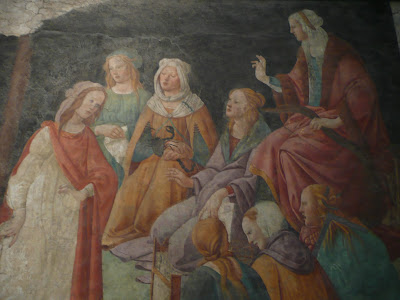
At Louvre Art Gallery in Paris, this is an art of Botticelli . According to Heidi Harley, an Associate professor of Linguistics at the University of Arizona, one of these lovely young ladies in the art would represent Grammar.

In her book The Myth of Mars and Venus, Deborah Cameron, a professor of Language and Communication at Worcester College of the University of Oxford and a leading expert in the field of language and gender studies, describes the ‘men are from Mars, women are from Venus’ position.

Every language reflects the prejudices of the society in which it evolved and as the patriarchal control over the society prevailed for a long time, the language has also been organized with male-centric views. So, in many languages, we find there are multi-gender systems similar to biological differences of nature. In most of the languages (except Japanese), the nouns and pronouns either have ‘masculine’ or ‘feminine’ gender. In English, there is also a third gender known as ‘neuter.’ But in Hebrew, Greek, German, Spanish, French, and Portuguese and in Indian languages like Hindi, there are only two genders and the prepositions or verbs have been modified according to the gender of the subject.

In comparison to these languages, my own language, Oriya, has gender-neutral characteristics. Though like English, in my language, there are three genders, but the variation is that our pronouns have no gender and unlike Hindi, our verbs and prepositions are not modified according to the subject. Many Indian languages besides Oriya like Tamil, Assamese and Bengali have also gender-free pronouns.

This type of characteristic can also be seen in Persian, Finnish, Estonian, Hungarian, Basque, Japanese, Korean, Indonesian, Quechuan, Filipino, and Tagalog. In some way, Chinese language can be marked as gender-neutral unless it contains a root for “man” or “woman.”

For example, the word for ‘doctor’ is ‘y?sh?ng’ and can only be made gender-specific by adding the root for “male” or “female” to the front of it. Thus, to specify a male doctor, one would need to say nány?sh?ng. Under normal circumstances both male and female doctors would simply be referred to as y?sh?ng.

The Pronoun Problem

In English, if the gender of a subject is not known, then often, the ‘masculine gender’ is used. For example: When a student comes into the room, he should pick up a handout. Here ‘student is a gender-neutral subject but a masculine gender ‘he’ is used for the pronouns. Like in Hindi, if anyone is coming, they say: Koi ata hai. Here the verb ‘ata hai’ is modified according to masculine gender whereas the gender of the subject (Koi: Anyone) is not known. In Oriya, we have no such baffle situation. Here Kehi asuchhi does not cite the gender of the subject. But in most of language, this gives feminist a good reason to think that this ‘male dominance’ contributes to making women invisible from grammar. The generic use of masculine pronouns, in referring to persons of unspecified gender is also termed by the feminist thinkers as ‘sexist’ norm of language.

In English the pronouns are highly gender-concerned. But how will they be treated when the gender of the pronoun is not known? Feminists have advised us to use singular ‘they’ instead of using ‘he’ or ‘she.’ For example , we can say , When a student comes into the room, they should pick up a handout. The Chicago Manual of Style (abbreviated in writing as CMS or CMOS, or verbally as Chicago) is a style guide for American English published since 1906 by the University of Chicago Press. The CMS, in its 13th edition, strongly reviewed this attempt of using singular ‘they’ and wrote: “Nontraditional gimmicks to avoid the generic masculine (by using he/she or s/he, for example) or to use they as a kind of singular pronoun. Either way, credibility is lost with some readers.” But later in its 14th edition, the manual revised its stance and recommended: “The ‘revival’ of the singular use of ‘they’ and ‘their,’ citing…its venerable use by such writers as Addison, Austin, Chesterfield, Fielding, Ruskin, Scott, and Shakespeare.” 15th Edition §5.204 deals specifically with gender bias and nowhere does it mention the writers stuff. So they changed it again — proves it’s a hot topic!

The Gendered Nouns Problem

Some feminists also find the use of some terms like Chairman, Fireman, Policeman, Mailman, Fisherman, Businessman, Milkman, Spokesman, Gunman, Mankind, and Brotherhood objectionable as the words reinforce the idea that men are more powerful and have higher priority over women. A women’s femininity becomes invisible when they accept being categorized in male gender-biased terms. It also means that women are only being recognized when classified in a masculine group. During the 19th century, attempts were made to make a feminine term for these masculine job-specific terms. This produced words like ‘doctress’ and ‘professoress,’ and even ‘lawyeress,’ all of which have fallen out of use; though waitress, stewardess, and actress are in contemporary use for some speakers.

Janice Moulton first marked her objection on the use of ‘Lady Doctor’, ‘Lady Typist’, ‘Lady Supervisor’ as these jobs are meant for men, whose use has been extended to cover both men and women. She thinks that these norms are highly insulting for a woman and a number of new words are also recommended such as: chairperson, spokesperson, firefighter, mailcarrier, etc., as substitutes for the “sexist” words in common use. [See: Moulton, J., 1981, “The Myth of the Neutral ‘Man’”, in Sexist Language, M. Vetterling-Braggin (ed.), Totowa. NJ: Littlefield and Adams: 100–115].

Another common gendered expression, found particularly in informal speech and writing, is “you guys.” This expression is used to refer to groups of men, groups of women, and groups that include both men and women. But “a guy” (singular) is definitely a man, not a woman, and that most men would not feel included in the expression “you gals” or “you girls.” Similarly, the way the words Mr., Miss, and Mrs. are used also make the feminists annoyed because “Mr.” can refer to any man, regardless of his marital status while women are defined by their relationship to men (by whether they are married or not). A feminists solution to this problem is to use “Ms.” (which doesn’t indicate marital status) to refer to women.

Feminists hope that by means of such reforms in the universities, the language of all society might gradually will be reformed, and that by means of such a reform in the language, the consciousness of people would be rendered more favorable to feminist ideas. But they oppose the job-specific terms when used to define the gender-specific status of the job holder. In India, nobody would ever call Mrs. Indira Gandhi as “Lady Prime Minister” or Ms. Pratibha Patil as “Lady President.” But these words in Hindi or other languages have been treated as ‘masculine.’ Still now in India, these maleness of norms are not being identified by neither any feminists nor any intellectual.

But in Western linguistics, the scholars and feminists are more concerned about these ‘maleness’ of language. Increasing numbers of women are calling themselves actors rather than actresses, especially in the live theatre. The Screen Actors Guild of America (SAG) annually gives out awards for “Best Male Actor” and “Best Female Actor.”

When my first novel was translated into Bengali and was published from Bangladesh, the Pratham Alo, a leading daily of that country, reviewed that novel. The reviewer of that book cited me as a ‘Lekhika’ (woman writer) in his review and to that, the translator of that book, Morshed Shafiul Hassan, got irritated with the use of such a gender -biased term for me.

The Patriarchal Problem in the Bible

Though Semitic religions are more male-centric (here God is always masculine), it is in the liberal Christian mind that attempts have been made by the churches to make a non-sexist, generic, and gender-neutral version of the Bible. The earliest example of such an effort was the Inclusive Language Lectionary published by the National Council of Churches in 1983. This new Bible excluded 1 Corinthians 11:3-16, 1 Corinthians 14:34-35, Ephesians 5:22-24, Colossians 3:18, 1 Timothy 2:11-15, and 1 Peter 3:1-6. In 1990, the excluded portions were also adapted into the new version of that Bible. It did not, however, substitute gender-neutral language in reference to God, and it did not incorporate many of the misinterpretations proposed by feminists. And in doing so, it did not satisfy many liberals.

The American Bible Society published an abridged version of the New Testament in 1991 and then a complete version of the Bible in 1995. In that edition, while they did not use gender-neutral language for God, in Genesis 2:18, Eve is called not a “helper” but a “partner” of Adam.

In another example, the Greek text of Matthew 16:24 is literally, “If anyone wants to follow me, he must deny himself and take up his cross and follow me.” The Contemporary English Version shifts to a form which is still accurate and at the same time, more effective in English: “If any of you want to be my followers, you must forget about yourself. You must take up your cross and follow me.”

Later in 1994, a group of liberal Roman Catholics published The Inclusive New Testament and the next year liberal Protestants published a similar version of The New Testament and Psalms: An Inclusive Version. Both these versions featured gender-neutral language for God along with many other politically-correct alterations designed to combat racism, homophobia, and ageism, etc. The liberties taken with the text of Scripture in these versions were however so blatant, that they were met with resistance in the popular press.

Up until 2004, 18 versions of the Bible had been published in non-sexist, gender-neutral generic language. [See: The Gender-Neutral Language Controversy by Michael D. Marl owe, 2001, (revised January 2005)]

Solving the Problem

In 1999, The United Nations Educational, Scientific, and Cultural Organization (UNESCO) issued guidelines for eliminating sexist stereotypes and language in common writing. This can be downloaded from HERE.
Gender-neutral language has gained support from most major textbook publishers and from professional and academic groups such as the American Psychological Association and the Associated Press. Today, many law journals, psychology journals, and literature journals do not print articles or papers that use gender-inclusive language.

But in India, there is no debate so far insisting on gender-neutral language. This is due to lack of gender discrimination consciousness and awareness. So while some progress has been made, there remains much room for improvement and development.

Sarojini Sahoo for more

US War Against Iraq: Destruction of a Civilization

James Petras is a Bartle Professor (Emeritus) of Sociology at Binghamton University, New York. He is the author of 64 books published in 29 languages.

Baghdad was considered the ‘Paris’ of the Arab world, in terms of culture and art, science and education. The destruction of the scientific, academic, cultural and legal foundations of an independent state means increasing reliance on the Western multinational corporations and their technical infrastructure – facilitating imperial economic penetration and exploitation, says James Petras.

The US seven-year war and occupation of Iraq is driven by several major political forces and informed by a variety of imperial interests. However these interests do not in themselves explain the depth and scope of the sustained, massive and continuing destruction of an entire society and its reduction to a permanent state of war. The range of political forces contributing to the making of the war and the subsequent US occupation include the following (in order of importance):

The most important political force was also the least openly discussed. The Zionist Power Configuration (ZPC), which includes the prominent role of long-time, hard-line unconditional Jewish supporters of the State of Israel appointed to top positions in the Bush Pentagon (Douglas Feith and Paul Wolfowitz ), key operative in the Office of the Vice President (Irving (Scooter) Libby), the Treasury Department (Stuart Levey), the National Security Council (Elliot Abrams) and a phalanx of consultants, Presidential speechwriters (David Frum), secondary officials and policy advisers to the State Department. These committed Zionists ‘insiders’ were buttressed by thousands of full-time Israel-First functionaries in the 51 major American Jewish organizations, which form the President of the Major American Jewish Organizations (PMAJO). They openly stated that their top priority was to advance Israel’s agenda, which, in this case, was a US war against Iraq to overthrow Saddam Hussein, occupy the country, physically divide Iraq, destroy its military and industrial capability and impose a pro-Israel/pro-US puppet regime. If Iraq were ethnically cleansed and divided, as advocated by the ultra-right, Israeli Prime Minister Benyamin Netanyahu and the ‘Liberal’ President Emeritus of the Council on Foreign Relations and militarist-Zionist, Leslie Gelb, there would be more than several ‘client regimes’.

Top Zionist policymakers who promoted the war did not initially directly pursue the policy of systematically destroying what, in effect, was the entire Iraqi civilization. But their support and design of an occupation policy included the total dismemberment of the Iraqi state apparatus and recruitment of Israeli advisers to provide their ‘expertise’ in interrogation techniques, repression of civilian resistance and counter-insurgency. Israeli expertise certainly played a role in fomenting the intra-Iraqi religious and ethnic strife, which Israel had mastered in Palestine. The Israeli ‘model’ of colonial war and occupation – the invasion of Lebanon in 1982 – and the practice of ‘total destruction’ using sectarian, ethno-religious division was evident in the notorious massacres at the Sabra and Shatila refugee camps in Beirut, which took place under Israeli military supervision.

The second powerful political force behind the Iraq War were civilian militarists (like Donald Rumsfeld and Vice President Cheney) who sought to extend US imperial reach in the Persian Gulf and strengthen its geo-political position by eliminating a strong, secular, nationalist backer of Arab anti-imperialist insurgency in the Middle East. The civilian militarists sought to extend the American military base encirclement of Russia and secure control over Iraqi oil reserves as a pressure point against China. The civilian militarists were less moved by Vice President Cheney’s past ties with the oil industry and more interested in his role as CEO of Halliburton’s giant military base contractor subsidiary Kellogg-Brown and Root, which was consolidating the US Empire through worldwide military base expansion. Major US oil companies, who feared losing out to European and Asian competitors, were already eager to deal with Saddam Hussein, and some of the Bush’s supporters in the oil industry had already engaged in illegal trading with the embargoed Iraqi regime. The oil industry was not inclined to promote regional instability with a war.


The US ‘Surge’ and ‘Peak Assassination’ Campaigns: 2006-2007

The high tide of terror against academics coincides with the renewal of the US military offensive in Baghdad and in the provinces. Of the total number of assassinations of Baghdad-based academics for which a date is recorded (110 known intellectuals slaughtered), almost 80% (87) occurred in 2006 and 2007. A similar pattern is found in the provinces with 77% of a total of 84 scholars murdered outside of capital during the same period. The pattern is clear: the murder rate of academics grows as the occupying US forces organize a mercenary Iraqi military and police force and provide money for the training and recruitment of rival Shia and Sunni tribesmen and militia as a means of decreasing American casualties and of purging potential dissident critics of the occupation.

The terror campaign against academics intensified in mid-2005 and reached its peak in 2006-2007, leading to the mass flight of tens of thousands of Iraqi scholars, scientists, professionals and their families overseas. Entire university medical school faculties have become refugees in Syria and elsewhere. Those who could not afford to abandon elderly parents or relatives and remained in Iraq have taken extraordinary measures to hide their identities. Some have chosen to collaborate with the US occupation forces or the puppet regime in the hope of being protected or allowed to immigrate with their families to the US or Europe, although the Europeans, especially the British are disinclined to accept Iraqi scholars. After 2008, there has been a sharp decline in the murder of academics – with only 4 assassinated that year. This reflects the massive flight of Iraqi intellectuals living abroad or in hiding rather than any change of policy on the part of the US and its mercenary puppets. As a result, Iraq’s research facilities have been decimated. The lives of those remaining support staff, including technicians, librarians and students have been devastated with few prospects for future employment.

The US war and occupation of Iraq, as Presidents Bush and Obama have declared, is a ‘success’ – an independent nation of 23 million citizens has been occupied by force, a puppet regime is ensconced, colonial mercenary troops obey American officers and the oil fields have been put up for sale. All of Iraq’s nationalist laws protecting its patrimony, its cultural treasures and national resources, have been annulled. The occupiers have imposed a ‘constitution’ favoring the US Empire. Israel and its Zionist flunkies in the Administrations of both Bush and Obama celebrate the demise of a modern adversary…and the conversion of Iraq into a cultural-political desert. In line with an alleged agreement made by the US State Department and Pentagon officials to influential collectors from the American Council for Cultural Policy in January 2003, the looted treasures of ancient Mesopotamia have ‘found’ their way into the collections of the elite in London, New York and elsewhere. The collectors can now anticipate the pillage of Iran.

Warning to Iran

The US invasion, occupation and destruction of a modern, scientific-cultural civilization, such as existed in Iraq, is a prelude of what the people of Iran can expect if and when a US-Israeli military attack occurs. The imperial threat to the cultural-scientific foundations of the Iranian nation has been totally absent from the narrative among the affluent Iranian student protesters and their US-funded NGO’s during their post-election ‘Lipstick Revolution’ protests. They should bear in mind that in 2004 educated, sophisticated Iraqis in Baghdad consoled themselves with a fatally misplaced optimism that ‘at least we are not like Afghanistan’. The same elite are now in squalid refugee camps in Syria and Jordan and their country more closely resembles Afghanistan than anywhere else in the Middle East. The chilling promise of President Bush in April 2003 to transform Iraq in the image of ‘our newly liberated Afghanistan’ has been fulfilled. And reports that the US Administration advisers had reviewed the Israeli Mossad policy of selective assassination of Iranian scientists should cause the pro-Western liberal intellectuals of Teheran to seriously ponder the lesson of the murderous campaign that has virtually eliminated Iraqi scientists and academics during 2006-2007.

Conclusion

What does the United States (and Britain and Israel) gain from establishing a retrograde client regime, based on medieval ethno-clerical socio-political structures in Iraq? First and foremost, Iraq has become an outpost for empire. Secondly, it is a weak and backward regime incapable of challenging Israeli economic and military dominance in the region and unwilling to question the ongoing ethnic cleansing of the native Palestinian Arabs from Jerusalem, the West Bank and Gaza. Thirdly, the destruction of the scientific, academic, cultural and legal foundations of an independent state means increasing reliance on the Western (and Chinese) multinational corporations and their technical infrastructure – facilitating imperial economic penetration and exploitation.

Israeli advisers have played a major role in instructing US occupation forces in Iraq on the practices of urban counter-insurgency and repression of civilians, drawing on their 60 years of experience. The infamous massacre of hundreds of Palestinian families at Deir Yasin in 1948 was emblematic of Zionist elimination of hundreds of productive farming villages, which had been settled for centuries by a native people with their endogenous civilization and cultural ties to the soil, in order to impose a new colonial order. The policy of the total deracination of the Palestinians is central to Israel’s advise to the US policymakers in Iraq. Their message has been carried out by their Zionist acolytes in the Bush and Obama Administrations, ordering the dismemberment of the entire modern Iraqi civil and state bureaucracy and using pre-modern tribal death squads made up of Kurds and Shia extremists to purge the modern universities and research institutions of that shattered nation.

The US imperial conquest of Iraq is built on the destruction of a modern secular republic. The cultural desert that remains (a Biblical ‘howling wilderness’ soaked in the blood of Iraq’s precious scholars) is controlled by mega-swindlers, mercenary thugs posing as ‘Iraqi officers’, tribal and ethnic cultural illiterates and medieval religious figures. They operate under the guidance and direction of West Point graduates holding ‘blue-prints for empire’, formulated by graduates of Princeton, Harvard, Johns Hopkins, Yale and Chicago, eager to serve the interests of American and European multi-national corporations.
This is called ‘combined and uneven development’: The marriage of fundamentalist mullahs with Ivy League Zionists at the service of the US.

Middle East Online for more

The Background Story of the Indian Guest Workers

300 Indian Guest Workers are taking part in a hunger strike in Washington D.C. to protest the human trafficking and exploitation they have faced. The workers have faced horrible conditions and obstacles in their path to Washington D.C., and their plight continues even today.

In 2006, after Hurricane Katrina, 550 Guest Workers from India (mainly the Southern part of India) were recruited in India to come to the U.S. Gulf Coast and work as welders and pipe fitters. The workers were recruited with false promises that they would be given green cards and work-based permanent residency in the United States, and that they would eventually be able to bring their families from India to come live with them. In return, the workers were forced to pay $20,000 apiece in reliance on these false promises. In December 2006, the workers arrived in the U.S. and began working for Signal International, a major Gulf Coast employer which has shipyards in both Texas and Mississippi. Signal International had knowledge of the fraudulent recruiting scheme but did not stop it, maintaining that the scheme was not the company’s problem. After arriving, the workers were required to live in labor camps and faced dehumanizing conditions: 24 men were forced to live in each cramped room; they faced a barrage of racist slurs; they were given only 10-month visas; and the men felt incredible discrimination as they were segregated from all the other workers in the factory.

In March 2007, the workers began to organize in order to protest the horrendous conditions they were facing. In response, Signal International sent armed guards to the labor camps, pulled the organizers out of bed, imprisoned them on company grounds, and attempted to deport them. 300 of the workers then went on strike that day to free the captive organizers. One year later, in March 2008, the 300 workers escaped from the labor camp and in April 2008, the workers walked from New Orleans to Washington D.C. to expose the harsh realities of the Guest-Worker program. This walk was in the tradition of Mahatma Gandhi’s satyagraha. Along their walk to Washington D.C., the workers faced racism in the various states they passed through, and in once instance, some workers even had acid thrown at them. On May 14th, 2008, the workers launched a hunger strike in Washington DC because they still had not received justice. Their strike has sparked a criminal trafficking and racketeering investigation against Signal International.

South Asian Network for more

Honduran Crisis Necessitates New Sanctions

Written by Jennifer Moore Source: Latin America in Movement


Failure on the part of the Organization of American States to reach an agreement for the return of Honduran President Manuel Zelaya yesterday signals the beginning of a new stage, says Radio Progreso correspondent Félix Molina. As the diplomatic mission left Tegucigalpa on Tuesday without approval for the San José Accord from de facto leader Roberto Micheletti Bain, the Honduran journalist says new sanctions are needed “that should include trade, economic, financing, and migratory elements.”

The seven-member mission accompanied by OAS Secretary General José Miguel Insulza presented a declaration to the press at the conclusion of their two-day visit to the Honduran capital. It indicated that the de facto leader and his supporters are alone in withholding support. Micheletti expressed discord with the restitution of President Manuel Zelaya and the provision of a political amnesty, key aspects of the proposal made by Costa Rican President Oscar Arias. Speaking defiantly to the foreign delegation, he told OAS representatives that his regime is not afraid of sanctions.

For his part, President Zelaya reiterated, in particular through declarations by First Lady Xiomara Castro de Zelaya, his decision to accept each of the twelve points in the accord even though it will truncate the process he initiated to consult Hondurans on whether or not they would like to pursue constitutional reforms.

Indicating that internal pressure could be growing in favour of the Arias proposal, President of the Association of Maquiladoras of Honduras, Jesus Canahuati, told Radio Globo yesterday morning that his group supports the agreement. The armed forces are also reportedly in discussions but have yet to make any declaration.

If a resolution is not achieved, journalist Félix Molina says the situation will become more complicated and more worrisome. He anticipates “stronger social reaction resulting in heightened police and military repression.”

Last week, a delegation from the Inter American Human Rights Commission verified thousands of arbitrary detentions, disproportionate use of state forces against opponents to the coup and serious limits on press freedom during the last two months. It resolved that “only a return to democratic order will create the conditions for effective assurance of the human rights of all residents of Honduras.”

International Federation of Human Rights also urges sanctions

“There are no democratic guarantees, nor guarantees for the freedom of expression, nor individual guarantees in Honduras,” said Secretary General of the International Federation of Human Rights in Colombia, Luis Guillermo Pérez, late Tuesday afternoon.

Upsidedownworld for more

Blackwater: CIA assassins?

Jeremy Scahill’s ZSpace Page

Independent journalist Jeremy Scahill, author of Blackwater: The Rise of the World’s Most Powerful Mercenary Army, looks at new allegations that the mercenary firm Blackwater was hired by the CIA to assassinate members of al-Qaeda.

IN APRIL 2002, the CIA paid Blackwater more than $5 million to deploy a small team of men inside Afghanistan during the early stages of U.S. operations in the country. A month later, Erik Prince, the company’s owner and a former Navy SEAL, flew to Afghanistan as part of the original 20-man Blackwater contingent. Blackwater worked for the CIA at its station in Kabul as well as in Shkin, along the Afghanistan-Pakistan border, where they operated out of a mud fortress known as the Alamo. It was the beginning of a long relationship between Blackwater, Prince and the CIA.

Now the New York Times is reporting that in 2004 the CIA hired Blackwater “as part of a secret program to locate and assassinate top operatives of al-Qaeda.” According to the Times, “it is unclear whether the CIA had planned to use the contractors to capture or kill Qaeda operatives, or just to help with training and surveillance.”

The Times reports that:

the CIA did not have a formal contract with Blackwater for this program but instead had individual agreements with top company officials, including the founder, Erik D. Prince, a politically connected former member of the Navy Seals and the heir to a family fortune.

A retired intelligence officer “intimately familiar with the assassination program” told the Washington Post, “Outsourcing gave the agency more protection in case something went wrong.” The Post reported that Blackwater “was given operational responsibility for targeting terrorist commanders and was awarded millions of dollars for training and weaponry, but the program was canceled before any missions were conducted.”

“What the agency was doing with Blackwater scares the hell out of me,” said Jack Rice, a former CIA field operator who worked for the directorate of operations, which runs covert paramilitary activities for the CIA.

“When the agency actually cedes all oversight and power to a private organization, an organization like Blackwater, most importantly they lose control and don’t understand what’s going on,” Rice told The Nation. “What makes it even worse is that you then can turn around and have deniability. They can say, ‘It wasn’t us, we weren’t the ones making the decisions.’ That’s the best of both worlds. It’s analogous to what we hear about torture that was being done in the name of Americans, when we simply handed somebody over to the Syrians or the Egyptians or others and then we turn around and say, ‘We’re not torturing people.'”

ZMAG for more

James Murdoch: unchecked BBC expansion is ‘chilling’

By Dan Sabbagh

James Murdoch is the chief executive of News Corporation, Europe and Asia, parent company of The Times.

An out-of-control BBC and addiction to central planning by regulators are damaging democracy and media choice in Britain, James Murdoch said in Edinburgh last night.

Giving the annual MacTaggart lecture to an audience of television executives, Mr Murdoch, 36, the son of Rupert Murdoch, called for a “dramatic reduction of the activities of the State” in broadcasting, arguing that it effectively treated viewers like children.

He contrasted the prevailing political attitude to mainstream broadcasting with the lightly regulated newspaper, film or book industry where consumer choice predominates.
Mr Murdoch, chief executive of the European and Asian operations of News Corporation, parent company of The Times, said: “In the regulated world of public service broadcasting, the customer does not exist: he or she is a passive creature — a viewer in need of protection.

“In other parts of the media world, including pay television and newspapers, the customer is just that: someone whose very freedom to choose makes them important.”

He said that the “chilling” expansionism of the BBC meant that commercial rivals and consumer choice were struggling. In particular the “expansion of state-sponsored journalism” in the form of BBC News online was “a threat to plurality and the independence of news provision, which are so important to our democracy”.

Mr Murdoch criticised Radio 2’s effort to woo younger listeners by hiring presenters such as Jonathan Ross on “salaries no commercial competitor could afford”.

“No doubt the BBC celebrates the fact that it now has well over half of all radio listening. But the consequent impoverishment of the once-successful commercial sector is testament to the corporation’s inability to distinguish between what is good for it and what is good for the country.”

Business Times for more

Indian Actor, American Character- The Psychology Of Security Measures

By Farzana Versey, Countercurrents.org

Farzana Versey is a Mumbai-based columnist and author of A Journey Interrupted: Being Indian in Pakistan , Harper Collins, India. She can be reached at kaaghaz.kalam@gmail.com

August 2009, Phoenix : A man carrying an AR-15 semi-automatic rifle over his shoulder is among the many gun-toting protestors outside the convention centre where President Barack Obama gives a speech.

August 2009, Newark Airport : Indian actor Shahrukh Khan is detained at the airport and there are questions asked, mainly the wrong ones.

February 2002, Mumbai Airport : I am standing at the counter and the man at Immigration reads out my name aloud as though it is alien. He goes through all the pages of the passport without looking at me and then bangs down the document that declares me a citizen of the Republic of India on the table.

In the taxi on the way home the driver says in Hindi, his mouth stuffed with paan , “You know, they killed our people.” He does not know I am one of Them. He makes no mention of the Gujarat riots; he only talks about the burning train of Godhra. He keeps up the rant. I wish to say something, speak out, argue. My throat is locked, my hands with nail marks of unsaid words.

After the incident of Sharukh Khan, we have had a slew of reports and opinion pieces that have held forth on how icons must be treated and are treated. Some ‘balanced’ commentators have stated that it does not have to do with his being a Muslim and having a Muslim name. These could well be valid trains of thought. However, there is a more dire script lurking beneath. It has little to do with physical security and all to do with psychological security. One would have called it xenophobia, but here safety is sought on the basis of not necessarily what is foreign but what is ingrained.

If security measures are all that important, then why did the US administration ask the actor if he would accept an apology for his two-hour detention?

Countercurrents for more

Partition And The Fantasy Of A Masculine State

By Ashis Nandy

Human beings have lived with states for millennia. There were even republican states in ancient times. Nation states are new; they came into their own in 17th-century Europe. Today, all states are not nation states, but most states are. European ideas take strange forms outside Europe. In Asia and Africa, colonialism conflated the ideas of the state and the nation state. Thus, when the western-educated, middle-class leaders of India’s freedom movement fought for independence, they did not want only a state, but a European-style, centralised, modern nation state. Such a state, they thought, would be a magical cure for India’s backwardness. When the Muslim League demanded a separate homeland for Indian Muslims, its leaders too thought of a standard nation state.

However, a nation state requires a nation and an ideology of nationalism. Simple, old-fashioned, non-ideological patriotism is not enough for it. More so if it is a republican state, led by new, insecure, nervous political leaders worried about its diverse, ‘ungovernable’ citizens and psychologically not yet closely linked to the state.

That is why V D Savarkar, despite being an avowed atheist and dismissive towards Hinduism as a religion, had moved towards the idea of Hindutva, which redefined the Hindus as a nation and Hindutva as their national ideology. This was years before Muhammad Ali Jinnah spoke of Hindus and Muslims as separate nations. And Savarkar was honest enough to admit it: “I have no quarrel with Mr Jinnah’s two-nation theory. We Hindus are a nation by ourselves and it is a historical fact that Hindus and Muslims are two nations.”

It is absurd to believe that Jawaharlal Nehru and Vallabhbhai Patel were immune to the seductive charms of a nation state. Both were modern, knowledgeable, western-educated persons, in awe of Europe’s muscular states. Both looked at the future Indian state as a means of pushing the obstinate, ill-educated, fractious Indians towards a better future and ‘proper’ citizenship. They had their own ways of defining nationality, but they certainly did not look kindly upon a decentralised state, which Gandhi would have approved.

Indeed, Jinnah demanded a looser, federal polity built around powerful provinces as a way out of partitioning the country. The Indian National Congress first accepted the idea and then ditched it. Paradoxically, the power that Jinnah demanded for the provinces was in many ways less than the power the chief ministers of some Indian states have exercised in recent years.

This background explains why, 60 years after the event, partition and the roles in it of individual leaders haunt our political culture. We are still debating in our hearts our birth trauma. We cannot accept that our midwives, too, were children of their times and spoke from within the colonial world in which they lived. We use them as archetypes to battle our fears, anxieties and self-doubts. We are what we are, we suspect, because of their choices, not ours.

We also deny the invisible obstetrician at our birth the colonial regime.
Times of India For More

Japan must shake off US-style globalization

OPINION
The likely next prime minister outlines his hopes for a more Asia-focused Japan.

By Yukio Hatoyama

Tokyo – In the post-cold war period, Japan has been continually buffeted by the winds of market fundamentalism in a US-led movement that is more usually called globalization. Freedom is supposed to be the highest of all values, but in the fundamentalist pursuit of capitalism people are treated not as an end but as a means. Consequently, human dignity has been lost.

The recent financial crisis and its aftermath have once again forced us to take note of this reality. How can we put an end to unrestrained market fundamentalism and financial capitalism that are void of morals or moderation in order to protect the finances and livelihoods of our citizens? That is the issue we are now facing.

In these times, we must return to the idea of fraternity – as in the French slogan “liberté, égalité, fraternité” – as a force for moderating the danger inherent within freedom. It must be the compass that determines our political direction, a yardstick for deciding our policies. The idea of fraternity is also the spirit behind our idea of achieving “an era of independence and coexistence” in today’s world.

Fraternity as I mean it can be described as a principle that aims to adjust to the excesses of the current globalized brand of capitalism and accommodate the local economic practices that have been fostered through our traditions.

The recent worldwide economic crisis resulted from a way of thinking based on the principle that American-style free-market economics represents a universal and ideal economic order – and that all countries should modify the traditions and regulations governing their own economy in order to reform the structure of their economic society in line with global standards (or rather American standards).
In Japan, opinion was divided on how far the trend toward globalization should go. Some people advocated the active embrace of globalism and supported leaving everything up to the dictates of the market. Others favored a more reticent approach, believing that effort should be made instead to expand the social safety net and protect our traditional economic activities. Since the administration of Prime Minister Junichiro Koizumi (2001-2006), the Liberal Democratic Party has stressed the former while we in the Democratic Party of Japan have tended toward the latter position.

CS Monitor for more